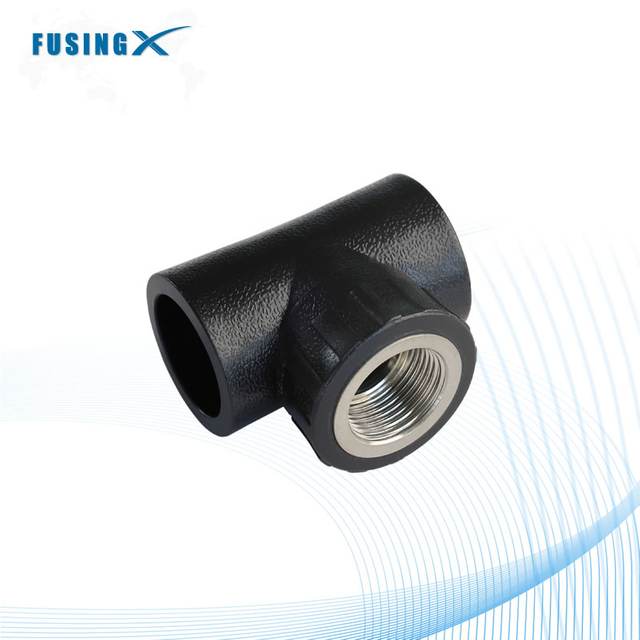
For most applications, butt fusion welding stands out as the preferred choice for joining an hdpe elbow, especially when using FusingX HDPE Butt Fusion Fittings. This method delivers exceptional joint strength, long-term reliability, and cost efficiency. Key decision factors include joint integrity, installation speed, and adaptability to different environments. The table below offers a quick comparison for immediate clarity.
Factor | Butt Fusion | Electrofusion |
Joint Strength | Excellent | Very Good |
Reliability | High | High |
Cost | Lower | Higher |
Installation Speed | Fast | Moderate |
Space Requirements | More | Less |
Key Takeaways
Butt fusion welding offers excellent joint strength and long-term reliability, making it ideal for high-pressure applications.
Electrofusion welding is perfect for confined spaces and quick repairs, thanks to its compact equipment and automated process.
Cost efficiency favors butt fusion, as it requires fewer materials and lower labor costs compared to electrofusion.
Installation speed is generally faster with electrofusion, which can complete fusion in under two minutes, while butt fusion takes about 30 minutes per joint.
Both methods require specific equipment and training; butt fusion needs skilled operators, while electrofusion simplifies training due to its automation.
Consider project requirements carefully; butt fusion suits large-diameter pipes, while electrofusion excels in tight or complex environments.
Regular maintenance and quality control are essential for both methods to ensure strong, leak-proof joints.
FusingX HDPE Butt Fusion Fittings are compatible with standard PE pipes, ensuring reliable performance across various applications.
HDPE Elbow Joining Methods
HDPE elbow connections rely on two primary pipe joining techniques: butt fusion welding and electrofusion welding. Each method offers distinct advantages, making them suitable for different project requirements and installation environments.
Butt Fusion Welding Overview
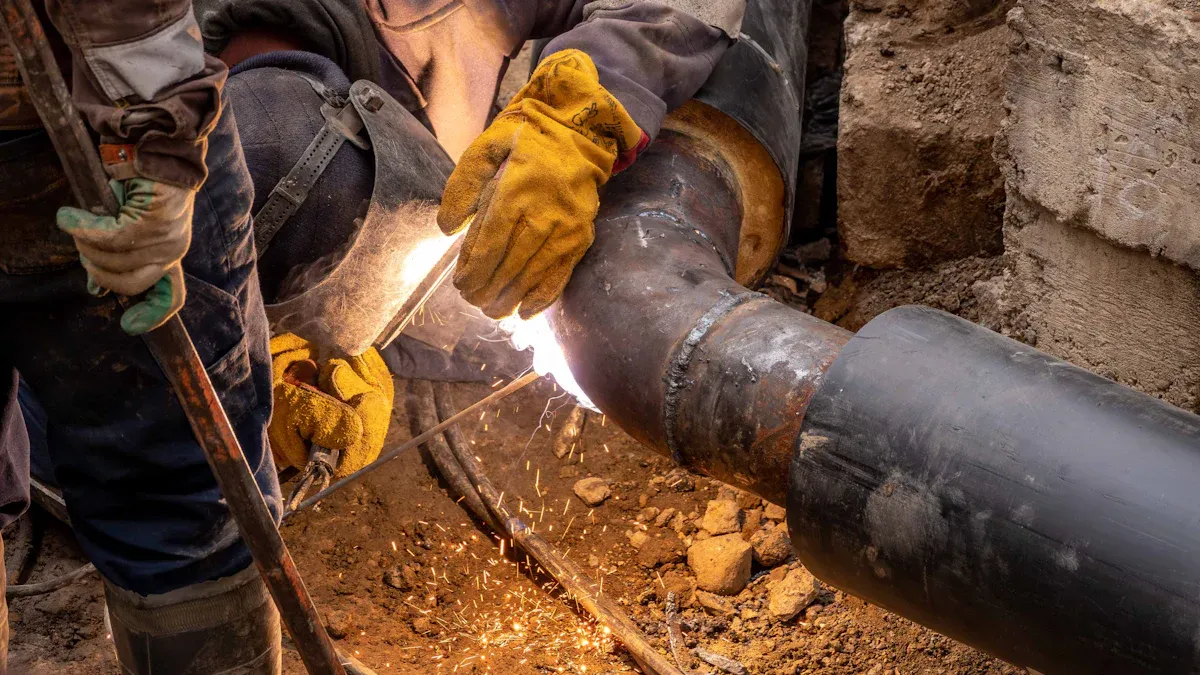
Butt fusion welding is a widely adopted process for joining HDPE elbows in large-scale piping systems. The technique involves heating the ends of the pipe and fitting until both surfaces reach a molten state. Once heated, the components are pressed together, forming a seamless joint. This method requires precise alignment and control throughout the fusion process. Butt fusion welding is best suited for straight runs and open construction sites, where space and access are not limited.
The equipment used for butt fusion includes robust welding machines with higher power requirements. These machines ensure consistent heating and pressure, resulting in strong, leak-proof joints. Butt fusion is ideal for large-diameter pipes and high-pressure applications, such as municipal water supply or industrial pipelines. The process delivers excellent joint strength and long-term durability, making it a preferred choice for critical infrastructure.
Electrofusion Welding Overview
Electrofusion welding provides an alternative solution for HDPE elbow installation, especially in confined spaces or complex layouts. This method utilizes fittings embedded with resistance wires. When connected to a portable electrofusion welding machine, the wires heat up and fuse the fitting to the pipe. The process is highly automated and requires less manual alignment compared to butt fusion.
Electrofusion is particularly effective for small-diameter pipes and emergency repairs. The equipment is compact and consumes less power, making it suitable for remote or restricted locations. Electrofusion fittings are designed for quick and reliable connections, even when access is limited. The method is favored in utility networks, repair scenarios, and installations where precision and flexibility are essential.
Tip: Electrofusion welding simplifies pipe joining in areas with limited space or challenging access, while butt fusion welding excels in open environments with larger pipes.
Technical Comparison Table
Feature | Electrofusion Welding | Butt Fusion Welding |
Connection Method | Embedded resistance wires fuse fitting and pipe | Heats pipe and fitting ends directly, then presses together |
Construction Process | Automated, lower alignment requirements | Requires precise control and alignment |
Equipment Requirements | Portable machine, low power | Larger machine, higher power |
Application Scenarios | Small-diameter, complex connections | Large-diameter, long-distance pipelines |
Cost | Higher equipment and fitting costs | Lower costs for fittings and equipment |
Common Use Cases Table
Welding Method | Use Case Description |
Electrofusion | Suitable for small diameter HDPE pipes, ideal for confined spaces, and excellent for emergency repairs. |
Butt Fusion | Best for large diameter pipes, high-pressure applications, and open construction environments. |
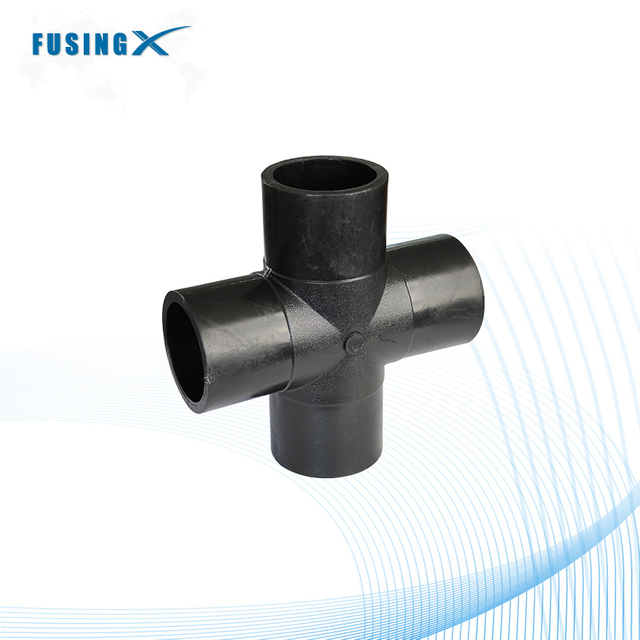
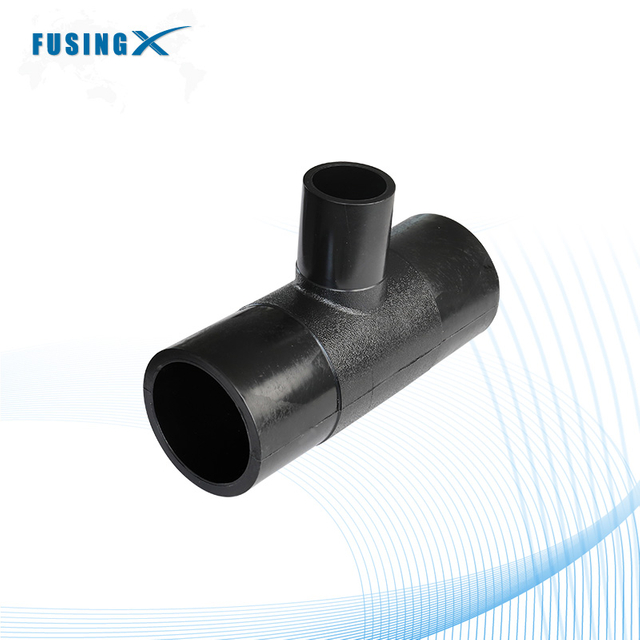
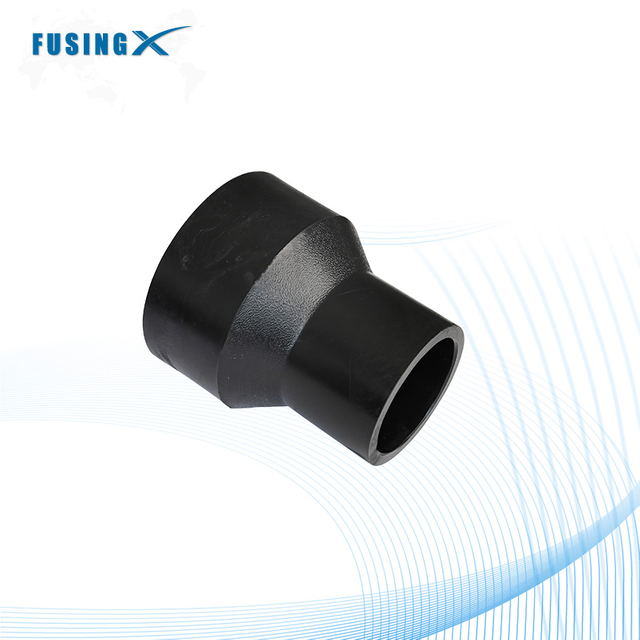
Both fusion methods play a vital role in HDPE elbow installation. Project requirements, joint strength, and site conditions determine the most appropriate technique. FusingX offers high-quality fittings compatible with both butt fusion and electrofusion, ensuring reliable performance across diverse applications.
Butt Fusion Welding for HDPE Elbow
Butt Fusion Process
Equipment Needed
Butt fusion welding for an hdpe elbow requires specialized equipment to ensure a reliable connection. The essential tools include a butt fusion welding machine, pipe clamps, a heating plate, and a facing tool. The welding machine must provide stable power and precise control over temperature and pressure. Operators also need cleaning supplies to remove contaminants from the pipe and fitting surfaces. Regular maintenance of all equipment is critical to maintain weld integrity and prevent faults during operation.
Step-by-Step Procedure
The butt fusion process follows a series of precise steps to achieve a strong, leak-proof joint. The table below outlines the recommended operating conditions and actions for welding HDPE elbows:
Step | Description |
1 | Clean the oil circuit joints and connect all parts of the welding machine correctly. |
2 | Measure the power supply voltage and confirm that it meets the welding machine requirements. |
3 | Check and clean the heating plate; replace if damaged. |
4 | Set parameters like heat absorption and cooling time according to the welding process. |
5 | Level the tube and adjust concentricity using a clamp. |
6 | Ensure the welding end face is smooth and parallel, with a gap of less than 0.3mm. |
7 | Measure and record the drag pressure (Pt) during welding. |
8 | Adjust the welding pressure (P1) based on drag pressure (Pt) and specified pressure (P2). |
9 | Start endothermic timing when the crimping height reaches the specified value. |
10 | Fit the welding surface immediately after removing the heating plate and increase pressure uniformly. |
11 | Reduce pressure to zero after cooling time and disassemble welded components. |
12 | Take protective measures when welding below zero to maintain surface temperature. |
13 | Ensure all items in contact with the welding surface are clean and dry. |
14 | Allow sufficient natural cooling after welding to eliminate internal stress. |
15 | Do not use butt fusion for components with dn≤63mm or wall thickness e<6mm. |
16 | Use electrofusion connection for different SDR series components. |
Note: Maintaining a clean and controlled environment during the process is essential for optimal joint integrity.
Advantages of Butt Fusion Welding
Joint Strength
Butt fusion creates a homogeneous joint that matches or exceeds the strength of the original pipe. The fusion zone becomes as robust as the pipe wall, ensuring high joint integrity. This strength is vital for applications where the pipeline must withstand internal pressure and external loads.
Cost Efficiency
One of the main advantages of butt fusion is its cost efficiency. The process does not require additional materials such as adhesives or mechanical fasteners. Labor costs remain low due to the relatively quick installation time, especially when using advanced equipment. Over the long term, the durability of the joint reduces maintenance expenses.
Longevity and Durability
Butt fusion welding delivers a leak-proof connection that resists corrosion and chemical attack. The joint can last for decades, often matching the service life of the pipeline itself. This durability makes butt fusion a preferred method for critical infrastructure projects.
Advantage | Description |
Strong Joints | The resulting joint is as strong as, or even stronger than, the pipe itself. |
No Additional Materials | Butt fusion doesn’t require adhesives or mechanical fasteners, making it a clean, reliable joining method. |
Leak-proof Connection | The joint is leak-proof, which is critical for gas and water pipeline applications. |
Disadvantages of Butt Fusion Welding
Equipment Complexity
The disadvantages of butt fusion include the complexity of the required equipment. Operators must use machines that provide precise control over temperature and pressure. Equipment faults or improper calibration can lead to weak joints or inconsistent welds.
Space Requirements
Butt fusion welding demands adequate space for machine setup and pipe alignment. Limited access or confined environments can make the process challenging. Misalignment or contamination from dirt or oil can compromise weld quality and reduce the effectiveness of the joint.
Tip: Always follow strict quality control measures, including visual inspection and regular equipment maintenance, to minimize the disadvantages of butt fusion and ensure reliable performance.
Butt Fusion Applications
Butt fusion welding has become the standard joining method for HDPE elbows in many industries. This process delivers reliable, high-strength joints that meet the demands of modern infrastructure. The versatility of butt fusion allows it to serve a wide range of applications, from municipal water supply to industrial fluid transport.
Many municipal water systems rely on butt fusion for pipeline construction. The method ensures leak-proof connections, which are essential for maintaining water quality and reducing maintenance costs. Gas distribution networks also benefit from the robust joints created by butt fusion welding. These networks require consistent performance under pressure, and the fusion process provides the necessary durability.
Industrial facilities often choose butt fusion for chemical pipelines. The process resists corrosion and chemical attack, making it suitable for transporting aggressive fluids. In sewage treatment plants, butt fusion welding supports the movement of wastewater through complex piping layouts. The seamless joints prevent leaks and contamination, which is critical for environmental safety.
Butt fusion welding is widely used in agriculture to enhance irrigation efficiency. The process creates strong, reliable joints that withstand high pressures and frequent use. Farmers and irrigation system designers prefer butt fusion for its long service life and low maintenance requirements.
Mining operations depend on butt fusion to construct pipelines for fluid transport. The harsh conditions in mining environments demand joints that can handle abrasion and heavy loads. Butt fusion welding meets these requirements by producing robust, consistent welds. The automation of the process reduces errors and ensures uniform quality across large projects.
The oil and gas industry also utilizes butt fusion for above-ground and buried pipelines. The method supports the safe transport of fuels and chemicals over long distances. Contractors appreciate the speed and reliability of butt fusion, especially when working on large-diameter pipes.
In addition, butt fusion is common in fire protection systems, landfill leachate collection, and geothermal heating networks. Each application benefits from the process’s ability to create homogeneous, long-lasting joints. The adaptability of butt fusion makes it a preferred choice for both new installations and system upgrades.
The following list highlights typical projects that use butt fusion welding for HDPE elbows:
Municipal water supply and distribution
Gas transmission and distribution networks
Agricultural irrigation systems
Mining fluid transport pipelines
Industrial chemical processing lines
Sewage and wastewater treatment plants
Oil and gas pipelines
Fire protection and safety systems
Landfill and environmental engineering
Geothermal and district heating networks
Butt fusion welding continues to set the standard for HDPE elbow connections. Its proven performance, adaptability, and cost-effectiveness make it the go-to solution for engineers and contractors worldwide.
Electrofusion Welding for HDPE Elbow
Electrofusion Process
Equipment Needed
Electrofusion welding for HDPE elbows requires a specific set of tools. The main component is the electrofusion control unit, which supplies power to the embedded resistance wires in the fitting. Operators also need pipe cutters to ensure clean, square ends on the HDPE pipe. Scrapers or rotary peelers remove the oxidized layer from the pipe surface, which is essential for a strong fusion. Alignment clamps hold the pipe and elbow in place during the process. Barcode scanners or manual input devices may be used to set the correct welding parameters for each fitting. Cleaning wipes are necessary to eliminate dust and contaminants before starting the fusion.
Step-by-Step Procedure
The electrofusion process follows a series of controlled steps to create a reliable joint:
Cut the HDPE pipe ends square and remove any burrs.
Mark the insertion depth on the pipe to ensure proper fitting engagement.
Use a scraper to remove the outer oxidized layer from the pipe surface.
Clean both the pipe and the inside of the electrofusion fitting with approved wipes.
Insert the pipe ends into the fitting, aligning them with the marked depth.
Secure the assembly with alignment clamps to prevent movement.
Connect the electrofusion control unit to the fitting terminals.
Scan the fitting barcode or enter the welding parameters manually.
Start the fusion cycle. The control unit delivers current to the resistance wires, heating and melting the HDPE surfaces.
Allow the joint to cool naturally before removing the clamps and handling the assembly.
Note: Strict adherence to the recommended procedure ensures a strong, leak-proof electrofusion jointing system.
Advantages of Electrofusion Welding
Flexibility in Tight Spaces
Electrofusion welding offers significant flexibility for installations in confined or hard-to-reach areas. The compact equipment and fittings allow operators to work efficiently where space is limited. This method minimizes the need for large machinery or extensive pipe movement, making it ideal for urban utility networks and retrofit projects.
Lower Skill Requirement
The process of electrofusion welding is highly automated. The control unit manages the heating cycle, reducing the risk of human error. Operators do not need advanced welding skills, which simplifies training and improves consistency. This automation also helps ensure compliance with regulatory standards in critical infrastructure projects.
Repair Suitability
Electrofusion excels in repair scenarios. When a pipeline suffers severe damage, such as cracks or holes, technicians can cut out the affected section and use electrofusion to join new HDPE segments. The resulting joint is as strong as the original pipe, eliminating the need for additional clamps or fasteners. This guarantees a reliable mechanical bond and restores system integrity quickly.
Enables effective repairs by replacing damaged sections with new HDPE elbows.
Guarantees strong mechanical bonds, making repairs durable and leak-proof.
Minimizes the risk of installation errors, ensuring a fully integrated system.
Disadvantages of Electrofusion Welding
Higher Fitting Costs
One of the main disadvantages of electrofusion is the higher cost of fittings compared to traditional butt fusion options. The specialized design and embedded resistance wires increase the price per unit. Project budgets must account for these additional expenses, especially in large-scale installations.
Power Supply Needs
Electrofusion welding requires a stable power supply to operate the control unit and complete the fusion process. Remote sites or areas with unreliable electricity may face challenges during installation. Proper planning and backup power solutions are essential to avoid delays.
Tip: Always verify power availability and fitting compatibility before starting an electrofusion project.
Electrofusion Applications
Electrofusion welding has become a preferred method for joining HDPE elbows in many specialized environments. This technique offers unique advantages that make it suitable for a range of applications where traditional butt fusion may not be practical.
Key Application Areas for Electrofusion Welding:
Urban Utility Networks:
Electrofusion excels in city infrastructure projects. Installers often face limited space in underground vaults, narrow trenches, or crowded utility corridors. The compact equipment and fittings allow for efficient work without the need for large machinery.
Pipeline Repairs and Maintenance:
Emergency repairs require speed and reliability. Electrofusion enables technicians to cut out damaged sections and quickly install new HDPE elbows. The process minimizes downtime and restores service with minimal disruption.
Retrofitting and System Upgrades:
Many older pipeline systems need upgrades to meet modern standards. Electrofusion welding allows for the integration of new HDPE elbows into existing networks, even when access is restricted or pipe alignment is challenging.
Industrial Facilities:
Factories and processing plants often have complex piping layouts with limited access. Electrofusion provides a solution for connecting elbows in tight spaces, ensuring leak-proof joints in critical systems.
Water and Gas Distribution:
Municipal water and gas utilities use electrofusion for service connections, branch lines, and meter installations. The method ensures consistent joint quality, which is essential for safety and regulatory compliance.
Tip: Electrofusion welding is especially valuable in environments where excavation is costly or disruptive. The ability to join pipes without moving them extensively reduces project complexity.
Typical Scenarios for Electrofusion Use:
Application Scenario | Why Electrofusion Is Preferred |
Confined urban trenches | Compact tools fit in tight spaces |
Emergency pipeline repairs | Fast, reliable joint creation |
Integration with old systems | Adapts to misaligned or non-standard pipes |
Industrial retrofits | Works around existing equipment and structures |
Service connections | Ensures precise, repeatable results for small-diameter elbows |
Summary of Benefits:
Reduces the need for large-scale excavation.
Supports rapid response during emergency repairs.
Provides flexibility for complex or crowded installations.
Delivers consistent, high-quality joints in challenging environments.
Electrofusion welding continues to gain popularity in sectors where space, speed, and adaptability are critical. Project managers and engineers choose this method to ensure reliable connections for HDPE elbows, especially when traditional fusion techniques are not feasible.
Butt Fusion vs Electrofusion Comparison
Joint Strength and Reliability
Joint strength and reliability are critical factors when selecting a joining method for an HDPE elbow. Butt fusion creates a homogeneous weld that matches the strength of the original pipe. This process ensures that the joint integrity is maintained throughout the pipeline’s service life. The fusion zone becomes as robust as the pipe wall, providing confidence in high-pressure and high-stress environments.
Electrofusion welding also delivers reliable connections, but the strength of the joint depends on the quality and compatibility of the fitting used. While modern electrofusion fittings are engineered for durability, the process can be more sensitive to surface preparation and alignment. Proper cleaning and calibration are essential to achieve consistent results.
The following table summarizes the comparative joint strength:
Welding Method | Joint Strength Description |
Butt Fusion | Produces a weld as strong as the pipe itself. |
Electrofusion | Strength depends on the quality of the fitting used. |
Butt fusion welding is often preferred for critical infrastructure where maximum reliability and long-term performance are required. Electrofusion provides a strong alternative, especially in situations where access is limited or rapid repairs are necessary.
Cost Analysis
Cost remains a decisive factor in pipeline construction and maintenance. Butt fusion offers lower material costs because the fittings are less complex and do not contain embedded components. However, the initial investment in butt fusion equipment can be higher, especially for large-diameter applications. Labor costs may also increase due to the need for skilled operators and precise alignment.
Electrofusion, on the other hand, involves higher material costs. The fittings contain embedded resistance wires, which increase the price per unit. Installation costs can be lower, as the process is more automated and requires less manual skill. For small-diameter or repair projects, electrofusion can offer cost advantages by reducing labor time and minimizing the need for specialized training.
The table below compares the average costs:
Welding Method | Average Cost per Joint | Installation Cost | Material Cost |
Butt Fusion | Lower | Higher | Lower |
Electrofusion | Higher | Lower | Higher |
Long-term maintenance costs for both methods remain low. HDPE elbows resist corrosion and chemical attack, eliminating the need for protective coatings. The smooth interior surface reduces sediment buildup, which minimizes cleaning requirements and supports efficiency and productivity over the pipeline’s lifespan.
HDPE elbows require minimal maintenance, leading to long-term cost savings.
They are resistant to corrosion and chemical attacks, eliminating the need for protective coatings.
The smooth interior of HDPE elbows reduces sediment buildup, minimizing the need for frequent cleaning.
Installation Speed
Installation speed directly impacts project timelines and overall productivity. Butt fusion welding typically requires about 30 minutes per joint. This process includes heating, aligning, fusing, and cooling the pipe and fitting. The need for precise alignment and controlled conditions can extend the installation time, especially in challenging environments.
Electrofusion welding offers a faster fusion cycle, with heating times ranging from 40 to 120 seconds. Cooling time adds another 15 to 30 minutes, but the overall process is less labor-intensive. The compact equipment and automated controls allow for efficient work in confined spaces or complex layouts.
The following table highlights the average installation times:
Welding Method | Average Installation Time |
Butt Fusion | Approximately 30 minutes per joint |
Electrofusion | Fusion time of 40 to 120 seconds, plus cooling time of 15 to 30 minutes |
Several factors influence installation speed for both methods:
Heating plate temperature is critical for proper melting of materials.
Welding pressure and time ensure molecular entanglement and a strong joint.
Cooling pressure and time prevent shrinkage and maintain integrity after welding.
Additional considerations include environmental conditions such as sunlight, soil composition, and temperature fluctuations. Proper surface cleaning and equipment calibration are essential for maintaining speed and quality during installation.
Tip: Electrofusion fittings provide consistent performance in various environments, which can enhance installation speed and reduce downtime.
Both butt fusion and electrofusion support high levels of efficiency and productivity when applied correctly. The choice depends on project size, site conditions, and the need for rapid deployment.
Equipment and Training
The choice between butt fusion and electrofusion welding for HDPE elbows depends heavily on the equipment required and the training needed for operators. Each method presents unique demands in terms of machinery, setup, and skill development.
Butt fusion welding relies on robust, specialized machines. These machines must deliver precise control over temperature and pressure. Operators need to understand the operation of the butt welding machine, proper handling of pipe ends, and the importance of the cooling process. The equipment often includes pipe clamps, heating plates, and facing tools. Regular maintenance and calibration are essential to ensure consistent weld quality.
Electrofusion welding uses compact, portable control units. These units connect to fittings with embedded resistance wires. The process requires less manual alignment, but operators must pay close attention to preparation, timing, temperature, pressure, and cooldown. Training for electrofusion welding typically lasts about eight hours. This training emphasizes the importance of accurately fusing electrofusion fittings and following strict procedures.
The table below summarizes the training focus for each method:
Welding Method | Training Duration | Key Focus Areas |
Butt Fusion Welding | Not specified | Operation of butt welding machine, proper handling of pipe ends, cooling process |
Electrofusion Welding | 8 hours | Accurate fusion of fittings, preparation, timing, temperature, pressure, cooldown |
Note: Proper training ensures safe operation and high-quality joints. Even with automated controls, attention to detail remains critical.
Key Points:
Butt fusion requires more complex equipment and a deeper understanding of machine operation.
Electrofusion simplifies the process with automated controls but demands strict adherence to preparation and timing.
Both methods benefit from ongoing training and quality assurance checks.
A well-trained team can maximize the advantages of either method, ensuring reliable and durable HDPE elbow connections.
Choosing the Best Method
Project Assessment Checklist
Selecting the optimal joining technique for an hdpe elbow requires a thorough evaluation of project-specific factors. A systematic checklist helps ensure the right choice for both butt fusion and electrofusion applications:
Material compatibility: Confirm that the selected fittings match the intended use, such as water supply, gas distribution, or drainage systems.
Pressure ratings: Verify that the fittings can handle the maximum operating pressure of the pipeline.
Environmental considerations: Assess exposure to UV light, chemicals, or other environmental stressors that may affect performance.
Density of polyethylene: Choose higher-density materials for enhanced mechanical strength and durability.
Manufacturer specifications: Request and review technical datasheets to compare product features and ensure compliance with project requirements.
Note: Careful attention to these factors supports long-term reliability and maximizes efficiency and productivity in pipeline systems.
Butt fusion welding remains the top choice for HDPE elbows in most scenarios, offering unmatched joint strength and cost efficiency. Electrofusion excels in confined spaces or for rapid repairs. FusingX HDPE Butt Fusion Fittings stand out due to their PE100 material, wide size range, and rigorous quality control.
Feature | Description |
Material | PE100 high-density polyethylene |
Size Range | 63mm–1200mm |
Pressure Levels | PN10–PN16 |
Manufacturing | Advanced equipment, strict inspection |
Application | Reliable, leak-proof water supply and industrial systems |
For open sites and large pipelines, choose butt fusion. For tight spaces or repairs, select electrofusion.
FAQ
What is the main advantage of butt fusion for HDPE elbows?
Butt fusion creates a seamless, homogeneous joint. This method delivers exceptional strength and long-term reliability. It is ideal for high-pressure and large-diameter applications.
When should I choose electrofusion over butt fusion?
Electrofusion works best in confined spaces or for pipeline repairs. The process uses compact equipment and requires less manual alignment, making it suitable for urban utility networks and retrofit projects.
Are FusingX HDPE Butt Fusion Fittings compatible with standard PE pipes?
Yes. FusingX HDPE Butt Fusion Fittings comply with international standards. They fit standard PE water and gas pipes, ensuring easy integration into existing systems.
How long does a typical butt fusion joint last?
A properly installed butt fusion joint can last over 50 years under normal operating conditions. FusingX fittings offer excellent resistance to corrosion and chemicals.
What training is required for butt fusion and electrofusion welding?
Operators need hands-on training for both methods. Butt fusion requires knowledge of machine operation and alignment. Electrofusion training focuses on preparation, timing, and following automated procedures.
Can I use butt fusion for small-diameter HDPE elbows?
No. Butt fusion is not recommended for pipes with diameters less than 63mm or wall thickness below 6mm. Electrofusion is the preferred method for small-diameter connections.
What makes FusingX HDPE Butt Fusion Fittings a reliable choice?
FusingX fittings use PE100 material and strict quality control. They offer a wide size range, long service life, and fast installation. These features ensure dependable performance for water, gas, and industrial pipelines.

 English
  العربية
  Français
  Русский
  Español
  Português
  Deutsch
  italiano
  日本語
日本語  한국어
한국어  Nederlands
  Tiếng Việt
  ไทย
ไทย  Polski
  Türkçe
  አማርኛ
አማርኛ  ພາສາລາວ
  ភាសាខ្មែរ
  Bahasa Melayu
  ဗမာစာ
ဗမာစာ  தமிழ்
தமிழ்  Filipino
  Bahasa Indonesia
  magyar
  Română
  Čeština
  Монгол
  қазақ
қазақ  Српски
  हिन्दी
  فارسی
فارسی  Kiswahili
  Slovenčina
  Slovenščina
  Norsk
Norsk  Svenska
  українська
  Ελληνικά
  Suomi
Suomi  Հայերեն
  עברית
עברית  Latine
  Dansk
Dansk  اردو
اردو  Shqip
Shqip  বাংলা
বাংলা  Hrvatski
  Afrikaans
  Gaeilge
  Eesti keel
  Māori
Māori