Introduction
Why do some pipeline systems fail early? Often, weak connections cause leaks and pressure loss. A reliable HDPE Pipe Fitting Tee can prevent these issues.
This article focuses on how tee fittings work in modern piping systems. It explains their types, uses, and performance advantages.In this article, you will learn how to choose the right HDPE Pipe Fitting Tee and how it improves system reliability.
Types of HDPE Pipe Fitting Tee
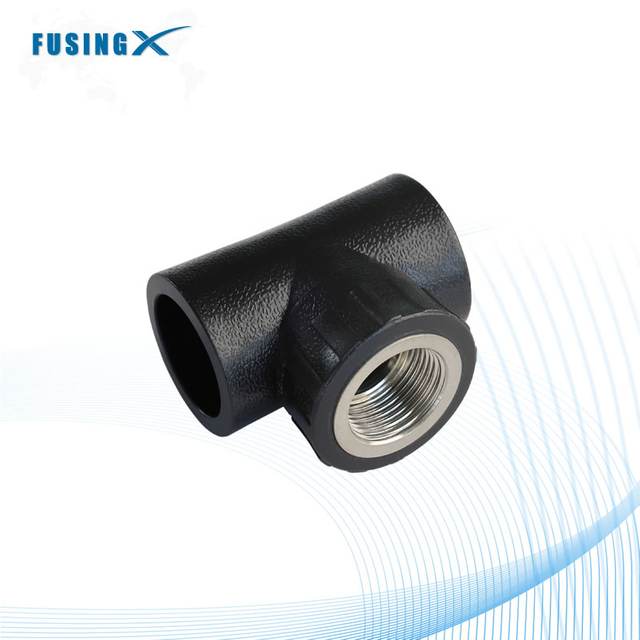
An HDPE Pipe Fitting Tee is a three-way connector used to split or combine flow inside a pipeline. In real-world systems, this fitting helps create branch lines without disrupting pressure balance or flow stability. Engineers rely on it when designing distribution networks, irrigation layouts, and industrial pipelines.
Equal Tee vs Reducing Tee
When selecting an HDPE Pipe Fitting Tee, pipe size compatibility is the first factor to consider. Equal tees and reducing tees serve different purposes depending on system design.
Equal Tee
A tee with all three outlets having the same diameter. This design supports uniform flow distribution across multiple branches. In water supply or irrigation systems, consistent pipe sizing helps maintain pressure stability and simplifies installation. Equal tees are commonly used in straightforward pipeline layouts where no size transition is required.
Reducing Tee
A tee where the branch outlet has a smaller diameter than the main pipe. This structure allows flow to move from a larger pipeline into a smaller branch line efficiently. It is often used in systems where flow demand varies or where multiple distribution levels exist. Reducing tees help minimize the need for additional fittings while keeping the layout compact.
| Type | Pipe Configuration | Typical Use Case | Main Advantage |
| Equal Tee | Same diameter all ends | Water supply, irrigation | Balanced flow and easy design |
| Reducing Tee | Smaller branch outlet | Industrial, multi-stage lines | Efficient size transition |
Butt Fusion HDPE Pipe Fitting Tee
A butt fusion HDPE Pipe Fitting Tee is designed for permanent and high-strength connections. The process uses controlled heat to fuse the pipe and fitting into one continuous structure.
Typical process steps include:
Pipe ends and tee ends are aligned and cleaned before fusion
A heating plate melts both surfaces under controlled temperature
Melted ends are pressed together with consistent force
Cooling phase forms a solid, homogeneous joint
This method creates a joint that performs almost like the original pipe material. Because no mechanical connection is involved, the risk of leakage is significantly reduced.
Key advantages:
Strong joint structure improves pressure resistance
Seamless fusion reduces leakage risk over time
Long service life supports infrastructure projects
Minimal maintenance required after installation
Electrofusion HDPE Pipe Fitting Tee
An electrofusion HDPE Pipe Fitting Tee uses built-in heating elements to achieve a controlled fusion process. Unlike butt fusion, the heat is generated inside the fitting itself.
Installation typically follows this sequence:
Pipe is inserted into the electrofusion fitting
Control unit applies electrical current to embedded wires
Internal heating melts both fitting and pipe surfaces
Cooling creates a tight, sealed joint
This method improves installation consistency, especially in complex environments.
Advantages include:
Controlled heating reduces installation variability
Suitable for confined or hard-to-reach spaces
Reliable sealing performance supports gas systems
Reduced dependency on operator skill compared to manual fusion
Threaded and Compression HDPE Tee Fittings
Not every project requires permanent fusion. Some applications need flexibility, quick assembly, or easy maintenance. In those cases, threaded and compression tee fittings become useful.
These fittings are designed for convenience:
No fusion equipment required during installation
Faster assembly compared to welded connections
Easy disassembly allows system modification
Suitable for lower pressure or temporary setups
Common applications include:
Agricultural irrigation systems that change layout
Temporary pipelines in construction projects
Maintenance or repair scenarios
Systems requiring frequent adjustments
| Connection Type | Installation Effort | Reusability | Suitable Scenario |
| Butt Fusion | High | No | Permanent high-pressure systems |
| Electrofusion | Medium | No | Controlled installation needs |
| Threaded/Compression | Low | Yes | Flexible or temporary systems |
Applications of HDPE Pipe Fitting Tee in Different Industries
An HDPE Pipe Fitting Tee plays a critical role in modern pipeline systems across multiple industries. Its ability to create branch connections while maintaining flow stability makes it essential in both simple and complex networks.
Different industries require different performance standards, so selecting the right tee type and connection method becomes important for safety, efficiency, and long-term operation. FusingX designs its HDPE fittings to support these varied application scenarios with reliable material performance and flexible system compatibility.
Municipal Water Supply and Distribution
In municipal infrastructure, an HDPE Pipe Fitting Tee is widely used to divide main pipelines into smaller distribution branches. These branch connections deliver water to residential areas, commercial buildings, and public facilities. A well-designed tee ensures stable pressure and balanced flow across the network.
Reliable sealing is critical in urban systems because leakage can lead to water loss, soil erosion, and increased maintenance costs. HDPE tee fittings help reduce these risks due to their fusion-based connection methods and corrosion resistance.
Key application benefits include:
Stable flow distribution across multiple pipeline branches
Reduced leakage risk in underground installations
Long service life suitable for municipal infrastructure
Resistance to corrosion from soil and environmental exposure
Gas Distribution Systems
Gas pipeline systems require a high level of safety and sealing performance. An HDPE Pipe Fitting Tee is used to branch gas flow from main pipelines into secondary lines while maintaining system integrity.
Gas systems demand tight connections because even small leaks can create safety hazards. Fusion-based HDPE tee fittings provide strong, sealed joints that help meet these requirements.
Important considerations in gas applications:
Strong sealing performance to prevent gas leakage
Consistent joint quality across different installation conditions
Compatibility with pressure-controlled systems
Reliable performance in long-term underground use
Agricultural Irrigation and Drainage
In agricultural systems, an HDPE Pipe Fitting Tee is essential for creating branch lines in irrigation networks. It is commonly used in drip irrigation, sprinkler systems, and drainage layouts where water must be distributed evenly across large areas.
Agricultural environments often expose pipelines to sunlight, moisture, and chemicals. HDPE tee fittings perform well under these conditions due to their durability and corrosion resistance.
Typical advantages in agriculture:
Flexible system layout for different field designs
Resistance to fertilizers and chemicals in soil
Lightweight structure simplifies installation in large areas
Ability to handle outdoor temperature variations
Industrial and Wastewater Pipeline Systems
Industrial and wastewater systems often involve complex piping networks with varying flow directions and harsh operating conditions. An HDPE Pipe Fitting Tee is used to split or combine flow in these systems, supporting efficient process control and fluid transport.
These environments may include chemicals, abrasive materials, or high-moisture conditions. HDPE material offers strong resistance to these factors, making it a reliable choice.
Below is a comparison of key requirements across different applications:
| Application Area | Main Requirement | HDPE Tee Advantage |
| Industrial pipelines | Chemical resistance | Durable and corrosion-resistant |
| Wastewater systems | Moisture and corrosion control | Long-lasting and low maintenance |
| Chemical transport | Material stability | Resistant to aggressive substances |
Additional benefits in these systems include:
Ability to handle complex pipeline layouts
Reduced risk of corrosion-related failure
Lower maintenance costs over time
Consistent performance in demanding environments
Advantages of HDPE Pipe Fitting Tee
An HDPE Pipe Fitting Tee offers more than a simple connection point. It improves how a pipeline performs over time. Many industries choose it because of durability, sealing strength, and flexibility.
FusingX designs its HDPE fittings using PE100 material and automated production processes. This approach helps ensure stable quality and consistent performance across different projects.
Durability and Long Service Life
Durability is one of the strongest advantages of an HDPE Pipe Fitting Tee. HDPE material performs well under pressure, chemical exposure, and changing environmental conditions. This makes it suitable for both underground and exposed installations.
Key durability features include:
Resistance to corrosion from soil, water, and chemicals
Pipelines often operate in aggressive environments. HDPE material prevents rust and degradation, unlike metal alternatives. This improves system stability over time.
Ability to handle environmental stress and temperature changes
Outdoor installations face heat, cold, and moisture variations. HDPE maintains structural integrity even in fluctuating conditions.
Long service life under normal operating conditions
Many systems expect over 50 years of service life. This reduces replacement frequency and supports long-term infrastructure planning.
| Property | HDPE Performance | Impact on Pipeline System |
| Corrosion resistance | Excellent | Longer lifespan, fewer failures |
| Chemical resistance | High | Suitable for industrial use |
| Environmental stress | Strong tolerance | Stable outdoor performance |
| Service life | 50+ years (typical) | Lower lifecycle cost |
Leak-Proof and Strong Connections
Connection quality directly affects pipeline safety and efficiency. An HDPE Pipe Fitting Tee achieves strong sealing performance through fusion-based methods such as butt fusion and electrofusion.
These connection methods offer several advantages:
Seamless joint structure improves reliability
Fusion welding creates a continuous connection. No gaps or weak points exist between pipe and fitting.
Reduced leakage risk in high-pressure systems
Strong sealing prevents fluid or gas loss. This is critical in water supply and gas distribution networks.
Lower maintenance requirements over time
Fewer leaks mean fewer repairs. Maintenance costs decrease as system reliability improves.
Flexibility and Versatility
An HDPE Pipe Fitting Tee adapts well to different systems and environments. This flexibility makes it useful across multiple industries, including water supply, irrigation, gas distribution, and industrial pipelines.
Important flexibility features:
Compatibility with various pipe sizes and configurations
HDPE systems often include different diameters. Tee fittings support both equal and reducing connections.
Ability to work in complex pipeline layouts
Branching, turning, and distribution become easier. This helps optimize system design.
Suitability for multiple installation methods
Fusion, threaded, and compression options allow adaptation to different project needs.
Practical examples of versatility:
Urban infrastructure uses tees for branching water lines
Agricultural systems use tees for irrigation networks
Industrial systems rely on tees for process flow control
Cost Efficiency and Low Maintenance
Cost efficiency is a major reason why many projects choose an HDPE Pipe Fitting Tee. The initial investment is balanced by long-term savings in maintenance and replacement.
Economic advantages include:
Lower repair frequency due to durable material
Strong resistance reduces system failures. Fewer breakdowns mean lower repair costs.
Reduced installation complexity in many scenarios
Fusion methods create reliable joints. Once installed, minimal adjustments are needed.
Long lifecycle reduces replacement expenses
Extended service life spreads costs over many years.
| Cost Factor | Traditional Materials | HDPE Tee Advantage |
| Maintenance cost | Higher | Lower over time |
| Replacement frequency | More frequent | Significantly reduced |
| Installation cost | Variable | Optimized with fusion methods |
| Lifecycle cost | High | More economical |
How to Choose the Right HDPE Pipe Fitting Tee
Choosing the right HDPE Pipe Fitting Tee is not only about size or price. It involves understanding the pipeline system, installation conditions, and long-term performance expectations.
Different projects require different solutions, so a careful selection process helps avoid future problems such as leakage, pressure imbalance, or unnecessary maintenance. FusingX provides multiple tee options across its HDPE fittings range, which makes it easier to match the right product to the right application.
Selecting the Correct Size and Type
The first step when choosing an HDPE Pipe Fitting Tee is ensuring the correct size and structure. Pipe diameter must match the system design, otherwise flow performance and pressure balance may be affected.
Key considerations include:
Matching tee size to pipe diameter
A mismatch can cause flow restriction or pressure loss. Proper sizing ensures smooth fluid movement across the system.
Choosing between equal tee and reducing tee
Equal tees work best when all connected pipes share the same diameter. Reducing tees are more suitable when the branch line requires a smaller size.
Understanding system layout requirements
Complex systems may require multiple tee types. Planning ahead helps avoid unnecessary adjustments during installation.
Below is a simple selection guide:
| Scenario | Recommended Tee Type | Reason |
| Same pipe size across system | Equal Tee | Maintains consistent flow distribution |
| Smaller branch line needed | Reducing Tee | Adapts flow to different pipe sizes |
| Multi-level distribution system | Combination | Supports flexible pipeline design |
Choosing the Right Connection Method
Connection method plays a major role in installation quality and long-term performance. Different methods suit different working environments and project requirements.
Common connection options include:
Butt fusion connection
Suitable for permanent installations. Requires specialized equipment and trained operators. Provides very strong and reliable joints.
Electrofusion connection
Uses controlled electrical heating for precise fusion. Works well in confined spaces or repair situations. Offers consistent joint quality.
Threaded or compression connection
Easier to install without special equipment. Suitable for temporary systems or applications requiring flexibility.
Evaluating Material Quality and Standards
Material quality directly affects the performance and lifespan of an HDPE Pipe Fitting Tee. Selecting the right material ensures durability, safety, and compliance with project requirements.
Important factors to check:
Use of PE100 material
High-density polyethylene with strong mechanical properties. Provides better pressure resistance and longer service life compared to lower-grade materials.
Manufacturing quality and consistency
Reliable production processes help maintain dimensional accuracy and performance stability. Automated production improves consistency across batches.
Certification and compliance
Products should meet relevant industry standards. This ensures safety and compatibility in different applications such as water supply or gas systems.
Conclusion
HDPE Pipe Fitting Tee improves flow control and system safety. It supports many industries and reduces long-term costs. FusingX provides durable PE100 fittings and reliable connection options. Their products offer strong sealing, flexibility, and stable performance for different pipeline needs.
FAQ
Q: What is an HDPE Pipe Fitting Tee?
A: An HDPE Pipe Fitting Tee connects three pipes and helps split flow in pipeline systems.
Q: Why choose an HDPE Pipe Fitting Tee?
A: An HDPE Pipe Fitting Tee offers durability, corrosion resistance, and long service life.
Q: How do you install an HDPE Pipe Fitting Tee?
A: Installation uses butt fusion, electrofusion, or threaded methods depending on system needs.
Q: Where is an HDPE Pipe Fitting Tee used?
A: It is used in water supply, gas systems, irrigation, and industrial pipelines.
Q: How to select the right HDPE Pipe Fitting Tee?
A: Choose based on size, connection method, and application requirements.

 English
  العربية
  Français
  Русский
  Español
  Português
  Deutsch
  italiano
  日本語
日本語  한국어
한국어  Nederlands
  Tiếng Việt
  ไทย
ไทย  Polski
  Türkçe
  አማርኛ
አማርኛ  ພາສາລາວ
  ភាសាខ្មែរ
  Bahasa Melayu
  ဗမာစာ
ဗမာစာ  தமிழ்
தமிழ்  Filipino
  Bahasa Indonesia
  magyar
  Română
  Čeština
  Монгол
  қазақ
қазақ  Српски
  हिन्दी
  فارسی
فارسی  Kiswahili
  Slovenčina
  Slovenščina
  Norsk
Norsk  Svenska
  українська
  Ελληνικά
  Suomi
Suomi  Հայերեն
  עברית
עברית  Latine
  Dansk
Dansk  اردو
اردو  Shqip
Shqip  বাংলা
বাংলা  Hrvatski
  Afrikaans
  Gaeilge
  Eesti keel
  Māori
Māori