Introduction
Why does one fitting control pipeline efficiency? The HDPE Pipe Fitting Tee plays a key role in flow distribution. Many systems depend on proper tee selection for stability. In this article, you will learn types, uses, and how to choose the right solution.
What Is an HDPE Pipe Fitting Tee and Why Is It Important?
What Is an HDPE Pipe Fitting Tee?
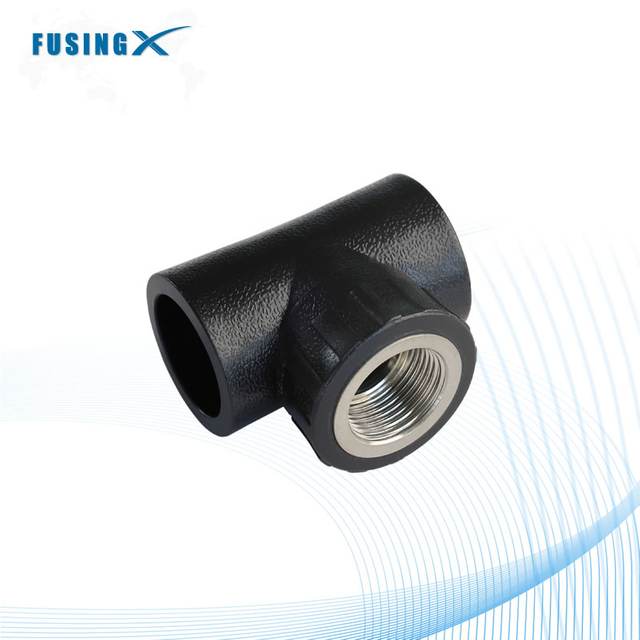
An HDPE Pipe Fitting Tee is a key component used to connect one pipeline with a branch line. The structure is usually shaped like the letter “T,” allowing fluid to flow in three directions. This design helps extend a pipeline without cutting or rebuilding the entire system. In many projects, this fitting plays a central role in building flexible and efficient pipeline layouts.
From a functional perspective, the tee fitting divides or combines flow inside a piping network. Engineers use this component when a system requires distribution to multiple directions. Instead of installing separate pipelines, a single main line can support multiple branches. This approach reduces material use and simplifies system design.
Main characteristics of an HDPE Pipe Fitting Tee:
Creates a branch connection from a main pipeline while maintaining continuous flow, which helps keep pressure stable across the system.
Supports multiple connection methods such as butt fusion and electrofusion, ensuring strong sealing and long-term durability.
Works with a wide range of pipe sizes, making the fitting suitable for both small installations and large infrastructure projects.
Why HDPE Pipe Fitting Tee Is Widely Used in Piping Systems
The widespread use of HDPE Pipe Fitting Tee comes from the advantages of HDPE material. Compared to traditional materials, HDPE offers strong performance under different environmental and operating conditions. These advantages directly improve the reliability of tee fittings in long-term use.
Several factors explain why this fitting is commonly used in modern piping systems:
Strong resistance to corrosion and chemicals allows use in water, gas, and industrial environments without rapid degradation.
Long service life reduces maintenance frequency and lowers overall system costs over time.
Lightweight structure simplifies transportation and installation while maintaining structural strength.
In practical scenarios, tee fittings appear across multiple industries:
Water supply systems rely on tee fittings to distribute water efficiently across urban and rural networks.
Gas distribution systems require reliable sealing performance, which HDPE tee fittings can provide through fusion connections.
Agricultural irrigation systems benefit from flexible branching layouts that support large field coverage.
Industrial pipelines depend on durable materials to handle chemicals and varying pressure conditions.
A clearer comparison helps highlight the advantages:
| Feature | HDPE Pipe Fitting Tee | Traditional Metal Tee |
| Corrosion Resistance | High resistance, no rust formation | Susceptible to corrosion |
| Weight | Lightweight and easy to handle | Heavy and labor-intensive |
| Service Life | Long-lasting under normal conditions | Shorter lifespan in harsh use |
| Installation Method | Fusion-based, secure sealing | Welding or threading required |
What Are the Main Types of HDPE Pipe Fitting Tee?
Equal HDPE Pipe Fitting Tee vs Reducing HDPE Pipe Fitting Tee
When selecting an HDPE Pipe Fitting Tee, one of the first decisions involves branch size. Two common options appear in most pipeline designs: equal tee and reducing tee. Each serves a different purpose, depending on how fluid needs to move through the system.
An equal HDPE Pipe Fitting Tee keeps the same diameter across all three ends. This design works well in systems where flow distribution remains balanced. In water supply or irrigation layouts, engineers often prefer equal tees because they maintain consistent pressure across branches.
A reducing HDPE Pipe Fitting Tee includes a smaller branch outlet. This design helps control flow when a secondary line requires less volume. It also supports transitions between pipe sizes without adding extra fittings, which simplifies installation.
Key usage differences to consider:
Equal tee supports uniform flow distribution, making it suitable for systems where each branch needs similar capacity.
Reducing tee adjusts flow direction and volume, which helps when connecting smaller pipelines to a larger main line.
System design often determines the choice, especially when pressure balance and flow rate need careful control.
A clearer comparison helps visualize the differences:
| Feature | Equal HDPE Pipe Fitting Tee | Reducing HDPE Pipe Fitting Tee |
| Branch Size | Same as main pipe | Smaller than main pipe |
| Flow Distribution | Balanced across all directions | Controlled or reduced flow |
| Application Scenario | Uniform pipeline systems | Mixed pipe size systems |
| Installation Complexity | Simple and consistent | Slightly more planning required |
Butt Fusion HDPE Pipe Fitting Tee
A butt fusion HDPE Pipe Fitting Tee connects to pipes through a heat fusion process. The pipe ends and fitting surfaces are heated, then pressed together to form a solid bond. Once cooled, the joint becomes as strong as the pipe itself, creating a continuous and durable connection.
This method works best in medium to large diameter pipelines. It is widely used in infrastructure projects where long-term reliability matters. Because the connection becomes permanent, there is minimal risk of leakage when installation is done correctly.
Advantages of butt fusion tee fittings:
Strong joint strength equal to or higher than the pipe body, reducing failure points in the system.
Smooth internal surface after fusion, which helps maintain consistent flow and reduces pressure loss.
Suitable for high-pressure applications, especially in water and gas distribution networks.
Electrofusion HDPE Pipe Fitting Tee
An electrofusion HDPE Pipe Fitting Tee uses embedded heating wires inside the fitting. When electric current passes through these wires, the material melts and bonds with the pipe surface. This process creates a strong and uniform connection without requiring external heating equipment.
This type of tee fitting is often selected in situations where installation space is limited. It is also useful when precise control over the joining process is needed. Compared to butt fusion, electrofusion requires less alignment effort and works well in confined or complex environments.
Situations where electrofusion tee fittings are preferred:
Installation in narrow trenches or restricted workspaces where large equipment cannot operate efficiently.
Projects requiring high precision, especially in gas or chemical pipelines where joint quality is critical.
Repair or extension of existing pipelines, where controlled fusion improves reliability.
Threaded and Fabricated HDPE Pipe Fitting Tee
Not all systems rely on fusion methods. Some applications require different connection approaches, which is where threaded and fabricated tee fittings come into use. These types provide flexibility in situations where standard fusion fittings may not fit the design.
A threaded HDPE Pipe Fitting Tee uses screw connections instead of fusion. This type is often used in smaller pipelines or systems that need easier assembly and disassembly. It allows faster installation, especially in maintenance or temporary setups.
A fabricated HDPE Pipe Fitting Tee is produced by joining sections of pipe or molded components. This method supports custom sizes, larger diameters, or special configurations. It is commonly used when standard fittings cannot meet project requirements.
Key differences compared to standard fusion tees:
Threaded tees offer convenience and flexibility but may not provide the same level of sealing strength as fusion joints in high-pressure systems.
Fabricated tees support customization, making them suitable for complex layouts or non-standard designs.
Fusion tees remain the preferred choice for permanent installations, while these types serve specific needs.
Where Is HDPE Pipe Fitting Tee Used and What Are Its Key Benefits?
Common Applications of HDPE Pipe Fitting Tee
An HDPE Pipe Fitting Tee appears in many pipeline systems where branching is required. It allows a main pipeline to connect to secondary lines without interrupting flow. In real projects, this fitting supports flexible layouts and helps reduce the number of joints needed across the system.
In different industries, the use of tee fittings follows clear patterns. Each application depends on reliable flow control and long-term performance.
Typical application areas include:
Water supply systems
Municipal networks use tee fittings to distribute water across residential and commercial zones. A single main line can branch into multiple service lines, improving efficiency and reducing infrastructure complexity.
Gas distribution systems
Gas pipelines require secure and leak-resistant connections. Tee fittings help split gas flow into different directions while maintaining pressure stability and safety standards.
Agricultural irrigation systems
Large fields often need flexible pipeline layouts. Tee fittings allow irrigation lines to branch easily, helping deliver water evenly across crops without redesigning the entire system.
Industrial pipelines
Industrial systems transport various fluids, including chemicals. Tee fittings support complex routing and help connect equipment lines to main pipelines.
Drainage and wastewater systems
These systems require multiple branch connections to collect and redirect flow. Tee fittings make it easier to connect different drainage points into one network.
In many of these systems, a tee fitting reduces the need for extra connectors. That leads to fewer weak points and a more streamlined pipeline layout.
Main Advantages of Using HDPE Pipe Fitting Tee
The popularity of HDPE Pipe Fitting Tee comes from its material performance and structural design. These fittings offer practical benefits that directly affect installation, maintenance, and long-term operation.
Key advantages include:
Corrosion resistance
HDPE does not rust or degrade easily when exposed to moisture. This makes the fitting suitable for underground or wet environments where metal components often fail.
Chemical resistance
Many industrial and wastewater systems contain aggressive substances. HDPE handles these conditions without rapid wear, which helps maintain system stability.
Lightweight structure
Compared to metal fittings, HDPE tees are easier to transport and install. This reduces labor effort and speeds up construction timelines.
Long service life
Under normal operating conditions, HDPE fittings can last for decades. This lowers replacement frequency and reduces overall project cost.
Reliable sealing performance
Fusion-based connections create strong joints. These joints reduce leakage risk and improve system safety.
A quick comparison highlights these advantages clearly:
| Feature | HDPE Pipe Fitting Tee | Conventional Material Tee |
| Corrosion Resistance | High, no rust formation | Susceptible to corrosion |
| Chemical Stability | Strong resistance | Limited resistance |
| Weight | Lightweight | Heavy |
| Maintenance Requirement | Low | Higher over time |
| Sealing Performance | Fusion-based, highly reliable | Depends on threading or welding |
Why HDPE Tee Fittings Are Better for Demanding Environments
Pipeline systems often operate in challenging conditions. These may include underground installations, outdoor exposure, high humidity, or contact with chemicals. In these situations, material performance becomes critical, and HDPE tee fittings show clear advantages.
HDPE performs well because it combines flexibility and strength. The material can absorb stress from soil movement or temperature changes without cracking. This makes it suitable for buried pipelines where external pressure and shifting conditions are common.
Performance advantages in demanding environments:
Resistance to moisture prevents structural degradation in wet or submerged conditions. This helps maintain long-term integrity in drainage or marine systems.
Stability under temperature variation allows the fitting to perform in both cold and moderately warm environments without losing strength.
Smooth internal surfaces reduce scaling and buildup, which supports consistent flow over time.
In addition, maintenance requirements remain relatively low. The durability of HDPE reduces the need for frequent inspections or replacements. This becomes especially important in large infrastructure projects where access may be limited.
Compared to traditional materials, HDPE tee fittings provide a more reliable solution for long-term use. Their ability to handle environmental stress makes them a preferred choice in modern pipeline engineering.
How to Choose the Right HDPE Pipe Fitting Tee
How to Select the Right HDPE Pipe Fitting Tee Type
Choosing the correct HDPE Pipe Fitting Tee starts with understanding how the pipeline will function. Different tee types serve different roles, so selection depends on flow direction, pipe size, and installation method. A mismatch can lead to poor performance or unnecessary complexity during installation.
In practical terms, each type fits a specific situation:
Equal tee works best when all connected pipes share the same diameter. This setup supports balanced flow and is common in uniform distribution systems.
Reducing tee is used when the branch line is smaller. This helps control flow and allows smooth transitions between pipe sizes.
Butt fusion tee is ideal for permanent installations where strong, continuous joints are required. It is often used in larger pipelines and high-pressure systems.
Electrofusion tee is preferred in confined spaces or where precise installation is needed. The process allows controlled joining without large equipment.
Threaded or fabricated tee fits special cases, such as maintenance systems or custom pipeline layouts.
To simplify selection, the following comparison helps match tee types to typical use scenarios:
| Tee Type | Best Use Case | Key Advantage |
| Equal Tee | Same diameter pipelines | Balanced flow distribution |
| Reducing Tee | Mixed pipe sizes | Controlled branch flow |
| Butt Fusion Tee | Large, permanent systems | Strong and durable connection |
| Electrofusion Tee | Limited space installations | Precise and reliable joining |
| Threaded/Fabricated Tee | Custom or flexible applications | Adaptable and easy to modify |
In real projects, selection should always follow system design. A tee fitting must match both the pipeline layout and the connection method. Not every type works in every condition, so choosing based on actual use is essential.
What Factors Matter Most When Buying an HDPE Pipe Fitting Tee
When evaluating an HDPE Pipe Fitting Tee, several factors directly influence performance and long-term reliability. These factors are often interconnected, so considering them together leads to better results.
Key factors to evaluate:
Pipe diameter
The tee must match the main pipe size exactly. Incorrect sizing can lead to poor sealing or installation difficulties.
Branch size
The branch outlet determines flow distribution. A mismatch may cause pressure imbalance or inefficient system performance.
Pressure requirements
Different systems operate under different pressures. The tee must handle the required pressure level without deformation or failure.
Connection method
The choice between butt fusion, electrofusion, or threading affects installation and sealing quality. Each method suits different environments.
Installation environment
Space constraints, temperature, and accessibility all affect which tee type works best in practice.
Application type
Water, gas, irrigation, and industrial systems each have unique requirements. The fitting must align with the intended use.
Installation and Quality Points to Check Before Use
Even the right HDPE Pipe Fitting Tee will not perform well without proper installation. Both product quality and installation practices play a major role in system reliability. Careful preparation helps prevent common issues such as leakage or weak joints.
Important checks before and during installation:
Alignment of pipes and fittings
Proper alignment ensures even pressure distribution across the joint. Misalignment can weaken the connection and lead to failure over time.
Clean and prepared surfaces
Dust, moisture, or oxidation can affect fusion quality. Clean surfaces improve bonding strength and sealing performance.
Correct fusion procedure
Following the correct heating and cooling process is essential. Incorrect timing or temperature can reduce joint strength.
Inspection of fitting quality
Checking dimensions, surface condition, and material consistency helps avoid installation issues. High-quality fittings support more reliable connections.
Conclusion
HDPE Pipe Fitting Tee types include equal, reducing, fusion, and threaded designs for different systems. Proper selection improves flow control and reliability. FusingX provides durable PE100 tee fittings, consistent quality, and flexible solutions for water, gas, and industrial pipeline needs.
FAQ
Q: What is an HDPE Pipe Fitting Tee?
A: HDPE Pipe Fitting Tee connects pipelines and allows branch flow in piping systems.
Q: How to choose the right HDPE Pipe Fitting Tee?
A: Select HDPE Pipe Fitting Tee based on size, pressure, and connection method.
Q: Why use HDPE Pipe Fitting Tee in pipelines?
A: HDPE Pipe Fitting Tee offers corrosion resistance and reliable sealing performance.
Q: What is the difference between equal and reducing HDPE Pipe Fitting Tee?
A: Equal HDPE Pipe Fitting Tee keeps same size, reducing type changes branch size.
Q: Where is HDPE Pipe Fitting Tee commonly used?
A: HDPE Pipe Fitting Tee is used in water, gas, irrigation, and industrial systems.

 English
  العربية
  Français
  Русский
  Español
  Português
  Deutsch
  italiano
  日本語
日本語  한국어
한국어  Nederlands
  Tiếng Việt
  ไทย
ไทย  Polski
  Türkçe
  አማርኛ
አማርኛ  ພາສາລາວ
  ភាសាខ្មែរ
  Bahasa Melayu
  ဗမာစာ
ဗမာစာ  தமிழ்
தமிழ்  Filipino
  Bahasa Indonesia
  magyar
  Română
  Čeština
  Монгол
  қазақ
қазақ  Српски
  हिन्दी
  فارسی
فارسی  Kiswahili
  Slovenčina
  Slovenščina
  Norsk
Norsk  Svenska
  українська
  Ελληνικά
  Suomi
Suomi  Հայերեն
  עברית
עברית  Latine
  Dansk
Dansk  اردو
اردو  Shqip
Shqip  বাংলা
বাংলা  Hrvatski
  Afrikaans
  Gaeilge
  Eesti keel
  Māori
Māori