Electrofusion Fittings: How They Work, Types, Installation, Standards & Expert Best Practices
Electrofusion fittings are changing how modern pipelines are built. Their leak-proof, high-strength joints make them essential for gas, water, and industrial systems. This guide explains what electrofusion fittings are, how they work, and why they’re trusted for critical pipelines. In this post, you’ll learn their types, installation steps, standards, and expert best practices.
What Are Electrofusion Fittings?
Electrofusion fittings are special connectors used to join HDPE and other polyethylene pipes into a single, sealed system. Instead of using glue or open flames, they rely on built-in electrical heating coils that melt the pipe and fitting together. Once the material cools, it forms a permanent, leak-proof joint that can handle high pressure and demanding conditions.
These fittings are widely used in gas, water, and industrial pipelines because they create strong, reliable connections even in tight or difficult spaces. They fit easily into modern infrastructure systems where safety, durability, and easy installation matter.
Unlike butt fusion, which needs large fusion machines and wide working areas, electrofusion works well in confined trenches. And compared to compression or push-fit fittings, it offers higher pressure ratings and greater long-term security.
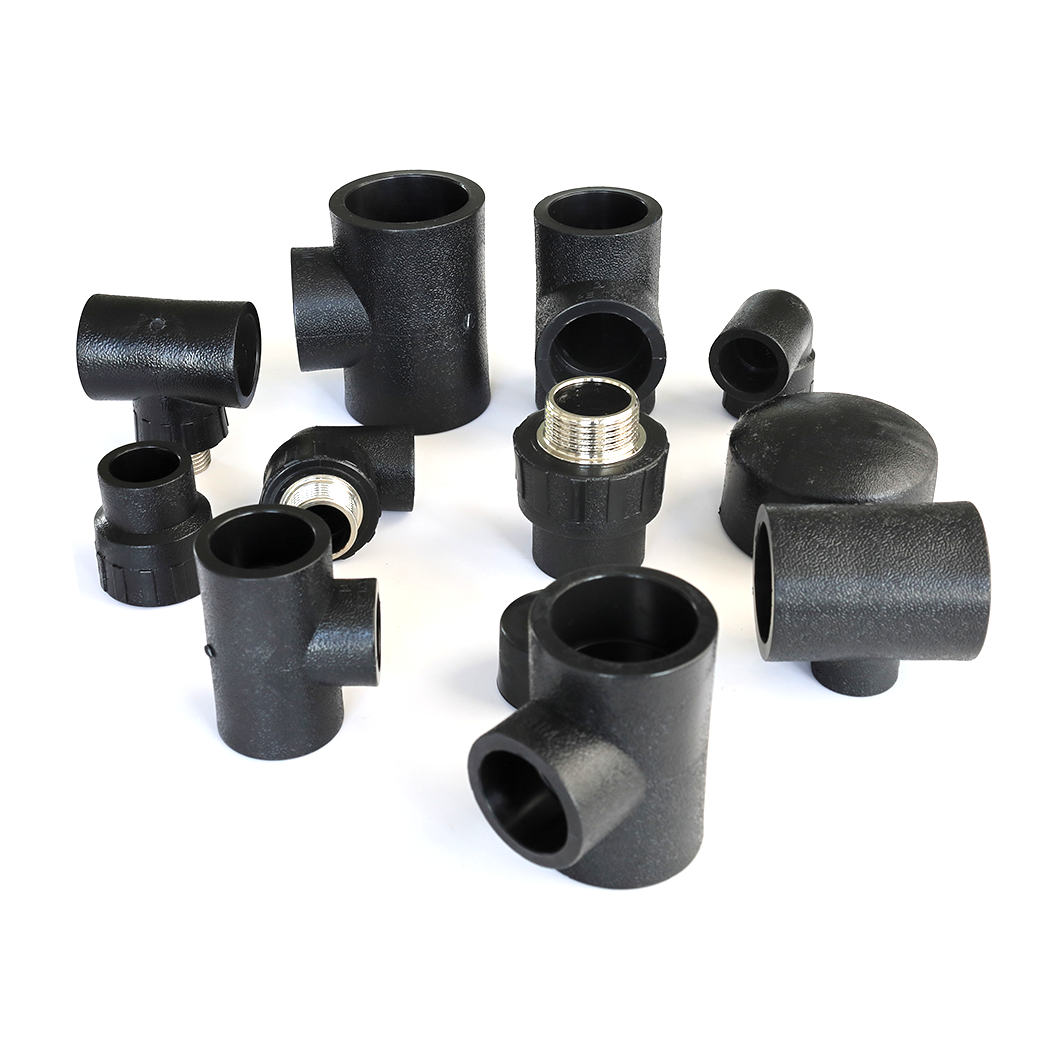
How electrofusion fittings differ from other joining methods
| Joining Method | How It Works | Strength | Best Use Case |
| Electrofusion | Internal heating coils melt fitting + pipe | Very high | Gas, water, tight spaces |
| Butt Fusion | Pipe ends melted and pressed together | Very high | Large pipes, open space |
| Compression | Mechanical grip seals the joint | Medium | Low-pressure systems |
| Push-Fit | Rubber O-ring + push insertion | Low–Medium | Small, quick repairs |
These differences make electrofusion a dependable choice for critical pipelines where failure is not an option.
How Electrofusion Fittings Work (Step-by-Step)
Embedded Heating Coil Technology Explained
Inside every electrofusion fitting, you’ll find a set of resistance wires or copper coils. When the fusion machine sends power through these coils, they heat up evenly. That heat melts both the inside of the fitting and the outside surface of the pipe. Because the coils sit inside the fitting, the heat is controlled and uniform, which helps create a strong, reliable bond.
How the heating coil works
Coils warm the fitting from the inside
Pipe and fitting melt at the same rate
Molten material flows together to form a seal
The Fusion Cycle
The electrofusion process follows four simple but important steps:
Pipe surface preparation – The outer layer of the pipe is scraped to remove oxidation so it can fuse properly.
Heating – The machine activates the coils, generating heat.
Material melting – Both the pipe and the fitting soften and mix together.
Cooling & solidification – The joint cools down and becomes a single, solid piece.
A good fusion depends on doing each step correctly, especially scraping and cooling.
Electrofusion Machine / ECU Overview
The electrofusion control unit (ECU) powers and manages the entire welding process. It keeps the voltage steady, controls the heating time, and adds safety protections.
What the ECU does
Regulates voltage output
Uses automatic timers based on the fitting’s barcode
Includes safety locks to prevent overheating
Stores weld data for records
Most ECUs are portable, so they work well on job sites with limited space.
Barcode, RFID & QR Code Parameter Control
Most modern fittings come with a barcode, RFID tag, or QR code. When the machine scans it, it automatically loads the right fusion time, cooling time, and voltage settings. This removes guesswork and keeps the weld consistent.
Why it matters
Prevents operator mistakes
Ensures the correct settings for each fitting
Adds traceability for gas and water authorities
These tracking systems help prove that each weld followed the required standards.
Temperature, Voltage & Pressure Requirements
Electrofusion fittings usually operate around 39.5V (may vary by brand). When the coils warm up, the plastic begins to melt and expand. That expansion creates internal pressure, which pushes the molten materials together and forms a strong bond.
Key points
Joint Strength & Molecular Fusion
As the melted materials cool, the pipe and fitting turn into a single, solid structure. This process is called molecular fusion. Because the two parts blend completely, the final joint is often as strong—or stronger—than the original pipe.
Why the joint is so strong
No internal bead inside the pipe
Uniform melt around the entire joint
Solid, one-piece structure created during cooling
This is why electrofusion is trusted for high-pressure gas, water, and industrial pipeline systems.

Complete List of Electrofusion Fitting Types
Electrofusion fittings come in many shapes and sizes, each designed to solve a specific connection problem in HDPE piping systems. They all use the same fusion technology, but their functions vary depending on pipe direction, diameter, pressure rating, or equipment connection needs.
Electrofusion Couplers
Couplers are the most widely used electrofusion fittings. They join two pipe ends together and rely on embedded heating coils to create a seamless, leak-proof connection.
Common types of couplers
Standard couplers: For simple pipe-to-pipe joining.
Long couplers: Provide extra surface area for stronger fusion, ideal for repairs or large diameters.
Repair couplers: Designed to fix damaged pipe sections without cutting long lengths.
Reducer couplers: Connect pipes of different diameters.
| Coupler Type | Best Use Case | Notes |
| Standard | Everyday joining | Most affordable |
| Long | Repair, high pressure | Extra strength |
| Reducer | Diameter change | Smooth transition |
| Repair | Pipe damage | No full pipe removal |
Electrofusion Elbows & Bends
When the pipeline needs to change direction, electrofusion elbows make the turn smooth and controlled. They come pre-angled to keep flow efficient and reduce stress on the piping system.
Options
These fittings help the line navigate buildings, underground routes, and equipment layouts.
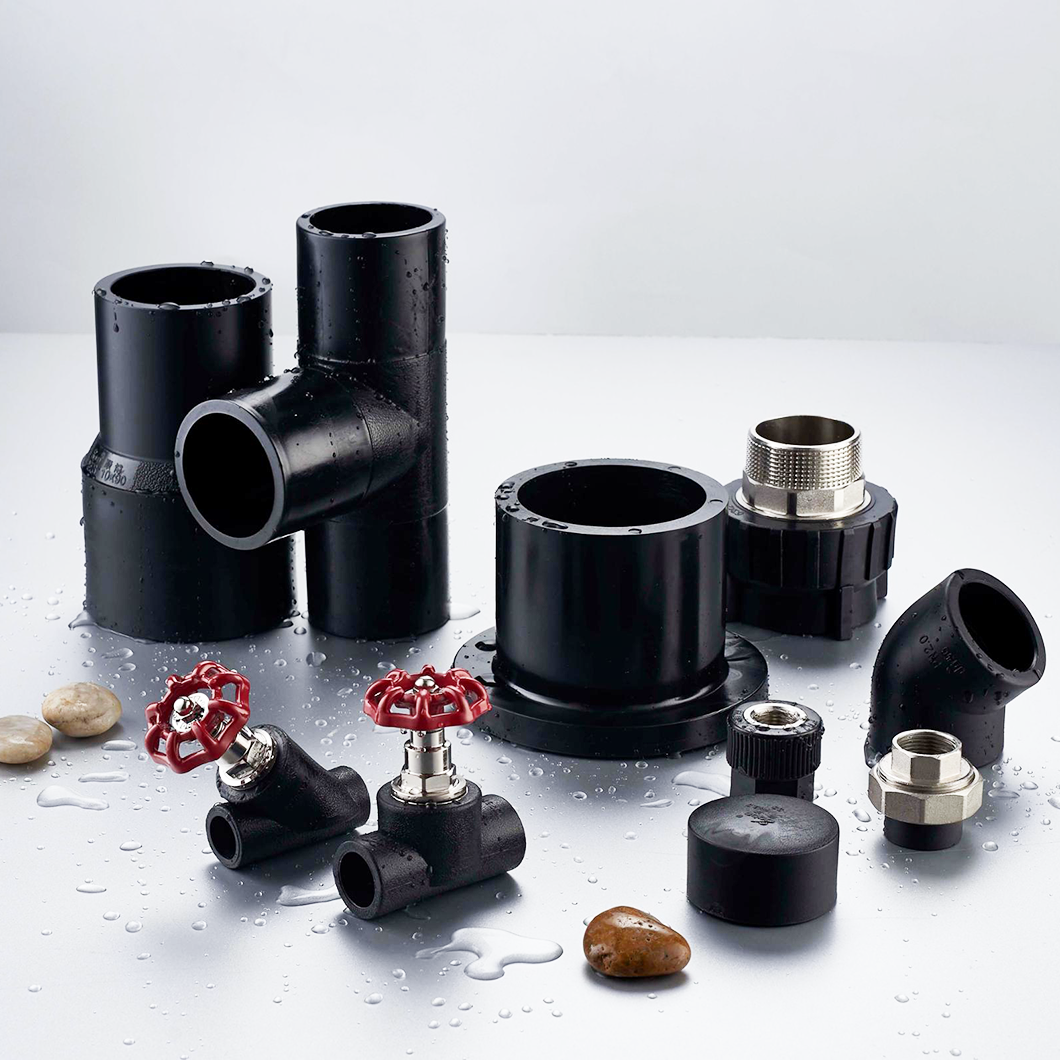
Electrofusion Tees
Tees allow a main pipeline to branch into another direction. They are widely used in gas, water, and industrial systems where multiple lines connect.
Types of tees
Equal tee: All three outlets have the same diameter.
Reducing tee: The branch is smaller than the main pipe.
Tapping tee: Creates a live branch connection without shutting down the pipeline.
Branch saddle: Used when only a single outlet is needed on an existing line.
Branch saddles are common in gas networks because they minimize excavation and allow safe tapping.
Electrofusion End Caps
End caps close off the end of a pipe permanently. They are used to seal unused branches, protect open pipes during construction, or terminate a line safely.
Electrofusion Transition Fittings (PE–Metal)
Transition fittings connect HDPE pipes to metal components such as valves, pumps, steel pipelines, or threaded systems.
They include:
PE-to-steel transitions
PE-to-brass transitions
PE-to-flange connections
These fittings maintain the leak-free performance of electrofusion while allowing mixed-material systems.
Electrofusion Valves & Special Fittings
Some valves come with electrofusion ends built in. This makes installation easier because the valve fuses straight to the HDPE pipe.
Special fittings may include
These help simplify complex piping layouts.
Large-Diameter Electrofusion Fittings
Large-diameter EF fittings are designed for heavy-duty applications such as industrial plants, mining systems, and high-volume water networks.
Key features
These fittings are engineered for demanding environments where durability matters most.
Material Science Behind Electrofusion Fittings
Electrofusion fittings depend on high-grade polyethylene materials to create strong, long-lasting joints. The science behind these materials determines how well the fittings perform under pressure, in harsh environments, and across decades of service. Two materials—PE100 and PE100-RC—lead the industry because they deliver excellent strength, durability, and crack resistance.
Why PE100 & PE100-RC Are Industry Standard
PE100 is the top choice for most modern gas, water, and industrial pipelines. It offers high strength and supports higher pressure ratings without adding extra pipe thickness. PE100-RC is an enhanced version of PE100. The “RC” stands for Resistance to Crack, which means it can handle tough soil conditions, point loads, and installation with reduced sand bedding.
What makes these materials ideal
They resist slow crack growth
They perform well under long-term pressure
They allow thinner, lighter pipes while keeping strength high
PE100-RC is especially valuable in trenchless installations and rocky terrain where pipes face stress from the surrounding environment.
Chemical Resistance
Both PE100 and PE100-RC offer broad chemical resistance. This makes electrofusion fittings reliable for more than just clean water and gas—they also handle chemicals, wastewater, and industrial fluids without corroding.
Compatible applications
Because the material doesn’t react with most chemicals, it stays stable and avoids internal degradation.
Pressure Fatigue Performance
HDPE materials do well under repeated pressure cycles. In pipelines where pumps start and stop often, the pressure rises and falls. PE100 and PE100-RC can handle these fluctuations over decades.
Key advantages
High resistance to creep
Excellent long-term pressure endurance
Predictable performance under PN10, PN16, and PN20 systems
This fatigue strength is one reason electrofusion fittings last 50+ years in many installations.
UV & Environmental Resistance
Electrofusion fittings are designed to survive outdoor conditions, but they still need protection during storage and installation. While HDPE has some UV resistance, long-term sun exposure can still cause surface oxidation.
Environmental considerations
Store fittings in closed bags until installation
Avoid long periods of direct sunlight
Use protective covers for above-ground temporary installations
They tolerate cold, heat, moisture, and soil variations well, which makes them suitable for underground or outdoor job sites.
Electrofusion Fittings vs Other Piping Methods
Electrofusion is one of several ways to join HDPE pipelines, but it stands out because it works reliably in tight spaces, delivers excellent joint strength, and provides full traceability. Below is a clear comparison showing how it performs against other common joining methods.
Electrofusion vs Butt Fusion
Butt fusion melts pipe ends and presses them together, while electrofusion melts the pipe from the inside using heating coils. Both create strong, permanent joints, but they work best in different environments.
Key differences
| Feature | Electrofusion | Butt Fusion |
| Space needed | Works in trenches & confined areas | Needs wide, open space for alignment |
| Equipment complexity | Smaller, simpler ECU | Large butt fusion machine required |
| Internal bead | No internal bead | Creates an internal bead (may affect flow) |
| Traceability | Barcode/RFID logs each weld | Limited data unless separate logger used |
| Best use cases | Gas lines, repairs, tie-ins | Long straight runs, large diameters |
Electrofusion wins when space is tight, the pipe cannot be moved, or documentation is required for safety audits.
Electrofusion vs Compression Fittings
Compression fittings use mechanical parts to grip the pipe. They install fast, but they don’t offer the same long-term strength or pressure rating.
Comparison
Electrofusion provides a permanent, fused joint
Compression fittings rely on O-rings and tightening nuts
Compression works best for low-pressure systems or quick repairs
Electrofusion is preferred for high-pressure water and gas networks
If the goal is leak-free performance for decades, electrofusion is the safer choice.
Electrofusion vs Push-Fit Fittings
Push-fit fittings snap into place without tools, but they have limits. They can’t handle high pressure or long-term underground installations.
Push-fit drawbacks
Lower pressure capability
Rubber seals can wear out
Not recommended for buried or high-risk pipelines
Electrofusion, however, forms a fully welded joint that resists pressure, ground movement, and chemical exposure.
When Electrofusion Is the Only Suitable Choice
Some situations demand electrofusion because no other method delivers the same level of safety, control, or versatility.
Situations that require EF
Repairs: Works even when a pipe can’t be removed or re-aligned
Confined spaces: Perfect for tight trenches, walls, and manholes
Gas networks: Mandatory in many countries due to leak-prevention standards
Live tapping: EF saddles allow branching without shutting down the system
Electrofusion excels in critical infrastructure where failure is not an option.
Applications of Electrofusion Fittings in Different Industries
Electrofusion fittings are used across many industries because they create strong, leak-proof joints that last for decades. Their resistance to corrosion, pressure, and chemicals makes them suitable for almost every type of HDPE pipeline system.
Potable Water Systems (ISO 4427)
In drinking water networks, electrofusion fittings help maintain water purity and prevent leakage. They are fully compliant with ISO 4427, which governs HDPE piping for potable water.
Why they’re ideal
No metal parts that can corrode
Smooth interior reduces bacterial buildup
Leak-free joints reduce water loss
Many cities rely on electrofusion for long-term water distribution because it protects water quality.

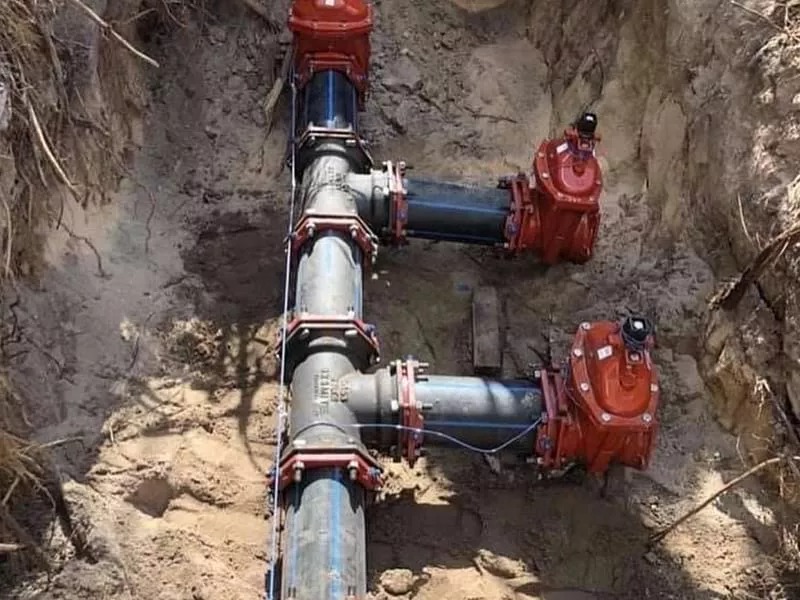
Natural Gas & LPG Networks (ISO 4437)
Gas pipelines require absolute safety, and electrofusion is often the mandatory joining method. These fittings meet ISO 4437, the main standard for gas-grade HDPE systems.
Benefits for gas systems
Gas companies prefer EF because it reduces the risk of leaks in high-pressure lines.
Sewage, Drainage & Wastewater
Wastewater often contains corrosive chemicals, solids, and fluctuating flow rates. Electrofusion fittings resist corrosion and maintain a sealed system even in aggressive environments.
Common applications
Gravity drainage
Pressurized sewage lines
Pumping stations
Since HDPE doesn’t rust or scale, it outperforms metal pipelines in sewage systems.
Industrial Fluids & Chemical Processing
Industries handling chemicals rely on electrofusion because HDPE has excellent chemical resistance. It can carry acids, alkalis, and industrial effluents without degrading.
Use cases
The fittings stay stable even when exposed to harsh liquids over long periods.
Mining & Slurry Handling
Mining sites use HDPE pipelines to move abrasive slurry and tailings. Electrofusion fittings work well here because they form smooth joints with no internal bead.
Advantages
The durability of PE100 and PE100-RC makes EF ideal for mining lines exposed to ground movement.
Fire Fighting & High-Pressure Lines
Fire systems depend on pipes that can handle sudden pressure surges. Electrofusion fittings can be used in PN16 or PN20 lines for firefighting networks.
Why EF works here
Facilities like warehouses and industrial plants often use HDPE + EF fittings for fire mains.
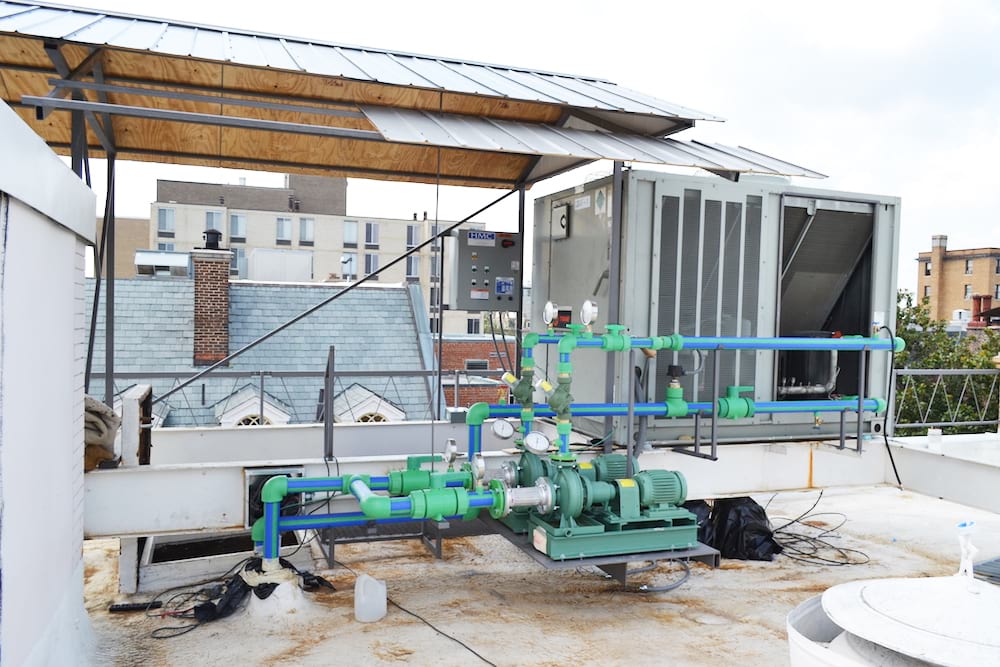
HVAC, Geothermal & District Cooling
Modern energy systems rely heavily on HDPE pipelines. Electrofusion fittings help create closed-loop systems that move chilled or heated fluids.
Typical applications
They handle temperature changes well without cracking, making them ideal for thermal systems.
Electrofusion Installation Guide (Expert-Level)
Proper installation is the key to a strong, long-lasting electrofusion joint. Even the best fittings will fail if the pipe isn’t prepared correctly or the fusion cycle is interrupted. Below is an expert-level guide based on industry standards and best practices used in gas, water, and industrial networks.
Tools & Equipment Needed
A successful electrofusion weld requires the right tools. Each tool plays a role in preparing the pipe, maintaining alignment, or controlling the fusion process.
Essential tools
Pipe cutters – Create clean, square pipe ends.
Scrapers/rotary peelers – Remove the oxidized surface layer.
Re-rounders – Correct pipe ovality before fusion.
Alignment clamps – Hold pipes and fittings steady.
ECU (Electrofusion Control Unit) – Powers and controls the weld cycle.
Generator – Provides stable voltage when working on remote sites.
Without these tools, the weld may not achieve the pressure or temperature needed for a reliable joint.
How to Scrape Pipes Correctly
Scraping is one of the most critical steps. Every HDPE pipe develops an oxidation layer from sunlight and air exposure. This layer prevents the molten material from bonding properly, so it must be completely removed.
Scraping rules
Remove a uniform layer across the entire fusion zone.
Use a rotary scraper or mechanical peeler for consistent depth.
Do not use sandpaper, metal files, or grinding tools.
Avoid touching the scraped area with your hands to prevent contamination.
Sandpaper damages the material and creates uneven surfaces, leading to weak or failed joints.
Alignment, Clamping & Ovality Correction
Pipes can deform during storage, transport, or burial, making them slightly oval. If the pipe isn’t perfectly round, the joint can't build the pressure needed during the melt phase.
Best practices
Use re-rounders on every joint, especially in larger sizes.
Clamp both sides of the fitting to prevent movement.
Ensure the pipe pushes fully into the socket until it reaches the inner stop.
Check alignment visually before starting the ECU cycle.
Movement during fusion is one of the biggest causes of joint failure.
Fusion Parameters & Timing
Every electrofusion fitting comes with preset parameters, which are read by the ECU through a barcode, QR code, or RFID tag. This ensures the correct voltage, heating time, and cooling time.
What to verify before fusion
Voltage output matches the fitting’s requirements (commonly ~39.5V).
Fusion time automatically loads on the ECU screen.
Both pipe ends are clamped and stable.
No water, dust, or oil is inside the fitting.
The machine will run the heating cycle automatically. Operators should monitor the process but never interrupt it.
Cooling Requirements
Cooling is just as important as heating. During this phase, the joint solidifies and forms its full strength.
Cooling rules
Do not move the pipe or the fitting until cooling time ends.
Follow the manufacturer’s cooling time (may range from minutes to hours).
Avoid splashing water on the joint or exposing it to strong heat.
Movement during cooling can cause invisible cracks or stress points.
Environmental Factors
Weather and site conditions can affect the fusion quality. HDPE reacts to temperature and moisture, so the welding environment must be controlled.
Impact of environmental conditions
Wind: Cools the joint too quickly, risking incomplete fusion.
Rain: Water inside the fitting can cause weld failure.
Temperature: Extreme cold or heat alters melt behavior.
Sunlight: Heats one side of the pipe unevenly.
Humidity: Moisture can contaminate the fusion zone.
Many installers use protective tents or shields to create stable welding conditions.
Field Installation Checklist
A quick checklist helps teams avoid common mistakes and ensures consistency.
Before welding
During welding
After welding
Observe full cooling time
Record weld data (barcode, time, operator)
Inspect visually before burying or pressure testing
Common Electrofusion Welding Errors & How to Avoid Them
Even though electrofusion technology is designed to be reliable, small mistakes during installation can cause leaks or failed joints. Most errors come from improper preparation, contamination, or unstable fusion conditions. Below are the most common issues installers face—and how to avoid them.
Contamination
Contamination is the number one reason electrofusion joints fail. Anything on the pipe surface can prevent the molten PE from bonding properly.
Common contaminants
How to avoid it
Keep fittings sealed in their bag until the moment of use.
Clean pipes with approved alcohol wipes.
Never touch the scraped surface with your hands.
Work under a tent or cover to reduce airborne dust.
Incomplete Scraping
If the oxidation layer isn’t removed completely, the pipe and fitting cannot fuse. Even a small patch of un-scraped material can cause a weak point.
Avoid this by
Using a rotary scraper for uniform removal
Scraping the entire fusion zone, not just a strip
Double-checking visually before inserting the pipe
Pipe Ovality
Pipes stored outdoors or buried for long periods can deform slightly. Ovality prevents the fitting from gripping the pipe evenly and stops proper melt pressure from forming.
Best practices
Use re-rounders on every joint
Inspect the pipe end before inserting
Avoid forcing oval pipe into the fitting
Poor Clamping / Movement During Fusion
If the pipe moves during heating or cooling, the joint may crack internally. This damage can be invisible but leads to leaks later.
How to prevent movement
Always use alignment clamps
Keep the pipe fully supported
Follow the “Do Not Move” rule during cooling
Movement during cooling is one of the biggest hidden risks in electrofusion work.
Damaged Heating Coil
A damaged or bent heating coil inside the fitting will produce uneven heat. This causes weak fusion zones or incomplete melting.
Prevent coil damage by
Inspecting fittings visually before use
Keeping fittings in protective packaging
Discarding fittings with visible coil deformation
Incorrect Voltage / Bad Generator
Electrofusion machines rely on stable voltage. A weak or unstable generator can interrupt the cycle or overheat the fitting.
Avoid voltage problems
Use a generator with stable output
Check cables and connectors
Verify voltage requirements match the fitting
Some ECUs display warnings if power supply fluctuates.
Overheating & Over-Melting
Too much heat causes the PE material to degrade, bubble, or deform. Over-melting often occurs when parameters are entered manually instead of being scanned.
Prevention
Use barcode, QR, or RFID scanning
Avoid repeating a fusion cycle on the same fitting
Make sure the ECU is calibrated
Failed Fusion Indicators & Troubleshooting
When something goes wrong, the system usually gives clues.
What to look for
ECU error codes (e.g., low voltage, high temperature)
Uneven melt indicators on the fitting
Burn marks, bubbles, or deformed ends
No visible expansion in the fusion zone
If a fusion fails:
These steps help ensure long-term safety and leak-free performance.
Electrofusion Joint Inspection, Testing & Quality Assurance
A welded electrofusion joint must be verified before the pipeline is buried, pressurized, or put into service. Proper inspection and testing help confirm that the fitting fused correctly, met all required standards, and will perform safely for decades. Most utilities—especially gas and water authorities—require strict documentation and traceability before approving any installation.
Visual Inspection
Before pressure testing, every joint should be checked visually. This helps catch problems early and ensures the fusion cycle completed as expected.
What to look for
Even, symmetrical melt indicators (if included on the fitting)
No burn marks, bubbles, or deformation
Pipe fully inserted to the internal stop
Clean, uniform fusion zone
No gaps between pipe and fitting
A quick visual check can often reveal alignment issues or contamination problems.
Hydrostatic & Pneumatic Testing
Once the joint passes visual inspection, the pipeline must be pressure-tested. This confirms the weld strength and identifies any hidden leaks.
Hydrostatic testing (water pressure)
Common for water and industrial pipelines
Typically involves filling the line with water and pressurizing it to a specified level
Safe, stable, and widely accepted
Pneumatic testing (air or gas pressure)
Used when hydro testing is not possible
Requires strict safety protocols because compressed air stores energy
Often used in gas networks with regulatory oversight
Both tests check the integrity of the entire system, not just the electrofusion joints.
Data Logging, Traceability & Recordkeeping
One advantage of electrofusion is its built-in traceability. Most ECUs store or print weld data automatically.
Data typically recorded
This information helps utilities verify that each joint was fused correctly and according to manufacturer instructions.
Benefits of data logging
Documentation for Gas & Water Authorities
Regulated industries—especially gas—require formal weld documentation. Many countries and regions enforce strict rules before pipeline commissioning.
Common required documents
Weld logs from the ECU
Visual inspection reports
Pressure test certificates
Fitting batch certificates
Installer qualification records
Some utilities will not approve a pipeline unless every electrofusion joint is documented.
Safety Joint Regulations
Safety joints in gas systems must meet higher standards because a failed joint could cause serious hazards. Many regions specify:
Mandatory use of PE100 or PE100-RC fittings
Full traceability for each weld
Approved fusion machines only
Strict guidelines for fusion time, cooling time, and environmental conditions
Following these rules ensures that the system meets national and international safety requirements (ISO, EN, ASTM) for long-term performance.
Standards & Certifications for Electrofusion Fittings
Electrofusion fittings must meet strict international standards to guarantee safety, performance, and long-term durability. These standards define material quality, pressure capability, manufacturing tolerances, and testing procedures. Most water and gas authorities require fittings to be certified before they can be installed in regulated networks.
ISO, EN, ASTM Standards
Several global standards govern how electrofusion fittings and HDPE pipes must be designed and tested. Each one focuses on a specific application such as potable water, gas distribution, or general polyethylene performance.
Key standards
ISO 4427 – HDPE piping systems for potable water
ISO 4437 – HDPE gas distribution systems
ASTM F1055 – Specification for electrofusion fittings used with PE piping
EN 1555 – PE systems for gas
EN 12201 – PE systems for water and sewerage
These documents specify everything from material grades to dimensional accuracy, fusion performance, and long-term pressure testing.
SDR & PN Compatibility
Electrofusion fittings must match the pipe’s SDR (Standard Dimension Ratio) and PN (Pressure Nominal) rating. This ensures the joint can handle the same pressure as the pipeline.
Compatibility rules
Fittings generally support SDR 11, SDR 13.6, SDR 17, SDR 21
Pressure ratings must correspond (PN10, PN12.5, PN16, PN20)
PE100 and PE100-RC materials provide higher pressure capability
Using a fitting with the wrong SDR or PN class can reduce system safety.
Certification Bodies
Most countries require fittings to be tested and certified by an accredited body. Certification ensures the product was manufactured with approved materials and passes mechanical, thermal, and pressure tests.
Common certification bodies
WRAS (UK) – Approved for potable water
DVGW (Germany) – Gas and water certification
KIWA (Netherlands) – PE fittings quality control
GASTEC – Gas systems safety verification
NSF (USA) – Drinking water system certification
Authorities often reject fittings that lack proper certification labels.
Material Grade Verification
Because electrofusion relies on molecular bonding, the material quality must be consistent. The most commonly accepted grades are PE80, PE100, and PE100-RC.
Material verification includes
Confirming resin grade (PE100/PE100-RC)
Checking manufacturer batch certificates
Verifying carbon black content for UV protection
Ensuring melt flow index and density meet ISO requirements
Material traceability helps guarantee that the fitting will perform safely throughout its lifespan.
Electrofusion Fitting Sizes & Technical Specs
Electrofusion fittings come in many sizes and pressure grades so they can match the full range of HDPE pipeline requirements. Their dimensions, wall thickness, and heating coil design all influence how well the joint performs under pressure, temperature changes, and long-term stress.
Diameter Ranges (20mm–1200mm)
Most electrofusion fittings cover standard pipe diameters from 20mm up to 1200mm, making them suitable for domestic, municipal, and industrial systems.
Common diameter categories
Small sizes (20–63mm): Service lines, irrigation, small branch connections
Medium sizes (75–315mm): Water distribution and gas networks
Large sizes (355–630mm): Municipal pipelines, industrial transport
Extra-large (710–1200mm): Mining, district cooling, large water mains
Bigger fittings often require reinforced coils and extended fusion times to ensure a full bond.
SDR / Wall Thickness Requirements
Fittings must be compatible with the pipe’s SDR (Standard Dimension Ratio), which determines wall thickness. The thicker the pipe, the lower the SDR number.
Typical compatible SDRs
SDR 11 – High pressure
SDR 13.6 – Medium pressure
SDR 17 – Common for water mains
SDR 21 / SDR 26 – Low-pressure systems
A fitting must match the pipe’s outside diameter, but the wall thickness influences how well it melts and forms pressure inside the joint.
Pressure Classes (PN10, PN16, PN20, PN25)
Electrofusion fittings come with pressure ratings (PN) that match the pipeline’s operating pressure.
Pressure ratings
| PN Class | Typical Use |
| PN10 | Low-pressure water, drainage |
| PN16 | Municipal water, gas distribution |
| PN20 | High-pressure industrial systems |
| PN25 | Specialized high-stress pipelines |
PE100 and PE100-RC fittings handle higher PN classes more easily due to their superior strength.
Heating Coil Design Variations
Not all electrofusion fittings use the same coil design. The coil impacts how the fitting heats, melts, and bonds with the pipe.
Common coil variations
Fully exposed coils: Faster heat transfer, common in repair couplers
Semi-embedded coils: Protected from physical damage
Deep coil patterns: Used in large-diameter fittings for uniform melting
Multi-zone coils: Provide controlled heating in stages
These coil designs help ensure consistent fusion across all sizes, even large pipes where uneven heating can cause weak spots.
Electrofusion for Gas vs Water Projects
Electrofusion fittings are used in both gas and water pipelines, but the requirements for each system are very different. Gas lines demand maximum safety and strict documentation, while water systems focus more on leak prevention and long-term durability. Understanding how the requirements change helps teams choose the right fittings, tools, and installation methods.
Safety Requirements
Gas networks operate under far stricter safety rules because even a tiny leak can lead to serious hazards. Electrofusion is preferred because it creates a fully welded, leak-proof joint with no weak mechanical parts.
Gas pipeline safety priorities
Zero leak tolerance
Strong fusion bond, verified by melt indicators
High-pressure resistance (often PN16 or higher)
No open flames or hot plates used during welding
Water systems also need reliable joints, but the safety margin is less extreme. Water lines typically focus on preventing leakage, protecting water quality, and maintaining pressure stability.
Water pipeline safety priorities
Long-term leak resistance
Smooth internal flow path
Corrosion-free joints
Compliance with potable water standards (ISO 4427)
Regulatory Approvals
Both gas and water fittings must meet international standards, but gas fittings go through additional approval steps due to their higher risk level.
Gas fittings often require certification from:
These certifications confirm the fitting meets strict performance rules for pressure, temperature range, and long-term durability.
Water fittings typically require:
WRAS
NSF
ISO 4427 compliance
Water authorities focus on safety for human consumption, ensuring the material does not contaminate potable water.
Mandatory Traceability for Gas
Traceability is one of the biggest differences between gas and water projects. Gas utilities require proof that every joint was fused correctly and safely.
What gas traceability includes
Barcode or RFID scan for every fitting
Automatic weld data logging (voltage, time, operator, date)
Batch number and material certification
Recorded cooling time and installation conditions
This data is often stored digitally and submitted to gas authorities before the system is approved.
Water projects may use traceability as well, but it is usually optional rather than mandatory. Gas, however, requires full documentation for each weld to maintain network safety and regulatory compliance.
Cost of Electrofusion Fittings & Installation
The cost of an electrofusion system depends on more than just the price of the fittings. While EF fittings are often more expensive than other connection methods, they offer lower failure rates, shorter installation times in tight areas, and far better long-term reliability. Understanding the full cost picture helps you choose the most economical option for your project.
EF vs Butt Fusion vs Compression: Full Cost Comparison
Different connection methods come with different equipment needs, labor requirements, and long-term performance levels.
| Joining Method | Material Cost | Equipment Cost | Labor Skill | Long-Term Reliability | Best Use |
| Electrofusion | Medium–High | Medium | Moderate | Very high | Gas, water, repairs, tight spaces |
| Butt Fusion | Low | High (large machine) | High | Very high | Large straight runs |
| Compression | Low | None | Low | Medium | Low-pressure, temporary setups |
Why EF is often cheaper overall
Faster installation in confined spaces
No need for large fusion machines
Lower rework and repair rates
Full traceability avoids compliance issues
Even if the fittings cost more upfront, the lower risk of leakage makes EF attractive for gas and water authorities.
What Affects Fitting Price
Electrofusion fittings vary widely in price depending on design, size, and certification.
Factors that influence cost
Diameter: Larger fittings (400mm+) cost significantly more
Type: Tees, elbows, and saddles cost more than couplers
PE material grade: PE100-RC fittings are more expensive than PE100
Coil design: Multi-zone or reinforced coils cost extra
Certifications: WRAS, DVGW, KIWA, NSF add to factory cost
Brand reputation: Trusted brands carry premium pricing
A 63mm coupler may cost only a few dollars, while a 400mm or 1200mm tee can cost hundreds or even thousands.
Equipment & Machine Rental Costs
An electrofusion setup requires an ECU (fusion machine) and sometimes extra tools, but rental options keep costs manageable.
Typical rental costs
ECU machine rental: Low–moderate
Re-rounders: Usually rented for large-diameter installations
Clamps & alignment tools: Often inexpensive to rent
Generators: Needed for remote site power
Compared to butt fusion—where machines can be very expensive—EF equipment has a lower entry cost.
Long-Term Total Cost of Ownership (TCO)
The real savings of electrofusion come from long-term performance. Because the joints are permanent and leak-proof, maintenance and repair costs remain extremely low.
TCO advantages
Reduced water loss in municipal networks
Fewer leaks in gas lines (improved safety)
Less downtime and fewer emergency repairs
Compliance with modern documentation requirements
50–100 year service life when installed correctly
When viewed over the lifespan of a pipeline, electrofusion is often the most economical option—especially for critical systems.
How to Choose the Right Electrofusion Fittings
Choosing the correct electrofusion fitting is essential for building a safe, durable, and efficient HDPE pipeline system. The right fitting must match the pipe, the environment, and the project’s regulatory requirements. Below are the key factors to consider before making a selection.
Based on Pipe Size & SDR
Every electrofusion fitting must match the pipe’s outer diameter and be compatible with its SDR (Standard Dimension Ratio).
What to check
Confirm the exact pipe diameter (20mm–1200mm).
Verify that the fitting supports the pipe’s SDR class (SDR 11, 13.6, 17, 21).
Make sure the fitting can generate enough melt pressure for thick-walled pipes.
If the SDR doesn’t match, the joint may not fuse evenly.
Based on Industry Requirements
Different industries have strict rules on which fittings are acceptable. Gas networks, potable water lines, and industrial chemical systems all require specific certification levels.
Industry-specific needs
Gas: Must meet ISO 4437 + DVGW/GASTEC approvals.
Potable water: WRAS/NSF certification + ISO 4427 compliance.
Chemicals: Use PE100 or PE100-RC with high chemical resistance.
Mining & slurry: Prefer large-diameter, reinforced-coil fittings.
The fitting should match the pipeline’s pressure rating (PN10–PN25).
Environmental & Soil Conditions
The installation environment affects how well the fitting performs over time. Soil type, temperature, and buried depth all matter.
Consider environmental factors
Rocky soil: PE100-RC fittings resist slow crack growth.
High temperatures: Ensure fittings have stable thermal performance.
Cold climates: Choose fittings tested for low-temperature fusion.
Deep burial or unstable soil: Larger couplers or reinforced fittings work better.
Harsh environments demand tougher materials and stronger coil designs.
Installation Crew Skill Level
Some fittings require more operator expertise. If the crew is less experienced, it’s safer to choose fittings designed to reduce human error.
Examples
Fittings with RFID or barcode control help avoid incorrect parameter entry.
Longer couplers give more forgiveness during alignment.
Pre-scraped or “integrated” fittings simplify preparation.
The easier the fitting is to install, the lower the risk of weld failure.
Budget vs Compliance
While budget is important, compliance and safety should come first—especially in gas networks and potable water systems.
Balance cost and requirements
PE100-RC fittings cost more but last longer and reduce repair risks.
Certified fittings help pass inspections and avoid project delays.
Lower-cost fittings may not meet utility approval standards.
Choosing the correct certification level ensures the system meets regulatory and safety requirements without expensive rework later.
Storage, Handling & Transportation Requirements
Electrofusion fittings may look tough, but their performance depends heavily on how well they’re protected before installation. The heating coils, PE material, and fusion surfaces must stay clean and undamaged. Proper storage and handling prevent hidden defects that could cause joint failure later.
Protecting Heating Coils
The internal heating coils are the most sensitive part of the fitting. Any bending, impact, or contamination can cause uneven heating during fusion.
Best practices
Keep fittings inside their sealed bags until installation.
Avoid dropping or stacking heavy items on top of fittings.
Inspect the coil area visually before use.
Store fittings in clean, dry containers to prevent dust buildup.
A damaged coil produces incomplete melting, which leads to weak joints.
UV Exposure Limits
HDPE is resistant to sunlight, but prolonged UV exposure can cause surface oxidation. This weakens the fusion zone and makes scraping more difficult.
UV protection tips
Store fittings indoors or under shade.
Keep them inside sealed packaging.
Avoid long-term outdoor exposure before installation.
If exposure occurred, check for discoloration and scrape thoroughly.
Short-term exposure is usually fine, but months of sunlight can degrade the material.
Temperature Requirements
HDPE material reacts to extreme temperatures. Cold weather makes it stiff and harder to round, while high heat softens the surface and affects fusion behavior.
Recommended temperature guidelines
Store fittings between 5°C and 40°C (41°F–104°F).
Avoid freezing temperatures that can make fittings brittle.
Keep fittings cool and shaded in hot climates.
Allow fittings to acclimate to ambient temperature before fusion.
Stable temperature ensures consistent melt and cooling performance.
Packaging & Transport Rules
Proper packaging protects the fittings from dirt, moisture, and mechanical damage during shipment.
Transportation guidelines
Transport in sealed bags or boxed cartons.
Keep fittings away from fuel, chemicals, and oil during transit.
Load fittings in a way that prevents crushing.
Avoid mixing fittings with sharp metal tools or pipes.
Clean, protected fittings reduce the risk of contamination during installation.
Advanced Technology Trends in Electrofusion
Electrofusion is becoming smarter, safer, and more automated thanks to rapid advances in digital technology. Modern pipeline projects demand full traceability, easier installation, and fewer human errors, and new EF innovations are designed to meet those expectations. These upgrades help installers work faster while keeping quality consistently high.
Smart Electrofusion Fittings (RFID / Sensors)
Many new electrofusion fittings come with built-in RFID chips or smart sensors. These features allow the ECU to automatically identify the fitting and load the correct welding parameters.
What smart fittings can do
Store fusion data inside the fitting
Communicate with welding machines via RFID
Prevent incorrect parameter selection
Track batch numbers and installation dates
Some advanced fittings even include temperature sensors that monitor heating conditions in real time.
Automated & AI-Assisted Welding Machines
Electrofusion control units (ECUs) are becoming more automated. AI-assisted systems help reduce operator mistakes and adjust for environmental conditions.
Machine upgrades include
Automatic voltage regulation
AI-based adjustments for cold or windy weather
Error detection for coil faults or pipe movement
Guided workflows for new installers
These machines make fusion safer and more consistent, especially on large utility projects.
Cloud-Based QC & Data Logging
Cloud platforms are becoming a big part of pipeline quality control. ECUs can now send fusion logs directly to cloud servers.
Cloud-based benefits
Real-time data backup
Remote inspection by supervisors
Long-term project tracking
Digital weld reports accessible anywhere
This eliminates the need for paper records and improves traceability for gas and water networks.
Industry 4.0 Integration
Electrofusion technology is now connecting with broader Industry 4.0 systems. Utilities, contractors, and industries use these tools to automate quality assurance and project management.
Industry 4.0 features
GPS-tagged weld data
Integration with asset management software
Digital twin systems for pipelines
Predictive maintenance alerts
These innovations help create smarter pipeline networks that are easier to monitor and maintain over decades.
Frequently Asked Questions About Electrofusion Fittings
Below are only the questions relevant to Electrofusion Fittings, each answered with technical depth and based on best-practice guidance from the industry and the competitor sources you provided.
Q: Are EF joints stronger than the pipe?
A: Yes. A correctly welded electrofusion (EF) joint forms a monolithic connection where the pipe and fitting melt together at a molecular level. Because the fusion zone often has greater wall thickness and uniform heat distribution, the joint can be equal to or stronger than the pipe itself. This is why EF is used in gas networks where zero-leak tolerance is required.
Q: How long do EF fittings last?
A: When installed correctly, EF fittings typically last 50–100 years, matching or exceeding the lifespan of PE100 pipelines. Their durability is certified through long-term creep, pressure, and fatigue testing under ISO standards. Most utilities consider EF joints “lifetime installations.”
Q: Can EF be used underground?
A: Yes. Electrofusion is designed for underground installations and is one of the safest joining methods for buried water, gas, sewer, and industrial pipelines. PE100 and PE100-RC materials resist soil stress, corrosion, and ground movement.
Q: Are EF joints permanent?
A: Yes. Once fused, EF joints cannot be separated without destroying the pipe. They create a permanent, pressure-rated, leak-proof bond expected to last for decades.
Q: Can EF fittings be reused?
A: No. EF fittings contain single-use heating coils, which deform during fusion. Once the fitting completes a heating cycle, it cannot be reheated or reused.
Q: Which generators are compatible?
A: Generators must provide stable, clean power suitable for EF machines (typically 39.5V output from the ECU). The generator must have:
Proper wattage (usually 3–5 kW minimum, more for large diameters)
Low harmonic distortion
Automatic voltage regulation (AVR)
Unstable generators can cause failed welds or overheat the coils.
Q: Why is scraping mandatory?
A: Scraping removes the oxidized surface layer on PE pipes, which prevents molecular fusion. If not removed, the molten PE cannot bond, causing weak or leaking joints. Sandpaper is not allowed because it smears material and leaves contamination; only mechanical peelers produce a uniform, controlled surface.
Q: How long is cooling time?
A: Cooling time is defined by the fitting manufacturer and stored in the fitting’s barcode or RFID tag. Small couplers may cool in 10–20 minutes, while large-diameter fittings require 30–60 minutes or more. The pipe must not be moved during this entire period or the joint may crack internally.
Q: What temperature is safe for welding?
A: Ideal fusion environment: 5°C to 45°C (41–113°F).
Below 5°C, preheating and tenting are needed.
Above 45°C, cooling and shading are required to prevent overheating.
Environmental controls (wind shields, tents, insulation) are recommended.
Q: What are electrofusion fittings?
A: Electrofusion fittings are specialized HDPE/PE connectors containing embedded electrical heating coils. When energized, the coils heat the pipe and fitting until they melt together, creating a seamless and fully pressure-rated joint.
Q: What is electrofusion used for?
A: Electrofusion is widely used in:
Gas distribution networks
Potable water supply
Wastewater and sewer lines
Industrial chemical transport
Mining slurry lines
Fire safety pipelines
It’s preferred where leak-free joints and high pressure reliability are critical.
Q: What is the difference between heat fusion and electrofusion?
A:
| Feature | Electrofusion | Butt Fusion |
| Heat Source | Internal heating coils | External hot plate |
| Alignment Need | Higher | Moderate |
| Space Requirement | Very small | Large |
| Internal Bead | None | Present |
| Best Use | Confined spaces, repairs, gas | Straight lengths, large pipes |
Electrofusion offers better traceability and safety controls, especially for gas networks.
Q: How does electrofusion work?
A: The ECU energizes the heating coil, creating heat that melts the pipe and fitting. Pressure builds as the material expands, forming a homogeneous, fused joint during cooling.
Q: What size are electrofusion fittings?
A: EF fittings commonly range from 20mm to 1200mm, although custom fittings beyond this range are available for industrial pipelines.
Q: What is the cooling time for electrofusion welding?
A: Cooling time varies by fitting size but is always defined on the fitting barcode. Movement during cooling is strictly prohibited, as it weakens the joint.
Q: Can you fuse a pipe in cold weather?
A: Yes, but only with environmental control. Installers must:
Q: What is electrical fusion?
A: Another term for electrofusion, referring to the electrical heating process used to join PE pipes via embedded coils.
All other questions were excluded because they are not relevant to electrofusion fittings.
If you want, I can convert these Q/A items into a full FAQ section for your article.
Conclusion
Electrofusion fittings offer strong, leak-proof joints that work well in gas, water, and industrial pipelines. They perform best in high-pressure systems, confined spaces, and critical utility projects. Proper scraping, alignment, and cooling are essential for a safe fusion. For long-term reliability, always follow certified standards and use qualified installers for every EF joint.

 English
  العربية
  Français
  Русский
  Español
  Português
  Deutsch
  italiano
  日本語
日本語  한국어
한국어  Nederlands
  Tiếng Việt
  ไทย
ไทย  Polski
  Türkçe
  አማርኛ
አማርኛ  ພາສາລາວ
  ភាសាខ្មែរ
  Bahasa Melayu
  ဗမာစာ
ဗမာစာ  தமிழ்
தமிழ்  Filipino
  Bahasa Indonesia
  magyar
  Română
  Čeština
  Монгол
  қазақ
қазақ  Српски
  हिन्दी
  فارسی
فارسی  Kiswahili
  Slovenčina
  Slovenščina
  Norsk
Norsk  Svenska
  українська
  Ελληνικά
  Suomi
Suomi  Հայերեն
  עברית
עברית  Latine
  Dansk
Dansk  اردو
اردو  Shqip
Shqip  বাংলা
বাংলা  Hrvatski
  Afrikaans
  Gaeilge
  Eesti keel
  Māori
Māori 


