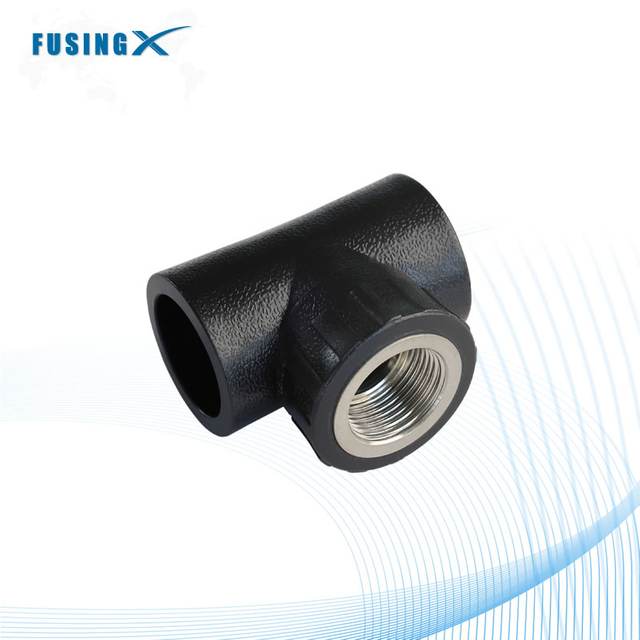
Introduction: What Is an Electrofusion Coupler
Have you ever wondered how water and gas pipelines stay perfectly sealed for decades, even underground? Behind that reliability is a small but powerful component — the electrofusion coupler. This simple-looking fitting plays a major role in connecting polyethylene (PE) pipes with strength and precision.
An electrofusion coupler creates leak-proof, long-lasting joints by using controlled electric heating instead of open flames or glue. Unlike traditional butt fusion or mechanical fittings, it ensures a clean, consistent bond that resists corrosion and pressure for years.
In this post, you’ll learn what an electrofusion coupler is, how it works, and why it’s widely used in water supply, gas distribution, agricultural irrigation, and industrial piping systems around the world.
Structure and Material Composition
A well-designed electrofusion coupler is built to ensure strength, safety, and consistency in every weld. Its structure is carefully engineered to provide reliable fusion between polyethylene (PE) pipes while maintaining mechanical durability and resistance to environmental stress. Let’s take a closer look at the key components that make up this essential fitting.
Main Body – High-Quality PE100 Raw Material
The coupler’s body is made from PE100, a high-density polyethylene grade known for:
Excellent flexibility and resistance to long-term stress
High tensile strength and crack resistance
Corrosion-proof and non-toxic properties suitable for potable water systems
UV and chemical resistance for outdoor and industrial use
This material allows the coupler to perform reliably under high pressure (up to PN16) and temperature variations.
| Property | PE100 Material Value | Benefit |
| Density | ≥ 0.95 g/cm³ | High mechanical strength |
| Pressure Rating | Up to 16 bar (SDR11) | Handles demanding applications |
| Temperature Range | –20 °C to +40 °C | Suitable for harsh environments |
| Expected Lifespan | 50+ years | Long-term durability |
Embedded Copper Wire Heating Coil
Inside each coupler lies a precision-wound copper heating wire that delivers consistent, even heat during fusion.
The coil melts both the inner surface of the coupler and the pipe’s outer layer simultaneously.
Uniform temperature distribution prevents weak points or incomplete fusion.
The embedded design ensures the coil remains protected from moisture and oxidation.
This hidden copper structure is the heart of the electrofusion process — it turns electric energy into molecular bonding strength.
Electrofusion Terminals – Fast and Secure Connection
At each end of the coupler are electrofusion terminals, designed for quick connection to welding cables.
Made from corrosion-resistant metal for strong current transfer
Labeled or barcoded for easy identification of welding parameters
Firmly fixed to prevent movement during the welding cycle
These terminals allow installers to complete precise, repeatable welds without manual temperature adjustments.
Injection-Molded for Precision and Consistent Quality
The entire coupler is injection-molded using advanced tooling and automation to maintain perfect symmetry and wall thickness.
Guarantees uniform fusion pressure along the joint area
Eliminates air pockets and surface irregularities
Ensures dimensional accuracy within ±0.1 mm tolerance
This precision manufacturing process results in fittings that meet international standards such as ISO 4427, EN 12201, and ASTM F1055 — delivering reliable performance across water, gas, and industrial pipe networks.
Working Principle: How Electrofusion Couplers Operate
The electrofusion process is a highly controlled method of joining polyethylene (PE) pipes using heat generated by electricity. Instead of open flames or adhesives, it relies on a clean, automated electrical fusion that ensures leak-proof and long-lasting joints. The process is simple in concept but precise in execution — every step is designed to produce a consistent, strong bond.
1. Electric Current Activation
The process begins when an electrofusion welding machine sends a carefully regulated electric current through the coupler’s embedded copper wire coil.
The machine connects to the coupler’s terminals.
The operator scans a barcode that automatically sets the voltage, current, and welding duration.
The current passes through the resistance wire, generating controlled heat.
| Parameter | Typical Range | Function |
| Voltage | 39–40 V DC | Supplies energy for fusion |
| Heating Time | 30–90 seconds (depending on size) | Melts PE surfaces |
| Cooling Time | 10–20 minutes | Allows molecular bonding to stabilize |
⚡ The automated barcode system prevents human error and ensures each weld meets precise factory parameters.
2. Heat Generation and Material Melting
As the copper wire heats, both the inner surface of the coupler and the outer surface of the pipe begin to soften and melt.
The materials reach their fusion temperature (around 200–220 °C).
The molten polyethylene flows together, eliminating gaps or voids.
No filler materials or adhesives are needed — the joint forms through molecular bonding.
Temperature and Fusion Phases
| Stage | Temperature (°C) | Description |
| Preheat | 50–100 °C | Softens pipe surface |
| Fusion | 200–220 °C | Molten phase forms strong bond |
| Cooling | < 80 °C | Joint solidifies and stabilizes |
3. Formation of the Fusion Zone
During fusion, the melted layers mix and merge to form a homogeneous fusion zone — essentially turning the pipe and coupler into one solid piece.
The molten region cools gradually under pressure.
As it solidifies, it creates a seamless and permanent leak-proof joint.
The embedded wire remains locked inside, adding reinforcement without weakening the connection.
4. Automated Control and Accuracy
Modern systems use a barcode-controlled fusion process to guarantee repeatability and safety.
Each coupler carries a barcode containing welding parameters: time, temperature, and voltage.
The welder scans this code — eliminating guesswork or manual input.
Built-in sensors monitor real-time current flow and temperature stability.
✅ Automation Benefits:
This fusion method ensures every joint achieves the same strength and durability as the pipe itself, making electrofusion the preferred solution for modern HDPE piping systems.
XFusing Technical Specifications
The XFusing Electrofusion Coupler is designed and manufactured with precision to meet international standards for performance, durability, and safety. Each fitting is tested under strict quality control to ensure consistent welding results and long service life in a variety of applications, including water, gas, and irrigation systems.
Technical Parameters Overview
| Model | Diameter Range | Material | Pressure Rating | SDR Class | Voltage | Application |
| Equal Coupler | 90 mm – 110 mm | PE100 | PN16 / SDR11 | SDR11 | 39 – 40 V DC | Water / Gas / Irrigation |
PE100 material ensures high mechanical strength, flexibility, and resistance to environmental stress cracking — ideal for high-pressure HDPE systems.
Compliance and Standards
XFusing’s couplers are fully compliant with major international and national standards, ensuring compatibility with a wide range of HDPE piping systems.
ISO 4427 – Polyethylene piping systems for water supply
EN 12201 – Plastics piping systems for water supply and pressure drainage
GB 15558 – Chinese national standard for gas and water distribution networks
✅ All fittings undergo electrofusion testing and dimensional verification before shipment.
Environmental and Physical Characteristics
| Property | Specification | Benefit |
| Temperature Range | –20 °C to +40 °C | Stable performance in extreme climates |
| Color | Black body with yellow fusion indicator | Easy identification during installation |
| Welding Time | 30–90 s (depending on size) | Fast, efficient fusion cycle |
| Expected Lifespan | 50+ years | Long-term durability and corrosion resistance |
Design Highlights
High-Precision Injection Molding: Guarantees dimensional accuracy and uniform wall thickness.
Embedded Copper Heating Coil: Delivers even heat distribution for consistent fusion.
Integrated Fusion Indicator: Yellow marker shows when welding is complete.
Barcode Identification: Enables automated control of voltage and heating time.
These technical specifications demonstrate XFusing’s commitment to quality, safety, and reliability in every electrofusion coupler produced.
Types of Electrofusion Couplers

Electrofusion couplers come in multiple forms to suit a wide range of pipe connection needs. Each type is designed for specific functions such as joining, branching, reducing, or redirecting polyethylene (PE) pipelines. Understanding these types helps installers and engineers choose the right fitting for their system to ensure performance, safety, and cost efficiency.
1. Equal Coupler
An Equal Electrofusion Coupler is the most common type used in PE pipe systems.
It connects two pipes of the same diameter, forming a straight and leak-free joint.
Features:
Suitable for both water and gas distribution networks
Available in multiple sizes (20 mm to 400 mm)
High pressure rating — up to PN16 (SDR11)
Ideal for pipeline extensions or repairs
| Application | Pipe Diameter Range | Pressure Rating | Material |
| Water / Gas | 20–400 mm | PN10–PN16 | PE100 |
2. Reducing Coupler
A Reducing Electrofusion Coupler connects two pipes of different diameters.
It’s useful when transitioning between main and branch lines or when system pressure requires a smaller flow path.
Advantages:
Provides smooth flow transition between pipe sizes
Minimizes turbulence and energy loss
Suitable for both SDR11 and SDR17 systems
| Example | Connection Type | Common Use |
| 110 mm × 90 mm | Main to branch line | Pressure control or downsizing |
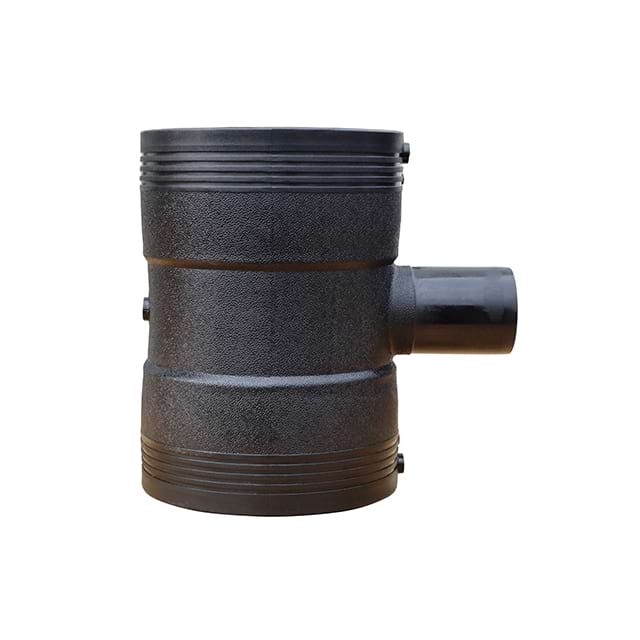
3. Electrofusion Tee / Elbow / Flange Adapter
Beyond straight couplers, electrofusion technology supports a variety of directional and branching fittings:
| Type | Function | Typical Application |
| Tee | Creates a branch line from the main pipeline | Water or gas distribution |
| Elbow (45° / 90°) | Changes flow direction smoothly | Tight installation spaces |
| Flange Adapter | Connects PE pipe to metal flanged systems | Pump or valve connections |
Key Benefits:
Enables complex network layouts
Maintains strong, leak-free joints at all angles
Compatible with automated welding equipment
These fittings make electrofusion systems highly flexible — suitable for both underground and industrial installations.
4. PP Electrofusion Coupler
The PP (Polypropylene) Electrofusion Coupler is designed for chemical or non-potable applications where higher chemical resistance is required.
Key Characteristics:
Made from polypropylene material (PP) instead of PE100
Resistant to acids, alkalis, and industrial solvents
Ideal for chemical drainage, laboratory pipelines, and wastewater systems
Lightweight yet durable with similar welding performance
| Parameter | PP Electrofusion Coupler | PE100 Electrofusion Coupler |
| Material | Polypropylene (PP) | Polyethylene (PE100) |
| Chemical Resistance | Excellent | Good |
| Temperature Range | –10 °C to +60 °C | –20 °C to +40 °C |
| Main Use | Chemical / Industrial | Water / Gas / Irrigation |
By selecting the appropriate type of electrofusion coupler, engineers can ensure optimal system design, reduce maintenance costs, and enhance overall pipeline reliability.
How to Choose the Right Coupler (Buyer’s Selection Guide)
Selecting the right electrofusion coupler is crucial for ensuring safety, efficiency, and compatibility in your piping system. With multiple standards, colors, and diameters available, understanding how to choose the correct fitting helps you avoid costly installation errors and guarantees long-term performance. Below is a practical guide for buyers, engineers, and installers.
1. Select by Pipe Diameter
The first step is to identify the outer diameter (OD) of the polyethylene (PE) pipes you’re joining.
Electrofusion couplers are available in a wide range — typically from 20 mm to 400 mm — to suit domestic, commercial, and industrial pipelines.
| Pipe Diameter (mm) | Application | Recommended Type |
| 20–63 mm | House / Small utility line | Equal Coupler |
| 75–160 mm | Municipal water or gas | Equal / Reducing Coupler |
| 180–400 mm | Industrial or irrigation systems | High-pressure SDR11 Coupler |
Always ensure that the coupler’s internal diameter precisely matches the pipe’s external diameter for a leak-proof fit.
2. Choose the Correct SDR and Pressure Rating
The SDR (Standard Dimension Ratio) defines the pipe wall thickness and determines the system’s pressure rating.
When choosing an electrofusion coupler, match its SDR rating to that of the pipes being joined.
| SDR Class | Pressure Rating (PN) | Common Use |
| SDR 11 | PN16 (up to 16 bar)** | Gas, high-pressure water |
| SDR 17 | PN10 (up to 10 bar)** | Low-pressure or drainage systems |
✅ Rule of thumb: Use SDR 11 for pressurized water and gas lines, and SDR 17 for gravity-fed or low-pressure applications.
3. Identify the Application by Color Code
Color coding helps quickly identify the purpose of each coupler and ensures correct usage:
| Color | Application | Description |
| Yellow | Gas distribution | Indicates gas-rated material and pressure class |
| Black | Water supply | Most common color for potable water and irrigation |
| Blue stripe | Potable water | Safe for drinking water systems |
| Orange or Red | Industrial use | Designed for chemical or wastewater systems |
⚠️ Never mix fittings of different colors or standards across applications. This could compromise pipeline safety and compliance.
4. Match Welding Parameters to Your Machine
Modern electrofusion couplers are designed with barcodes or RFID tags that contain their welding parameters — voltage, time, and cooling duration.
Before welding:
Ensure your electrofusion welding machine supports automatic barcode scanning.
Match machine output voltage to 39–40 V DC as specified by the coupler manufacturer.
Always verify ambient temperature, as extreme heat or cold may affect fusion results.
| Parameter | Typical Setting | Purpose |
| Voltage | 39–40 V DC | Energy input for heating coil |
| Fusion Time | 30–90 seconds | Depends on diameter and SDR |
| Cooling Time | 10–20 minutes | Stabilizes the joint after welding |
Tip: Always follow the manufacturer’s barcode settings. Manual adjustment should only be performed if the welding machine or coupler lacks barcode data.
5. Quick 3-Step Buyer’s Checklist
Confirm Pipe Compatibility → Match coupler diameter and SDR rating.
Verify Application Type → Choose correct color-coded coupler for gas, water, or irrigation.
Check Welding Equipment → Ensure the fusion machine meets voltage and barcode specifications.
Following this guide ensures you select the right electrofusion coupler for your project — maximizing performance, safety, and durability in every connection.
Advantages of XFusing Electrofusion Couplers
XFusing’s electrofusion couplers are engineered to deliver outstanding performance, durability, and ease of installation across various piping systems. Manufactured with advanced PE100 material and precision molding, these fittings are trusted by contractors and utility companies worldwide for their proven reliability and long service life.
1. Long Lifespan – 50 Years of Reliable Service
Each coupler is designed to provide over 50 years of service life under standard working conditions.
This longevity is achieved through superior material properties and consistent fusion quality.
Key Features Contributing to Durability:
PE100 raw material resists stress cracking and environmental wear.
Embedded copper coils ensure uniform heating and fusion strength.
Resistant to internal pressure fluctuations and external soil stress.
| Condition | Service Life Expectancy | Standard |
| Water Supply Network | 50+ years | ISO 4427 Certified |
| Gas Distribution System | 40–50 years | EN 12201 Compliant |
| Irrigation and Industrial Use | 45–60 years | Field-Tested Durability |
XFusing couplers are built for decades of continuous performance, minimizing maintenance and replacement costs.
2. 100% Leak-Free, Corrosion-Resistant & UV Stable
Leak prevention and corrosion resistance are central to XFusing’s design philosophy.
Unlike mechanical joints or metal fittings, electrofusion couplers form molecular-level fusion bonds that completely eliminate leakage.
Performance Highlights:
Leak-free joints even under high pressure or vibration.
Corrosion-proof PE100 material, ideal for underground and coastal installations.
UV-stabilized surface, preventing degradation under sunlight exposure.
Perfect sealing performance in gas and water applications.
| Test Type | Result | Standard Reference |
| Pressure Test (PN16) | No leakage after 1000 hrs | ISO 13956 |
| UV Resistance | Stable up to 5000 hrs exposure | ASTM D4329 |
| Chemical Resistance | Excellent against acids and salts | ISO 175 |
The combination of corrosion resistance and UV stability ensures long-term joint integrity even in the harshest environments.
3. Simple, Fast Installation with Barcode Automation
XFusing couplers are equipped with built-in barcodes that automatically communicate welding parameters — voltage, time, and temperature — to the electrofusion machine.
Benefits of Automated Welding:
Reduces operator error and ensures consistent quality.
Cuts installation time by up to 40% compared to manual welding.
Enables traceability with digital welding records.
Installation Steps Overview:
Clean and align PE pipes.
Scan barcode on the coupler.
Press start on the welding machine.
Wait for fusion and cooling cycles to complete.
| Phase | Average Duration | Automation Role |
| Fusion | 30–90 seconds | Voltage & time control |
| Cooling | 10–20 minutes | Indicator alerts completion |
| Verification | Instant | Barcode data record |
⚙️ Barcode automation ensures every weld is performed under factory-defined precision, improving overall system reliability.
4. Excellent Compatibility with Leading HDPE Pipe Brands
XFusing’s electrofusion couplers are designed to be universally compatible with most international HDPE pipe brands, enabling easy integration into new or existing systems.
Compatibility Advantages:
Works seamlessly with HDPE pipes conforming to ISO 4427, EN 12201, ASTM F1055.
Supports both SDR11 (PN16) and SDR17 (PN10) pipes.
Ideal for mixed-brand networks — ensuring reliable fit and fusion.
| Compatible Pipe Brands | Compliance Standard | Country/Region |
| Wavin | EN 12201 | Europe |
| Pipelife | ISO 4427 | Europe / Africa |
| Polypipe | ASTM F1055 | UK / Middle East |
| Agru | ISO 4437 | Global |
XFusing couplers guarantee strong, leak-free joints no matter the brand or region — making them a trusted choice for international projects.
Installation and Welding Guide
Proper installation of an electrofusion coupler ensures a strong, leak-free, and durable joint between polyethylene (PE) pipes. Following the correct welding procedures helps achieve uniform fusion and long-term performance in both water and gas pipeline systems. Below is a practical, step-by-step guide for installers and technicians.
Required Tools and Equipment
Before starting, make sure all necessary tools are available and in good condition.
| Tool | Purpose |
| Scraper / Rotary Peeler | Removes the oxidized surface layer from the pipe ends. |
| Alignment Clamp | Holds pipes securely in position during welding. |
| Electrofusion Welder (with barcode reader) | Supplies controlled electrical energy to the coupler’s heating coil. |
| Pipe Cutter / Trimmer | Ensures smooth, square pipe ends for proper alignment. |
| Measuring Tape & Marker | Marks insertion depth and alignment reference points. |
⚙️ Using clean and calibrated tools is essential for precise, defect-free welds.
Step-by-Step Welding Process
Step 1: Pipe Preparation
Cut pipe ends squarely using a sharp pipe cutter.
Remove any dirt, grease, or oxidation using a scraper or rotary peeler.
Mark the insertion depth on both pipe ends to ensure proper alignment.
Step 2: Alignment and Clamping
Insert both pipe ends into the electrofusion coupler up to the marked depth.
Use an alignment clamp to hold the pipes in place.
Ensure the pipe and coupler are perfectly aligned — misalignment can cause fusion failure.
Step 3: Welding
Connect the welder cables to the coupler’s electrofusion terminals.
Scan the barcode on the fitting to automatically set voltage and fusion time.
Start the welding cycle.
The embedded copper coil inside the coupler heats up, melting the inner layer and the pipe’s outer surface to form a molecular bond.
| Parameter | Typical Range | Purpose |
| Voltage | 39–40 V DC | Provides consistent fusion energy |
| Welding Time | 60–90 seconds (for 90–110 mm couplers) | Melts and fuses materials |
| Cooling Time | 10–15 minutes | Allows joint to solidify and stabilize |
The fusion indicator on the coupler will rise slightly when the process is complete — confirming a proper weld.
Step 4: Cooling and Inspection
Keep the pipes completely still during the cooling phase.
Do not remove clamps or apply stress until the recommended cooling time has passed.
After cooling, visually inspect the fusion indicators and coupler surface for any irregularities.
Proceed to pressure testing only after full cooling (10–15 minutes).
Important Installation Tips
Avoid welding in wet or dusty environments — moisture can cause fusion defects.
Maintain a clean workspace; contaminants like oil or soil can weaken the bond.
Use the same SDR class coupler and pipe for uniform wall thickness.
Always follow the coupler manufacturer’s barcode welding parameters for optimal results.
Quick Installation Checklist
Pipe ends are clean and scraped
Depth marks made and aligned
Pipes clamped securely
Barcode scanned and welding completed
Fusion indicator raised and joint cooled properly
⚠️ Any movement or contamination during fusion can compromise the joint’s integrity — precision and patience are key to a perfect electrofusion weld.
Applications and Real-World Cases
XFusing electrofusion couplers are trusted worldwide for their durability, leak-free performance, and ease of installation across a wide range of industries. From municipal infrastructure to industrial engineering, these fittings play a critical role in ensuring safe and long-lasting pipeline systems. Below are key application areas and real-world use cases based on XFusing’s project experience.
1. Municipal Water Supply
Electrofusion couplers are extensively used in city water distribution networks where hygiene and durability are paramount.
Their leak-proof fusion joints prevent contamination and water loss, ensuring a clean, reliable supply for residential and commercial users.
Advantages in Water Networks:
100% leak-free sealing prevents groundwater infiltration.
Non-toxic PE100 material suitable for potable water.
Corrosion-free and UV-stable, even in outdoor environments.
Compatible with water mains and service connection lines.
| Feature | Benefit |
| Leak-Free Fusion | Maintains system pressure & hygiene |
| Smooth Internal Surface | Reduces flow resistance |
| Lightweight Material | Easier installation and maintenance |
Example: XFusing electrofusion couplers installed in a municipal water supply project in Southeast Asia, delivering over 10 years of maintenance-free service.
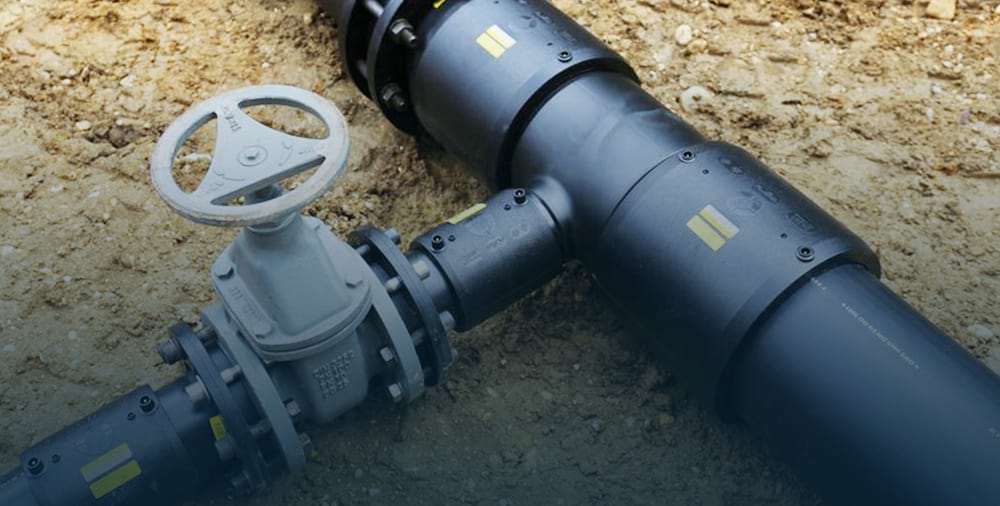
2. Gas Distribution Systems
Safety is critical in gas transportation pipelines, and XFusing’s electrofusion couplers are engineered for maximum reliability.
Each fitting forms a molecular bond between pipe and coupler, ensuring a permanent, gas-tight seal that withstands pressure and environmental stress.
Key Advantages:
Yellow-coded fittings for easy gas network identification.
High-pressure tolerance — up to PN16 (SDR11).
Proven resistance to vibration, soil movement, and temperature fluctuations.
| Parameter | Specification |
| Pressure Class | PN16 |
| Temperature Range | –20 °C to +40 °C |
| Lifespan | 50 years under standard load |
Example: Used in urban gas grid renovation projects in Europe and the Middle East, replacing corroded steel systems with lightweight HDPE fusion joints.
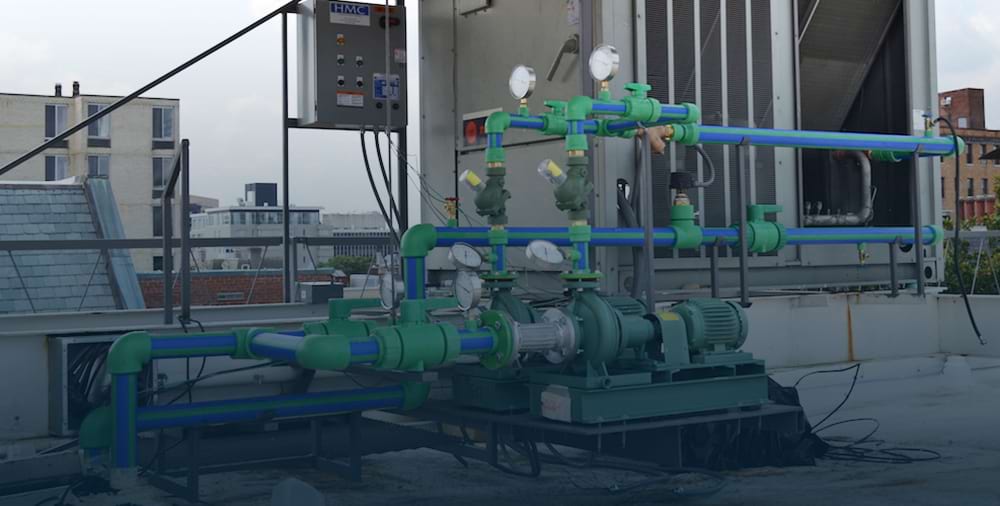
3. Agricultural Irrigation
In agriculture, XFusing couplers ensure efficient and durable irrigation systems that withstand constant water flow and harsh outdoor exposure.
Their corrosion-free design and quick installation make them ideal for large-scale farm networks.
Applications Include:
Main irrigation pipelines
Greenhouse water supply systems
Underground water transportation lines
Benefits:
No rust or scaling even in mineral-rich water.
UV and chemical resistance for long-term outdoor use.
Seamless connection between HDPE pipes for smooth flow.
Case Study: XFusing PE100 couplers are used in Middle Eastern irrigation networks, offering consistent performance under high temperature and saline water conditions.
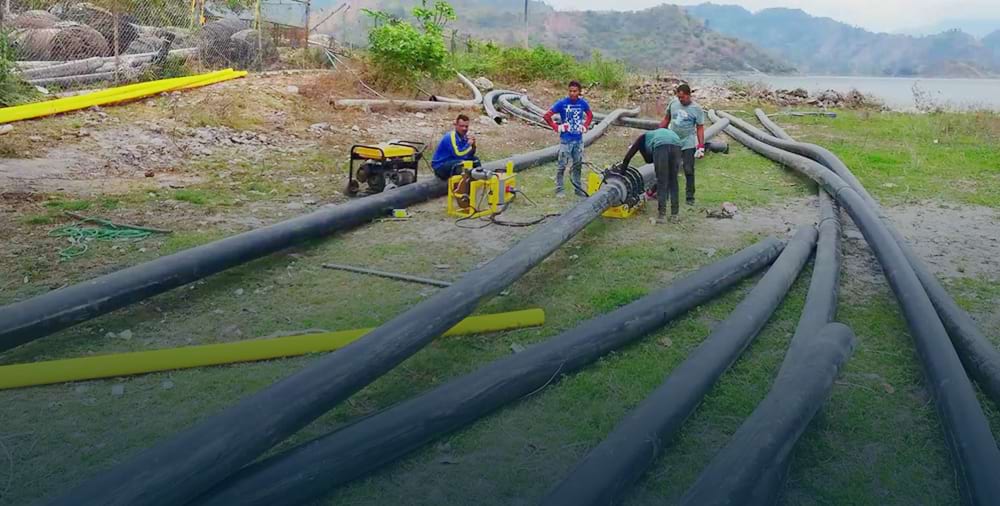
4. Mining & Industrial Projects
For heavy-duty industrial pipelines — such as those used in mining, chemical, and wastewater systems — XFusing electrofusion couplers provide exceptional strength and chemical resistance.
Why They’re Ideal for Industrial Use:
Resistant to abrasion and corrosive chemicals.
High structural integrity under dynamic pressure.
Safe for transporting slurry, chemicals, and process water.
Compatible with PP electrofusion couplers for special chemical handling lines.
| Industry | Pipeline Medium | XFusing Coupler Type |
| Mining | Slurry / Process Water | PE100 Electrofusion Coupler |
| Chemical Processing | Acids / Alkalis | PP Electrofusion Coupler |
| Wastewater Treatment | Effluent Flow | HDPE Electrofusion Coupler |
Example: XFusing couplers successfully deployed in Australian mining tailings pipelines, offering reliable operation under high pressure and abrasive flow conditions.
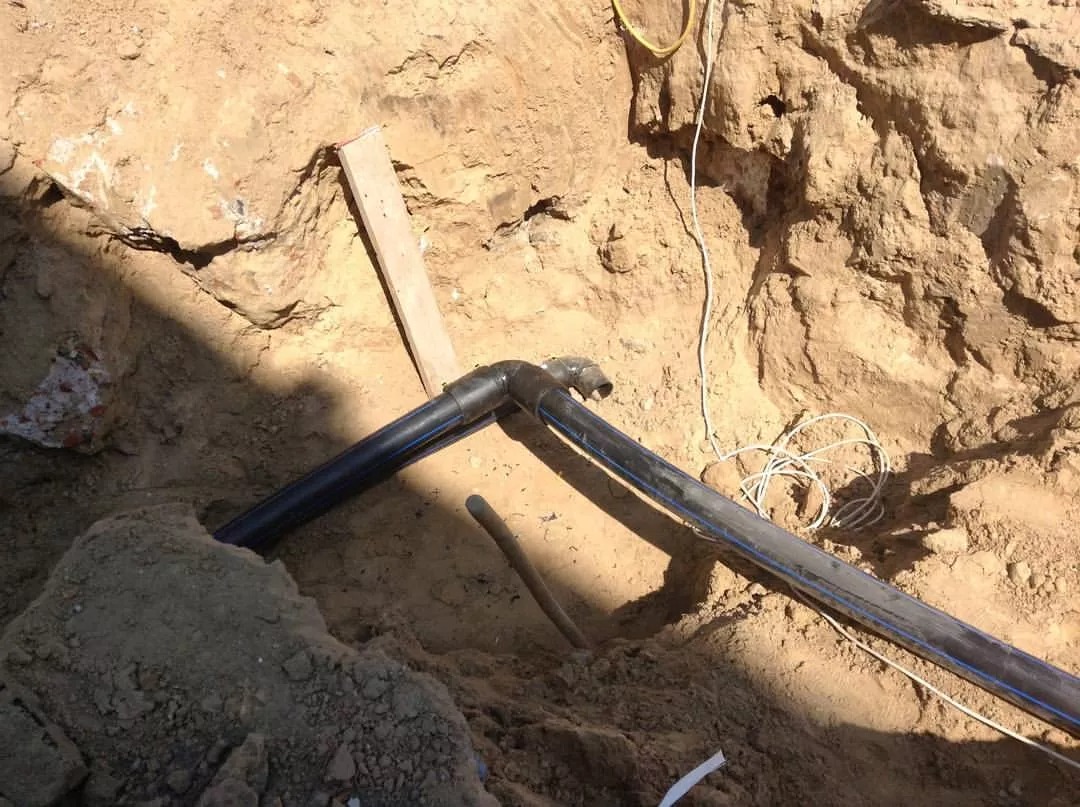
Visual Reference: Installation Gallery
Below are examples from XFusing’s field solutions illustrating real-world installations:
Urban Water Distribution System – PE100 SDR11 pipeline installation.
Gas Distribution Network – Yellow-coded fusion joints for natural gas.
Agricultural Irrigation Line – UV-stabilized couplers under desert sun.
Industrial Pipeline – Chemical-resistant PP electrofusion fittings.
XFusing’s electrofusion couplers are in use across Asia, Europe, Africa, and the Middle East — proving their reliability in diverse environmental and industrial conditions.
Price, MOQ & Delivery Information
XFusing offers factory-direct electrofusion couplers at highly competitive prices, ensuring excellent cost control for distributors, contractors, and project buyers. With efficient production and global logistics, we provide fast delivery and consistent product quality for large-scale infrastructure and industrial applications.
1. Pricing Overview
The price of an electrofusion coupler depends on three primary factors: diameter, SDR class, and order volume.
Larger sizes or higher pressure ratings (SDR11 / PN16) require more material and precise manufacturing, while bulk orders enjoy discounted rates.
| Diameter (mm) | SDR Class | Approx. Unit Price (USD) | Application |
| 20–63 mm | SDR11 | $0.50 – $1.20 | House / Utility lines |
| 75–160 mm | SDR11 / SDR17 | $1.50 – $3.50 | Water / Gas distribution |
| 180–400 mm | SDR11 | $4.00 – $8.00 | Industrial / Irrigation systems |
Factory-direct pricing ensures project buyers receive the best value without intermediary markups.
2. Factory-Direct Supply Advantage
As a professional manufacturer and exporter of HDPE fittings, XFusing provides complete OEM/ODM support with in-house molding, injection, and testing capabilities.
This guarantees high precision, quick customization, and cost savings.
Benefits of Direct Supply:
Lower unit cost for high-volume projects
Guaranteed dimensional accuracy
Faster lead time and flexible packaging
Full compliance with ISO / EN / GB standards
XFusing serves distributors, EPC contractors, and OEM partners worldwide — supporting municipal, agricultural, and industrial projects.
3. Minimum Order Quantity (MOQ)
To maintain efficient production and quality consistency, XFusing’s standard MOQ is:
| Product Type | MOQ per Size |
| Electrofusion Coupler | 500 – 1000 pcs |
| Electrofusion Fittings (Tee, Elbow, Adapter) | 300 – 800 pcs |
| Custom / OEM Models | Negotiable |
Larger orders qualify for bulk pricing and priority manufacturing slots.
4. Lead Time and Production Schedule
XFusing maintains a flexible production system to ensure on-time delivery for both standard and custom orders.
| Order Type | Lead Time (Days) | Notes |
| Standard Size Couplers | 7 – 10 days | Ready-to-mold production |
| Custom Sizes / OEM Orders | 12 – 15 days | Includes tooling setup |
| Large Project Orders | 15 – 20 days | Depending on volume and logistics |
⏱️ Production begins immediately after order confirmation and advance payment.
5. Export Packaging and Logistics
To ensure safe international shipping, XFusing follows strict export packaging standards suitable for sea and air freight.
Standard Packaging Structure:
Each fitting sealed in PE bag for moisture protection.
Multiple pieces packed in reinforced carton box.
Cartons stacked and wrapped on fumigation-free wooden pallets.
| Packaging Type | Purpose |
| PE Bag | Dust & moisture prevention |
| Carton | Shock absorption during transport |
| Pallet | Stability for bulk export |
Optional branding, barcoding, and pallet labeling available for distributors and OEM clients.
XFusing delivers globally through major ports such as Ningbo, Shanghai, and Qingdao — ensuring timely and cost-effective shipment for every project.
Quality Assurance & Warranty
At XFusing, quality is at the core of every electrofusion coupler we manufacture. Our commitment to precision, safety, and long-term reliability ensures that every product meets or exceeds international performance standards. From raw material inspection to final packaging, each stage of production is governed by a rigorous quality management system.
1. 100% Inspection Before Shipment
Every electrofusion coupler undergoes a comprehensive inspection process before leaving the factory to guarantee perfect performance and appearance.
Inspection Scope Includes:
| Inspection Type | Description | Purpose |
| Visual Check | Confirms no surface defects, warping, or contamination | Ensures professional appearance and dimensional accuracy |
| Fusion Test | Tests the embedded copper coil for proper resistance and heating response | Guarantees reliable electrofusion performance |
| Pressure Test | Simulates operating pressure up to PN16 | Verifies leak-proof sealing capability |
| Dimensional Verification | Uses precision calipers and gauges | Confirms compliance with ISO/EN tolerances |
✅ Only products that pass all inspection steps are packaged for export.
2. Certified Manufacturing System
XFusing operates under a fully certified ISO 9001 Quality Management System, ensuring consistent control from material sourcing to final delivery.
All fittings are produced in compliance with international standards and certifications.
Compliance and Certifications:
ISO 9001:2015 – Certified Quality Management
ISO 4427 / EN 12201 / GB 15558 – PE piping system standards
CE Certification – European conformity for safety and performance
Environmental Compliance – ROHS and REACH standards
Documentation and traceability are provided for every batch, ensuring transparency and accountability.
3. Warranty & Technical Support
All XFusing electrofusion couplers come with a 12-month warranty from the date of shipment.
This warranty covers manufacturing defects, fusion performance issues, or any material failures under standard operating conditions.
Our Support Commitment:
Free product replacement or repair for any confirmed defect.
Lifetime technical assistance for installation, fusion, and maintenance guidance.
Remote support via email, video call, or on-site service (for large projects).
| Warranty Period | Coverage | Support Type |
| 12 Months | Manufacturing & material defects | Free replacement / repair |
| Lifetime | Technical guidance & consultation | Email / Remote support |
XFusing’s technical engineers are always ready to assist with installation parameters, fusion machine settings, and troubleshooting.
4. Third-Party Inspection Options
For international buyers and project contractors, XFusing welcomes independent third-party inspection prior to shipment.
Renowned agencies such as SGS, Bureau Veritas (BV), or TÜV can verify product quality, packaging, and documentation on-site.
Available Inspection Services:
Product conformity testing (dimensions, pressure, and fusion performance)
Random sampling and destructive testing for quality verification
Packaging and labeling inspection before container loading
| Inspection Partner | Service Offered | Availability |
| SGS | Product quality verification | Global |
| Bureau Veritas (BV) | On-site inspection and certification | Global |
| TÜV Rheinland | Safety and conformity testing | EU / Asia |
This optional service provides additional assurance for government projects, EPC contractors, and international distributors.
About XFusing and OEM Services
With over 15 years of experience in the HDPE fittings manufacturing industry, XFusing has established itself as a trusted global supplier of electrofusion couplers and related pipeline solutions. Our company integrates research, production, and export services to deliver durable, high-precision fittings that meet international standards for water, gas, and industrial applications.
1. 15+ Years of HDPE Manufacturing Expertise
Since its founding, XFusing has specialized in HDPE pipeline connection technology, combining innovation and engineering precision to deliver products that last.
Our extensive experience allows us to meet the complex requirements of municipal, agricultural, and industrial piping systems worldwide.
Key Strengths:
Over 15 years of production experience in electrofusion and butt fusion fittings
Deep understanding of ISO, EN, and ASTM system standards
Continuous investment in R&D for new materials and fusion performance improvement
Proven track record supplying major water and gas infrastructure projects
| Experience Area | Capabilities |
| HDPE Fittings Manufacturing | Injection molding, electrofusion, butt fusion |
| Product Range | Couplers, Elbows, Tees, Flange Adapters, Transition Fittings |
| Annual Capacity | 2 million+ units |
| Industries Served | Water, Gas, Mining, Irrigation, Industry |
XFusing’s manufacturing expertise ensures consistent quality and reliability across every batch.
2. Advanced Molding & Automated Production
XFusing operates modern production facilities equipped with high-precision injection molding machines and automated copper wire embedding systems for consistent fusion performance.
Manufacturing Highlights:
CNC-controlled injection molding for precise dimensional accuracy
Automatic copper coil embedding for stable and uniform heating during fusion
In-house quality lab for resistance testing, pressure testing, and inspection
Strict compliance with ISO 9001 and CE manufacturing standards
| Equipment Type | Function | Output Quality |
| Injection Molding Machines | Shape couplers and fittings | Dimensional precision |
| Embedding Machines | Install copper heating wire | Uniform resistance control |
| Quality Inspection Devices | Test voltage, resistance, pressure | 100% quality assurance |
⚙️ Automation ensures not just efficiency, but also repeatability and long-term performance of every XFusing coupler.
3. OEM / ODM Customization Services
XFusing provides OEM (Original Equipment Manufacturing) and ODM (Original Design Manufacturing) support to distributors and project partners worldwide.
We help clients build their brand identity with customizable design and packaging options.
OEM/ODM Customization Options:
Logo printing or engraving on fittings or packaging
Custom color matching for brand differentiation
Private label packaging (cartons, labels, barcodes)
Customized dimensions or fusion voltage for special projects
| Customization Type | Description | Benefit |
| Logo & Branding | Laser-engraved or printed | Enhances distributor visibility |
| Color Customization | PE100 in black, blue, or yellow | Matches product series or application |
| Packaging Design | Cartons with OEM artwork | Supports retail or project distribution |
| Technical Adjustments | Tailored SDR or voltage specs | Fits regional market standards |
XFusing’s OEM program enables distributors to launch their own product lines with professional technical and branding support.
4. Global Export Markets
XFusing proudly exports to more than 40 countries and regions, serving distributors, contractors, and government infrastructure projects.
Main Export Regions:
Europe: Germany, Poland, Italy, Spain
Middle East: Saudi Arabia, UAE, Qatar
Africa: Egypt, Kenya, South Africa
Southeast Asia: Thailand, Indonesia, Vietnam, Malaysia
| Region | Application Focus | Typical Products Supplied |
| Europe | Water & Gas Distribution | SDR11 Electrofusion Couplers |
| Middle East | Irrigation & Industrial Use | PP Electrofusion Fittings |
| Africa | Water Supply Projects | HDPE Elbow & Tee Fittings |
| Southeast Asia | Municipal Infrastructure | Full HDPE Fitting Range |
XFusing’s international reputation is built on consistent quality, competitive pricing, and reliable customer service — making us a trusted partner in HDPE pipeline solutions worldwide.
After-Sales Service & Technical Support
XFusing is committed to providing comprehensive after-sales service and technical support to ensure customers achieve the best performance from every electrofusion coupler. Our team of engineers and support specialists works closely with distributors, contractors, and project managers to assist throughout the entire installation and maintenance process — from system design to post-sale technical troubleshooting.
1. Free Technical Guidance & Welding Training
To guarantee correct installation and long-term reliability, XFusing offers free training and technical guidance for all customers.
Our experts provide both on-site and remote training on how to properly handle, align, and weld electrofusion fittings.
Training Coverage:
Pipe preparation and surface cleaning techniques
Welding machine setup and barcode parameter verification
Cooling, inspection, and pressure testing procedures
Common troubleshooting for electrofusion joints
| Training Type | Format | Target Audience |
| Installation Guidance | Online / On-site | Contractors & Technicians |
| Welding Demonstration | Video or PDF manual | Distributors & Project Managers |
| Technical Q&A Support | 24/7 Online Assistance | All Customers |
Our training ensures every technician can achieve uniform, defect-free joints using XFusing electrofusion couplers.
2. Project Consultation & System Design Support
XFusing provides professional project consultation for large-scale infrastructure and industrial systems.
Our engineering team helps clients design complete HDPE pipeline networks — ensuring cost efficiency, compliance, and optimal performance.
Consultation Services Include:
Pipeline layout and connection design
Material selection (SDR class, coupler type, and fusion specifications)
Pressure and temperature compatibility analysis
Customization advice for OEM or project-specific fittings
| Service Area | Description | Benefit |
| Pipeline Design | Layout optimization and material selection | Reduces cost and installation errors |
| Fusion Parameter Setup | Match barcode data to site conditions | Ensures reliable welding results |
| OEM Customization | Branding and dimension adjustments | Tailored to distributor or tender needs |
Our technical team acts as your engineering partner — helping you optimize every stage from planning to execution.
3. Sample Supply for Testing & Tender Submission
XFusing understands the importance of testing and certification in project bidding and technical approval.
We offer sample supply services to support laboratory testing, quality verification, or tender submission.
Sample Support Includes:
Small-quantity pre-production samples (20–50 pcs)
Official product data sheets, test reports, and certificates
Optional customization (logo or size) for OEM tenders
| Purpose | Support Provided | Lead Time |
| Quality Verification | Factory test reports + samples | 3–5 days |
| Tender Submission | Samples with specification sheet | 7–10 days |
| Distributor Demo | Customized samples for display | 10–12 days |
Samples are shipped with international courier service for fast delivery — ensuring project teams meet tight bid deadlines.
XFusing’s after-sales philosophy is built on long-term partnerships — providing not just products, but complete technical assurance and project success support for every client worldwide.
FAQ
Q: What voltage is required for electrofusion welding?
A: The most common input voltage for electrofusion welding fittings is around 39-40 V DC, which is used to produce consistent fusion without risking operator safety.
Q: Can electrofusion couplers be reused?
A: No, electrofusion couplers are designed for single-use only. Once the embedded heating wires have been activated and the fitting has been fused to the pipe, it cannot be reused or re-welded.
Q: What SDR class should I choose for 16 bar pressure?
A: For a nominal pressure rating of ~16 bar (≈ PN16) in PE100 systems, the typical choice is SDR11, which corresponds to the required wall thickness for that pressure class in many HDPE applications.
Q: What’s the difference between HDPE and PP couplers?
A:
HDPE (High-Density Polyethylene): Higher strength-to-density ratio, excellent chemical resistance, and commonly used in pressure pipe systems.
PP (Polypropylene): Higher temperature tolerance, more flexibility, and often used in special applications such as chemical handling or non-potable environments. PP electrofusion couplers are available for such use-cases.
Q: How long should I cool the joint before testing?
A: A typical cooling period for a 90-110 mm electrofusion coupler is about 10-15 minutes before proceeding to pressure testing. The exact time can depend on size, material, ambient temperature and manufacturer’s instructions.
Q: Can you provide OEM logo printing and custom packaging?
A: Yes. Many electrofusion fitting manufacturers offer OEM/ODM support – including custom logo printing on fittings or packaging, as well as tailored packaging solutions for distributors.
Q: Can different grades of PE pipe be connected using an electrofusion coupler?
A: Yes — electrofusion fittings are able to join different PE material grades (such as PE80 and PE100) provided the fusion parameters are correct and the lower-rated component’s PN rating is adopted.
Q: What are the special storage and handling requirements before welding?
A: The fitting must remain in its original sealed packaging until use, stored undercover at 0–50 °C, and all dust, moisture and direct sunlight exposure must be prevented.
Q: What training or certification is required for installers performing electrofusion welding?
A: Installers should be trained and certified (e.g., according to AS/NZS 2033 or equivalent) in electrofusion welding procedures, and equipment must be calibrated regularly.
Q: What happens if the ambient temperature is outside the recommended range for welding?
A: If the pipe surface is too hot (e.g., from sunlight) or too cold, it may affect fusion results; control measures such as shade or heating may be required.
Q: What causes electrofusion joint failures, and how can they be avoided?
A: Common causes include improper pipe preparation (e.g., not scraping oxidation), misalignment, movement during cooling, contamination, or faulty power supply.
Conclusion & Contact Information
XFusing electrofusion couplers provide a dependable, leak-proof, and long-lasting solution for connecting HDPE pipes in water, gas, and industrial systems. Designed for strength, precision, and ease of installation, these fittings guarantee secure joints that meet international standards.
With over 15 years of manufacturing experience, XFusing combines reliable product quality, factory-direct pricing, and global export capability to support contractors, distributors, and OEM partners worldwide. Whether for municipal projects or industrial pipelines, XFusing delivers fittings that stand the test of time.
Contact XFusing Today
For detailed catalogs, price quotations, or OEM customization services, reach out to our team:
Website: www.xfusing.com
✉️ Email: sales@xfusing.com
Phone: +86-13185061581
Address: No. 288-3, Jinyuan Road, Puyang Town, Xiaoshan District, Hangzhou City, Zhejiang Province
Partner with XFusing — your trusted expert in electrofusion couplers and HDPE pipeline solutions.

 English
  العربية
  Français
  Русский
  Español
  Português
  Deutsch
  italiano
  日本語
日本語  한국어
한국어  Nederlands
  Tiếng Việt
  ไทย
ไทย  Polski
  Türkçe
  አማርኛ
አማርኛ  ພາສາລາວ
  ភាសាខ្មែរ
  Bahasa Melayu
  ဗမာစာ
ဗမာစာ  தமிழ்
தமிழ்  Filipino
  Bahasa Indonesia
  magyar
  Română
  Čeština
  Монгол
  қазақ
қазақ  Српски
  हिन्दी
  فارسی
فارسی  Kiswahili
  Slovenčina
  Slovenščina
  Norsk
Norsk  Svenska
  українська
  Ελληνικά
  Suomi
Suomi  Հայերեն
  עברית
עברית  Latine
  Dansk
Dansk  اردو
اردو  Shqip
Shqip  বাংলা
বাংলা  Hrvatski
  Afrikaans
  Gaeilge
  Eesti keel
  Māori
Māori