Introduction
Ever wonder how farms save water efficiently? HDPE Pipes transform irrigation with durable, leak-free connections. In this article, you will learn how these pipes and fittings optimize water delivery and simplify installation.
Understanding HDPE Pipes for Irrigation
What Are HDPE Pipes?
HDPE Pipes, or High-Density Polyethylene pipes, are widely used in modern irrigation systems because they are flexible yet strong. They are made from thermoplastic polymer that offers durability under pressure. They resist corrosion, chemicals, and UV exposure, making them ideal for outdoor applications. Lightweight design allows easy transportation across fields, even in uneven terrain. They can bend slightly without cracking, which helps when installing across slopes or curves.
HDPE’s smooth interior reduces friction, ensuring water flows efficiently. They also require minimal maintenance, saving both time and operational costs.
Key properties of HDPE Pipes include:
● Flexibility: Can accommodate minor ground movements or shifts.
● Chemical Resistance: Handles fertilizers, salts, and irrigation chemicals.
● Lightweight: Easier handling and installation compared to metal pipes.
● Durability: Resistant to cracking, scaling, and abrasion over decades.
Types and Sizes of HDPE Pipes
HDPE pipes come in various grades and diameters, tailored to irrigation needs. Most agricultural systems use PE100, a high-quality grade offering excellent strength under pressure. Other grades may be suitable for smaller, low-pressure applications. Common diameters range from 20 mm to 1200 mm, allowing flexibility for drip lines, sprinkler systems, or main distribution pipelines. Selecting the correct size depends on flow rate, pressure requirements, and system layout.
Below is a typical size and pressure rating chart for HDPE pipes used in irrigation:
Pipe Diameter (mm) | Typical Pressure Rating (bar) | Common Use in Irrigation |
20-32 | 6-10 | Drip irrigation lines |
40-63 | 10-16 | Sprinkler lateral lines |
75-160 | 16-20 | Main field distribution |
180-400 | 20-25 | Primary supply pipelines |
450-1200 | 16-20 | Large-scale water delivery |
Installation methods vary, but all benefit from the material’s lightweight and corrosion-resistant properties. It makes transporting and handling in fields easier. Contractors often prefer long coil lengths, which reduce the number of joints needed. Fewer joints mean fewer potential leaks, saving time and maintenance costs. HDPE pipes also allow for flexible layouts, accommodating irregular field shapes without compromising flow efficiency.
HDPE Pipe Fittings and Connection Methods
Types of HDPE Pipe Fittings
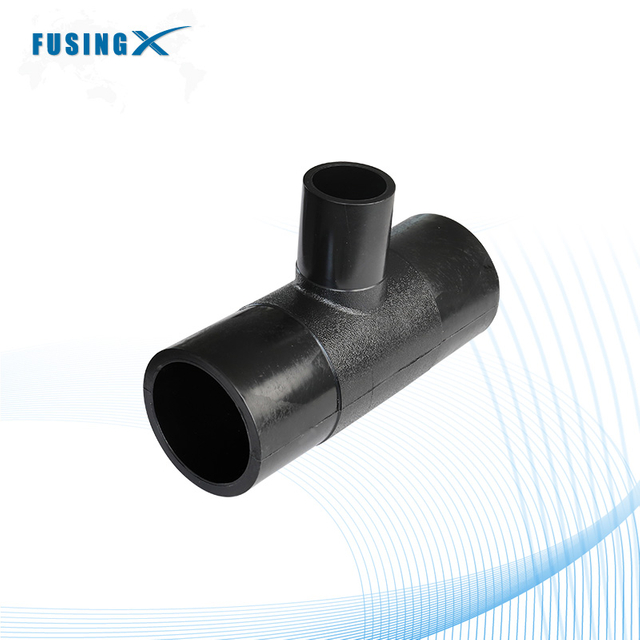
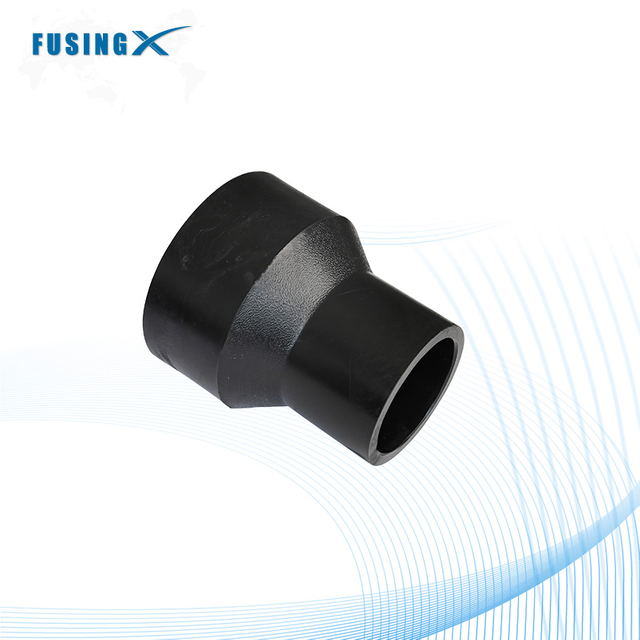
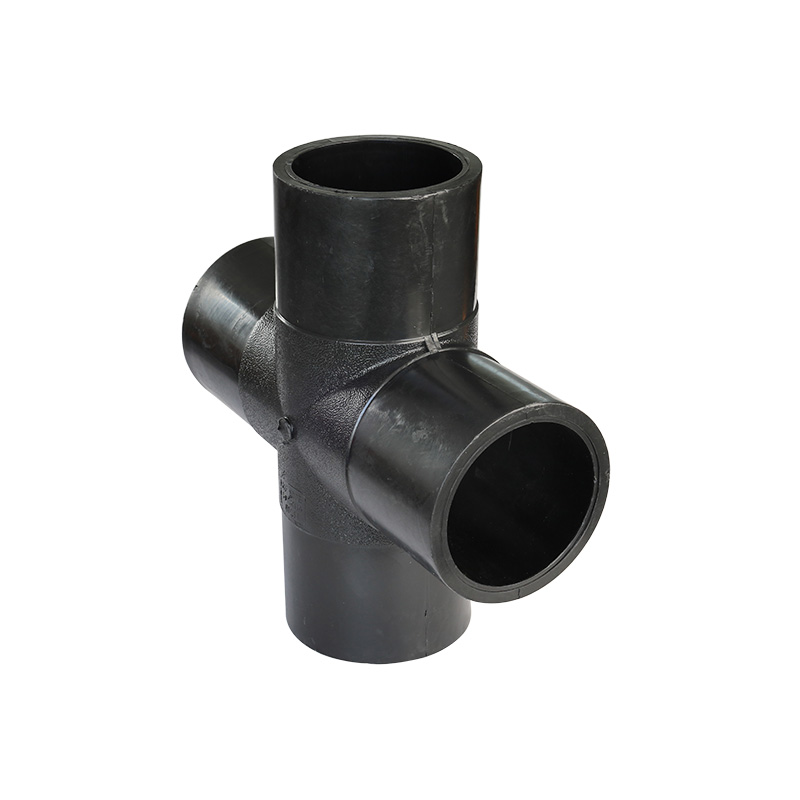
When designing irrigation systems, choosing the right HDPE pipe fittings is critical. FusingX offers a full range of butt fusion fittings, electrofusion fittings, and threaded fittings, each tailored for specific applications. They also provide reducers, elbows, tees, and end caps to handle complex layouts. These fittings allow pipelines to navigate field curves, elevation changes, or tight spaces while maintaining water flow efficiency.
Specialty fittings are designed to adapt to drip or sprinkler systems, ensuring uniform irrigation coverage. Using high-quality PE100 material, they resist cracking, chemical damage, and pressure fluctuations, making joints reliable for decades.
Common HDPE Fittings and Uses:
Fitting Type | Function / Application | Notes |
Butt Fusion Tee | Branching main lines to laterals | Seamless, leak-free joint |
90° Elbow | Direction change | Smooth inner surface reduces friction |
Reducer | Connecting different diameters | Ensures proper flow balance |
End Cap / Plug | Termination of pipelines | Prevents leakage or contamination |
Electrofusion Coupler | Repairs or joining difficult sections | Quick installation, reliable strength |
Installation Methods and Techniques
HDPE pipelines rely on fusion or mechanical connections for long-lasting performance. Butt fusion joins pipes by heating and pressing ends together until the polymer melts and forms a single piece. The resulting joint is stronger than the pipe itself, ensuring no leaks even under pressure fluctuations. Electrofusion uses a heating coil in the fitting to melt the pipe’s surface, perfect for branches or repairs in irregular layouts. Compression or threaded fittings are convenient for temporary systems or smaller diameters; they offer flexibility but require proper torque to maintain leak-free joints.
FusingX provides guidance on each method, helping installers select the best technique for flow and pressure requirements.
Installation Tips:
● Always square and clean pipe ends before fusion.
● Maintain precise pressure and heating time for seamless joints.
● Avoid dragging or bending pipes during connection to prevent weak points.
● Inspect all fittings visually and perform pressure tests before backfilling.
Ensuring Leak-Free and Durable Connections
Even high-quality HDPE pipes can fail if joints are poorly executed. Proper fusion techniques are essential to create a strong, leak-free irrigation system. Butt-fused and electrofusion joints form a monolithic structure where molecular chains interlock, eliminating gaps. Qualified installers use specialized tools and follow precise procedures for alignment, heating, and joining.
Best Practices for Durable Connections:
● Correct Pipe Preparation: Square and clean all pipe ends before fusion.
● Controlled Heating: Maintain accurate temperature and pressure to create seamless joints.
● Avoid Stress on Joints: Do not drag or bend pipes during installation.
● Cooling and Inspection: Allow proper cooling time and visually inspect every joint.
● Pressure Testing: Test system integrity before backfilling to ensure no leaks.
Benefits of Proper Connections:
● Minimizes water loss across irrigation networks
● Reduces future maintenance and repair needs
● Ensures uniform water distribution to crops and gardens
● Provides long-term reliability even under pressure fluctuations
Using FusingX fittings and guidance, installers achieve high-quality, durable, and reliable irrigation networks that perform efficiently for decades.
Applications of HDPE Pipes in Irrigation Systems
Drip Irrigation Networks
Drip irrigation requires precise water delivery, and HDPE Pipes are ideal for achieving efficiency. Their flexibility allows layouts to follow garden beds or crop rows, reducing water loss. FusingX provides custom fittings that support multiple branches, ensuring consistent flow across the system. These pipes resist fertilizers and soil chemicals, extending operational life.
Key Benefits of HDPE in Drip Systems:
● Flexible and lightweight for easy handling and installation
● Long coil lengths reduce joints, minimizing potential leak points
● Compatible with elbows, tees, and reducers for complex layouts
● Smooth inner surface enhances flow and reduces pressure loss
The lightweight nature also reduces labor needs, and installers can adapt layouts for slopes or uneven terrain without compromising performance.
Sprinkler and Overhead Irrigation Systems
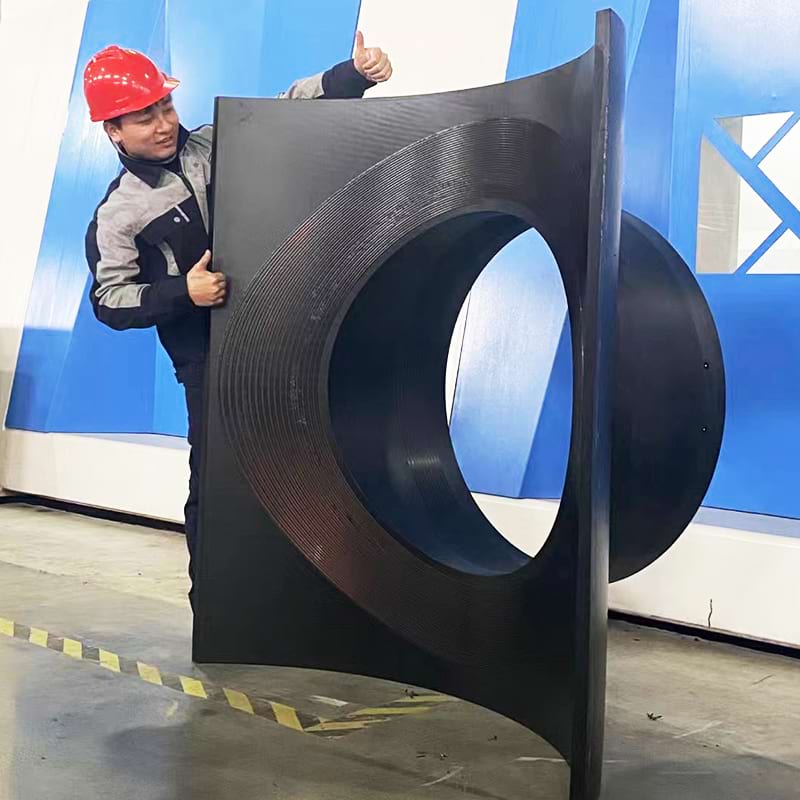
HDPE pipes perform well under high-pressure sprinkler systems. They are resistant to chemicals and UV exposure, making them ideal for outdoor irrigation. Proper fittings ensure uniform water distribution, preventing pressure drops or uneven coverage. FusingX offers specialized electrofusion and butt-fusion fittings that create durable, leak-free joints, even in long-distance pipelines.
Advantages for Sprinkler Systems:
● High-pressure tolerance for large-scale sprinkler setups
● Adaptable to different zones for precise water management
● Leak-free joints maintain system efficiency over time
● Easy expansion or modification without shutting down existing lines
These features make HDPE a versatile choice for both small gardens and large agricultural fields.
Main Distribution and Branch Lines
For primary irrigation supply, larger-diameter HDPE Pipes transport water efficiently from pumps or reservoirs to lateral lines. Fitted elbows, tees, and reducers allow branching to multiple zones while maintaining flow. Joints resist vibration, soil movement, and pressure changes, ensuring long-term reliability.
Applications and Advantages:
● Primary water conveyance to multiple fields or zones
● Integration with valves, pressure regulators, and sensors
● Reduced friction loss and energy consumption
● Supports high-volume irrigation for large farms
Typical HDPE Pipe Sizes for Irrigation Applications:
Pipe Diameter (mm) | Typical Use | Notes |
20-32 | Drip irrigation lines | Low-pressure, precise delivery |
40-63 | Sprinkler lateral lines | Medium pressure, flexible layout |
75-160 | Branch lines | Medium flow rates |
180-400 | Main field distribution | High-pressure tolerance |
450-1200 | Primary supply pipelines | Large-scale water delivery |
Maintenance, Longevity, and Cost Considerations
Lifespan and Durability of HDPE Pipes
HDPE Pipes are engineered to last for decades, often exceeding 50 years under proper conditions. Their flexibility, chemical resistance, and UV stability make them highly durable, even in harsh irrigation environments. Unlike metal or PVC pipes, HDPE resists cracking, corrosion, and scaling, ensuring long-term performance.
Key durability factors include:
● Material grade (PE100 offers higher strength and wear resistance)
● Exposure to sunlight and chemicals
● Proper installation and support spacing
Maintenance Requirements
HDPE Pipes minimize maintenance needs thanks to their abrasion and chemical resistance. Leak-free joints created by butt fusion or electrofusion further reduce the risk of water loss. The smooth inner surface prevents sediment buildup, lowering cleaning requirements. System operators spend less time repairing damaged sections, and irrigation efficiency remains high over the pipe’s lifetime.
FusingX fittings enhance these benefits, providing consistent performance even in complex or long-distance networks.
Total Cost of Ownership (TCO) in Irrigation Projects
Although HDPE Pipes may have a slightly higher initial cost than traditional metal or PVC options, the long-term savings are significant. Reduced labor for installation, minimal repair requirements, and lower energy costs due to smooth water flow make HDPE an economically smart choice.
Over time, the TCO decreases because fewer replacements and lower maintenance reduce operational expenses. Farms using HDPE benefit from both durable infrastructure and cost-efficient irrigation, making it an ideal investment for long-term water management.
Conclusion
FusingX HDPE Pipes and fittings offer durable, leak-free irrigation solutions. They resist chemicals, are easy to install, and support flexible layouts, providing long-term efficiency and water savings for agricultural and garden systems.
FAQ
Q: What is an HDPE Pipe?
A: HDPE Pipe, or high-density polyethylene pipe, is a flexible, chemical-resistant piping solution widely used in irrigation. It provides long service life, withstands pressure, and is ideal for both drip and sprinkler systems, ensuring efficient water delivery across fields and gardens.
Q: How do HDPE Pipes improve irrigation efficiency?
A: HDPE Pipes enhance efficiency by maintaining consistent water flow and reducing leaks. When paired with FusingX fittings, they enable uniform distribution and minimize water waste, allowing irrigation systems to operate reliably with fewer maintenance interventions.
Q: Why choose FusingX HDPE fittings?
A: FusingX HDPE fittings offer durable, leak-free connections that resist chemical exposure and pressure fluctuations. They support complex irrigation layouts, adapt to different pipe diameters, and help ensure that drip, sprinkler, and main distribution networks operate efficiently and safely.
Q: What sizes of HDPE Pipes are available for irrigation?
A: HDPE Pipes are available in a wide range of diameters from 20mm to 1200mm. This variety makes them suitable for small drip lines, medium-pressure sprinkler laterals, or large main distribution pipelines, allowing customization for diverse irrigation system designs.
Q: How are HDPE Pipes installed?
A: HDPE Pipes are installed using butt fusion, electrofusion, or threaded fittings, creating strong, monolithic joints. Proper fusion ensures long-lasting, leak-free connections that maintain water flow and performance, even under variable pressure and field conditions.

 English
  العربية
  Français
  Русский
  Español
  Português
  Deutsch
  italiano
  日本語
日本語  한국어
한국어  Nederlands
  Tiếng Việt
  ไทย
ไทย  Polski
  Türkçe
  አማርኛ
አማርኛ  ພາສາລາວ
  ភាសាខ្មែរ
  Bahasa Melayu
  ဗမာစာ
ဗမာစာ  தமிழ்
தமிழ்  Filipino
  Bahasa Indonesia
  magyar
  Română
  Čeština
  Монгол
  қазақ
қазақ  Српски
  हिन्दी
  فارسی
فارسی  Kiswahili
  Slovenčina
  Slovenščina
  Norsk
Norsk  Svenska
  українська
  Ελληνικά
  Suomi
Suomi  Հայերեն
  עברית
עברית  Latine
  Dansk
Dansk  اردو
اردو  Shqip
Shqip  বাংলা
বাংলা  Hrvatski
  Afrikaans
  Gaeilge
  Eesti keel
  Māori
Māori