Introduction
Ever wondered how cities deliver safe water reliably? HDPE pipes with hdpe fusion fittings solve leaks and corrosion issues. In this guide, you'll learn installation steps, key advantages, and real-world uses of these durable systems.
What Is HDPE Pipe and Why It Is Used in Water Supply Systems
Understanding HDPE Pipe Material and Polyethylene Properties
HDPE pipe comes from high-density polyethylene, a thermoplastic material widely used in modern pipeline engineering. It forms strong molecular chains during polymerization. These chains create flexibility, durability, and excellent impact resistance. Engineers prefer it for water supply networks because it resists corrosion and performs well underground. Soil chemicals rarely damage it. Ground moisture causes no rust. Municipal systems rely on this stability for long-term water transport.
Polyethylene pipes used in infrastructure normally fall into two major grades: PE80 and PE100. They share similar chemical structures. However, their density and pressure resistance differ. PE100 pipes tolerate higher internal pressure. They also allow thinner pipe walls while maintaining strength. Because of this advantage, many modern municipal water projects select PE100 materials.
Material Grade | Strength Level | Typical Applications |
PE80 | Medium pressure capacity | Rural water supply networks |
PE100 | High pressure resistance | Municipal water transmission pipelines |
PE100-RC | Crack-resistant version | Harsh soil environments |
These polyethylene materials also resist many environmental factors. They tolerate acids, salts, and biological activity found in soil. Internal pipe walls stay smooth. Water flows efficiently through the system. Energy loss stays low during long-distance transmission.
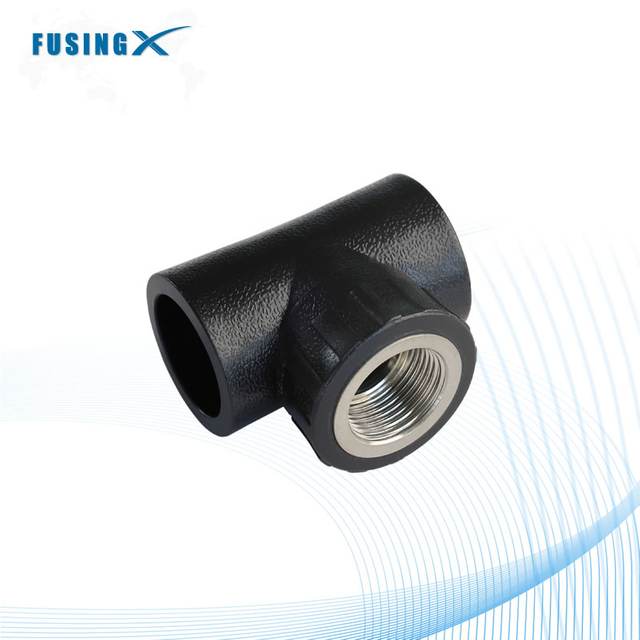
Another important feature involves compatibility. HDPE pipes connect seamlessly through hdpe fusion fittings. These fittings fuse directly to pipe surfaces. The result forms a continuous pipeline structure. It behaves almost like a single piece of pipe. Leakage risks drop significantly in water distribution systems.
Key Advantages of HDPE Pipe for Municipal Water Networks
Water infrastructure must operate reliably for decades. Municipal engineers evaluate several factors before selecting pipe materials. HDPE pipeline systems perform well across most evaluation criteria. Their advantages become clearer when compared to traditional materials like cast iron or steel.
Key performance advantages include:
● Corrosion resistance
Metal pipes gradually corrode when exposed to soil moisture or minerals in water. Rust weakens pipe walls. HDPE behaves differently. It does not react chemically in most underground conditions. Municipal pipelines therefore maintain structural integrity much longer. Maintenance requirements decrease across the network.
● Flexibility under ground movement
Soil layers shift naturally due to temperature changes, groundwater flow, or minor seismic activity. Rigid pipes may crack under these stresses. HDPE pipes bend slightly instead of breaking. They absorb movement from surrounding soil. This flexibility protects water distribution pipelines in unstable environments.
● Long service life and minimal maintenance
Many polyethylene water systems remain operational for over fifty years. Internal pipe surfaces stay smooth during that time. Mineral scaling rarely forms. Reduced friction keeps pumping energy low. Maintenance teams inspect systems less frequently compared with metal pipelines.
Municipal planners often combine these pipes with hdpe fusion fittings to strengthen network reliability. The fusion process eliminates weak mechanical joints. Once installed correctly, the pipeline functions as a sealed system.
Another practical benefit involves installation logistics. Construction crews handle HDPE pipes more easily than traditional materials.
HDPE Fusion Fittings and Their Role in Water Supply Pipeline Design
What Are HDPE Fusion Fittings and How They Work
HDPE fusion fittings are essential components for high-density polyethylene (HDPE) pipelines. They enable pipes to form a continuous, leak-free network, critical for safe and efficient water distribution.
The fusion process heats the pipe ends and fitting surfaces, then presses them together until they form a single, solid structure. This creates strong, permanent joints that behave like one continuous pipe. Engineers rely on these fittings to reduce maintenance, prevent leaks, and ensure pipeline reliability under both municipal and industrial conditions. They are particularly important in networks that experience ground movement or high internal pressure.
Types of HDPE Fusion Fittings Used in Water Systems
HDPE pipelines use various types of hdpe fusion fittings, each designed for specific pipeline configurations. The most common include:
● Butt Fusion Fittings: Straight-line connections or simple angle changes in standard pipelines.
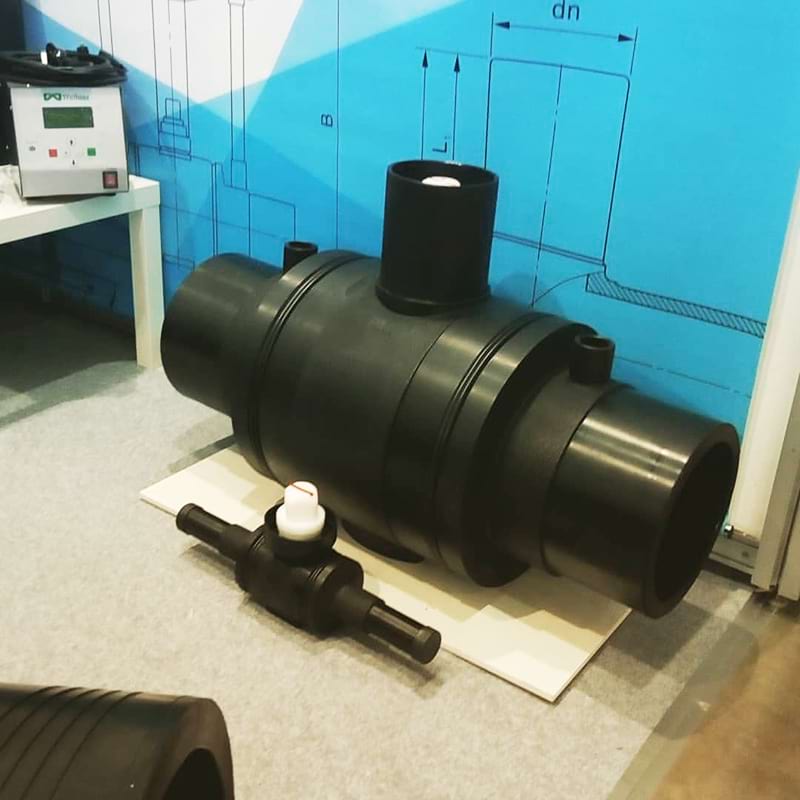
● Electrofusion Fittings: Embedded heating elements allow connections in tight or complex installations.
● Reducers, Elbows, Tees, and End Caps: Enable directional changes, branching, diameter transitions, or termination.
These fittings support high-pressure PE100 pipes and are widely applied across municipal water networks, irrigation systems, and industrial water transport.
Fitting Type | Function | Installation Method |
Butt Fusion | Straight connections and simple angles | Heat and press fusion |
Electrofusion | Complex or restricted spaces | Electric coil heating |
Elbows & Tees | Directional changes, branching | Butt or electrofusion |
End Caps | Pipeline termination | Butt fusion |
Butt Fusion vs Electrofusion: Choosing the Right Connection Method
Selecting the proper fusion method depends on project requirements. Butt fusion is ideal for long straight runs. It uses a heating plate and precise alignment, providing strong, permanent joints quickly.
However, it requires space and specialized equipment. Electrofusion, in contrast, is excellent for tight spaces, repairs, and non-linear pipelines. An electric coil melts the pipe surface and fitting simultaneously, creating a secure connection.
Both methods ensure leak-free and durable joints. Decision-making involves pipeline layout, site accessibility, and system scale. Manufacturers like FusingX supply a full range of butt fusion and electrofusion fittings, designed for seamless integration with HDPE pipes, ensuring efficiency, reliability, and long-term performance in water supply systems.
How HDPE Pipe Systems Are Installed in Water Supply Projects
Step-by-Step HDPE Pipe Butt Fusion Installation Process
Installing HDPE pipes involves several precise steps to ensure a strong, leak-free system. The process starts with pipe alignment in the fusion machine. Misalignment can weaken joints. Then, the heating plate melts the pipe ends. Temperature must be carefully controlled to suit PE80 or PE100 material. Once molten, the ends are pressed together under controlled pressure and left to cool naturally. This creates a continuous joint that behaves like a single pipe.
Key steps include:
● Pipe alignment and clamping – Prevents misalignment stress
● Surface preparation – Scraping removes debris and ensures smooth contact
● Heating – Accurate temperature control ensures proper fusion
● Fusion pressure and cooling – Forms strong, leak-proof joints
Equipment and Tools Required for HDPE Fusion Welding
HDPE fusion requires specialized tools. Proper equipment ensures safety and consistent quality. Common tools:
Tool | Purpose | Notes |
Fusion Machine | Aligns and holds pipes | Sizes vary for different diameters |
Heating Plate | Melts pipe ends | Adjustable temperature for PE80/PE100 |
Alignment Clamps | Keeps pipes straight | Prevents stress during heating |
Scrapers & Face Tools | Prepares surfaces | Removes dirt and ensures proper contact |
Additional items like thermometers, protective gloves, and fusion log sheets are also recommended for quality control and safe operation.
Best Practices for Installing HDPE Fusion Fittings in Water Pipelines
Following correct installation practices ensures long-term performance.
● Surface cleanliness – Avoid dust, grease, or moisture on pipe ends
● Accurate alignment – Misaligned fittings reduce joint strength
● Avoid touching molten surfaces – Contamination weakens fusion
● Controlled cooling – Time depends on pipe diameter and ambient temperature
Tips for smoother installation:
● Always check equipment calibration before fusion
● Use protective covers to prevent debris falling onto pipe surfaces
● Document each fusion joint for traceability
Quality Control and Testing After Pipe Fusion
After fusion, inspection confirms system integrity. Quality control methods include:
● Hydrostatic pressure testing – Confirms joints withstand design pressure
● Visual weld inspection – Checks uniform bead and alignment
● Sample destructive testing – Verifies joint strength for critical pipelines
Other considerations:
● Use FusingX hdpe fusion fittings as recommended for compatibility
● Maintain logs for each joint, including temperature, pressure, and cooling time
● Perform random spot checks during long pipeline installations
These practices reduce risks of leaks, failures, and maintenance issues in municipal water networks.
Conclusion
HDPE Pipe for water supply systems offers leak-free, durable, and flexible solutions for municipal, agricultural, and industrial networks. FusingX provides hdpe fusion fittings that enhance pipeline reliability, reduce maintenance, and support long-term water transport efficiently.
FAQ
Q: What is an HDPE Pipe?
A: HDPE Pipe is a high-density polyethylene pipe used for safe and durable water supply pipelines.
Q: How do hdpe fusion fittings work?
A: They join HDPE pipes through heat fusion, creating strong, leak-free connections.
Q: Why choose HDPE Pipes for irrigation?
A: They resist corrosion, handle long-distance water flow, and require minimal maintenance.
Q: Are HDPE Pipes suitable for industrial water systems?
A: Yes, they provide chemical resistance and reliable high-pressure water transport.
Q: What are the benefits of using FusingX hdpe fusion fittings?
A: They ensure durable joints, enhance pipeline longevity, and simplify installation.

 English
  العربية
  Français
  Русский
  Español
  Português
  Deutsch
  italiano
  日本語
日本語  한국어
한국어  Nederlands
  Tiếng Việt
  ไทย
ไทย  Polski
  Türkçe
  አማርኛ
አማርኛ  ພາສາລາວ
  ភាសាខ្មែរ
  Bahasa Melayu
  ဗမာစာ
ဗမာစာ  தமிழ்
தமிழ்  Filipino
  Bahasa Indonesia
  magyar
  Română
  Čeština
  Монгол
  қазақ
қазақ  Српски
  हिन्दी
  فارسی
فارسی  Kiswahili
  Slovenčina
  Slovenščina
  Norsk
Norsk  Svenska
  українська
  Ελληνικά
  Suomi
Suomi  Հայերեն
  עברית
עברית  Latine
  Dansk
Dansk  اردو
اردو  Shqip
Shqip  বাংলা
বাংলা  Hrvatski
  Afrikaans
  Gaeilge
  Eesti keel
  Māori
Māori