Introduction
Why do modern HDPE pipelines last for decades? Good design makes the difference. Engineers must consider materials, pressure ratings, flexibility, and hdpe fusion fittings. In this article, you will learn the core design factors behind safe, durable HDPE piping systems.
Understanding HDPE Material Properties and Industry Standards
What Is HDPE and Why It Is Ideal for Pipeline Systems
High-density polyethylene (HDPE) is a thermoplastic polymer widely used in modern pipeline engineering. Engineers choose it because it performs well under pressure and in harsh environments. Unlike traditional metal pipes, it resists corrosion and chemical reactions. That makes it useful for water distribution, gas transport, irrigation systems, and industrial pipelines.
Several key advantages explain why HDPE pipelines are widely adopted:
● Corrosion resistance
HDPE does not rust or react with most chemicals. Because of this property, it performs well in soil, wastewater systems, and marine environments. Maintenance needs stay low during long service cycles.
● Flexibility and impact resistance
It bends slightly without cracking. This flexibility helps the pipe absorb ground movement and vibration. Engineers often install long pipe runs using fewer joints.
● Long service life
Properly designed HDPE pipelines can operate for decades. Many systems exceed fifty years of reliable use. Durable hdpe fusion fittings also help maintain structural integrity.
● Lightweight construction
HDPE pipes weigh less than metal alternatives. Transport becomes easier. Installation often requires fewer workers and simpler equipment.
Below is a simplified comparison of HDPE and traditional piping materials in infrastructure projects.
Property | HDPE Pipe | Metal Pipe |
Corrosion resistance | Excellent | Often requires coatings |
Flexibility | High | Low |
Installation difficulty | Moderate | High |
Expected lifespan | 50+ years | 20–40 years |
Key HDPE Standards and Material Classifications
Designing an HDPE piping system requires following recognized engineering standards. These standards define material quality, pipe strength, and fitting dimensions. They help ensure compatibility between pipes and hdpe fusion fittings used in the same system.
Two common standards influence HDPE pipe design:
● ASTM D3350
● This specification defines polyethylene material classifications. It describes properties such as density, stress crack resistance, and long-term strength.
● ASTM F2206
This standard focuses on fabricated HDPE fittings. It ensures fittings meet proper pressure ratings and dimensional accuracy.Material grades also affect pipeline performance.
Engineers frequently encounter PE4710, a widely used high-performance polyethylene material. It offers strong resistance to pressure and slow crack growth. Because of this, it works well in demanding municipal or industrial pipeline systems.
Important material factors often considered during design include:
● Density levels
Higher density polyethylene provides improved structural strength. It supports higher pressure ratings.
● Hydrostatic design stress
This value determines the pressure the pipe can safely handle during long-term operation.
● Stress crack resistance
It measures how well the material resists slow crack growth under constant load.
Structural Design Factors for HDPE Piping Systems
Dimension Ratio (DR) and Pressure Rating Selection
Engineers often start pipeline design by evaluating the Dimension Ratio (DR) of HDPE pipes. It represents the relationship between pipe diameter and wall thickness. A smaller DR number usually means thicker pipe walls and higher pressure capacity. In practical pipeline design, we use DR values to estimate how a pipe will perform under continuous internal pressure and environmental stress.
Important design factors engineers review during DR selection include:
● Pipe wall thickness
It directly affects the pipe’s structural strength. Thicker walls resist internal pressure better. In high-pressure water or gas pipelines, designers usually select lower DR pipes to improve safety margins.
● Operating pressure of the system
Engineers must compare expected system pressure with the allowable pipe pressure rating. If the pressure is underestimated, pipes may deform over time.
● Compatibility with hdpe fusion fittings
Pipes and fittings must share compatible pressure ratings. If a fitting has lower pressure capacity, the joint becomes the weakest point in the system.
The following table shows how DR influences pipe performance in typical pipeline systems.
DR Value | Wall Thickness | Pressure Capacity | Typical Application |
DR 9 | Thick | Very High | Industrial pressure pipelines |
DR 11 | Medium-thick | High | Municipal water distribution |
DR 17 | Moderate | Medium | Irrigation and drainage |
DR 21 | Thin | Lower | Low-pressure transport systems |
Bend Radius and Flexibility Advantages of HDPE Pipes
One major advantage of HDPE pipes is their flexibility. Unlike rigid materials, they can follow curved paths during installation. This property reduces the need for multiple directional fittings. In many projects, engineers use natural pipe bending to simplify pipeline routing.
Several engineering benefits appear when designers use pipe flexibility correctly:
● Reduced number of hdpe fusion fittings
Pipes can gradually change direction along a curved trench. Fewer fittings are needed. Installation time decreases and leak risk drops.
● Improved trenchless installation capability
Flexible pipes adapt well to trenchless construction methods such as horizontal directional drilling. The pipe can move through curved underground paths.
● Better resistance to ground movement
Soil shifts, vibrations, or minor earthquakes can stress rigid pipes. HDPE absorbs some of this movement because it bends slightly instead of breaking.
Below is a simplified design reference for typical HDPE bend radius calculations.
Pipe Diameter | Typical Minimum Bend Radius | Installation Advantage |
110 mm | ~2.5 m | Ideal for small distribution networks |
315 mm | ~7 m | Suitable for municipal pipelines |
630 mm | ~14 m | Used in large infrastructure systems |
HDPE Fusion Fittings and Connection Technology
What Are HDPE Fusion Fittings and Their Role in Piping Systems
In HDPE pipeline engineering, connections determine whether a system operates reliably for decades. Pipes carry fluids, but fittings organize the flow. Engineers rely on hdpe fusion fittings to redirect pipelines, create branches, and maintain pressure continuity across the network. These fittings connect through heat fusion, which melts the polyethylene surfaces and joins them into one continuous structure.
This fusion process produces joints that behave almost like a single pipe. Unlike threaded or gasketed connections, the fused area does not create a mechanical weak point. When installed correctly, the welded joint becomes highly resistant to leaks and environmental stress. Because of this performance, fusion fittings are widely used in municipal water supply systems, irrigation pipelines, and industrial fluid transport networks.
Common types of HDPE fusion fittings appear in most infrastructure projects:
● Elbows
These fittings change the direction of a pipeline. Engineers install them when pipes must navigate around buildings, terrain obstacles, or underground utilities. Their curved design maintains smooth fluid flow and reduces pressure loss.
● Tees
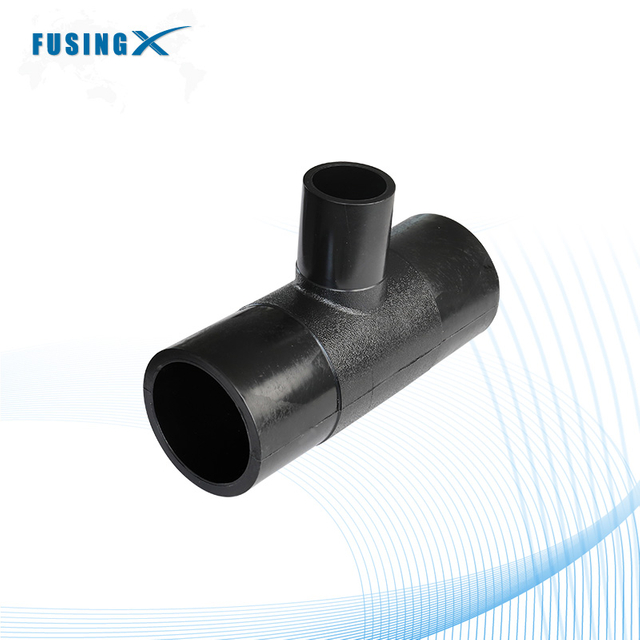
Tees divide a main pipeline into branch connections. Distribution networks use them to deliver water or gas to multiple service areas. Properly designed tees maintain stable flow conditions across all branches.
● Reducers
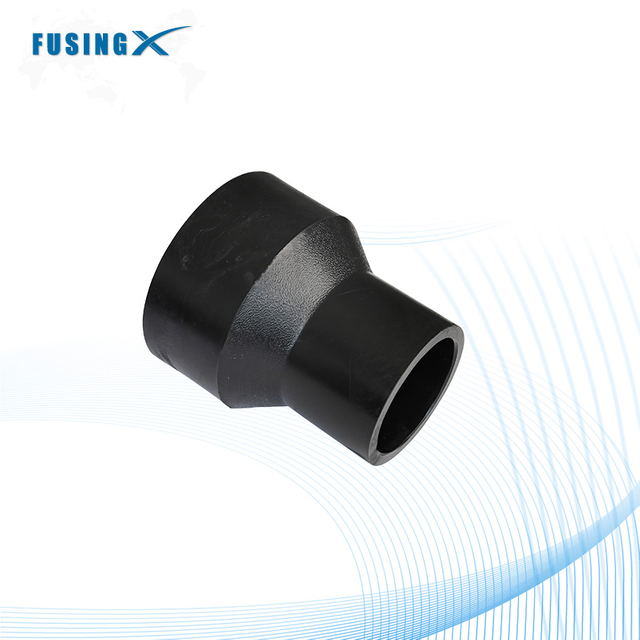
Reducers connect pipes of different diameters. They allow a pipeline to transition between flow capacities without creating turbulence. Designers often install them when systems move from main transmission lines to smaller distribution pipes.
● End caps
End caps seal pipeline ends during construction or system expansion. They help isolate sections of the network during testing or maintenance operations.
Butt Fusion Welding Process for HDPE Pipes
Among all connection technologies used in HDPE pipelines, butt fusion welding remains the most widely applied. Engineers choose it because the process creates strong, continuous joints between pipe segments. Instead of relying on mechanical sealing parts, the pipe material itself forms the connection.
Key stages in the butt fusion process include:
● Pipe surface preparation
Workers trim pipe ends to ensure smooth and square surfaces. They remove dust, moisture, or oxidation layers before welding. Clean surfaces allow the polyethylene to melt evenly during heating.
● Heating stage
A heated plate warms the pipe ends to a precise temperature. The polyethylene softens gradually until it reaches a suitable melting condition. Temperature control is essential because excessive heat may weaken the material.
● Alignment and fusion pressure
After heating, operators remove the plate and press the softened pipe ends together. Controlled pressure forms a small uniform bead around the joint. This bead indicates proper material flow and fusion quality.
Cooling and stabilization
The joint remains still until the molten material solidifies. Moving the pipe during this stage may weaken the weld. Proper cooling ensures the joint achieves full strength.
Electrofusion and Other Connection Methods
Although butt fusion is common, other joining technologies support specialized installation conditions. One important method is electrofusion welding, which is often used in confined construction areas. In this process, fittings contain embedded electrical coils that generate heat when connected to a power supply.
As electricity flows through the coil, the inner surface of the fitting and the outer surface of the pipe melt simultaneously. The materials then fuse together during cooling.
Electrofusion offers several practical advantages:
● Compact installation equipment
Workers can install electrofusion fittings in narrow trenches or underground chambers.
● Precise temperature control
Many electrofusion fittings include barcodes or programmed parameters. Welding equipment reads these values and adjusts heating automatically.
● Reliable repairs and upgrades
Maintenance crews often use electrofusion fittings when repairing damaged pipeline sections without removing large pipe lengths.
Other connection options sometimes appear in specialized systems:
● mechanical flange adapters for joining HDPE to metal pipelines
● compression fittings for small diameter pipes
● transition fittings between different pipeline materials
Ensuring Compatibility Between Pipes and HDPE Fusion Fittings
Successful HDPE pipeline design requires careful compatibility checks. Pipes and fittings must share similar material properties and pressure ratings. If the specifications differ, the joint becomes the weakest section of the system.
Engineers typically evaluate several parameters before installation:
● Pressure rating compatibility
The pressure capacity of pipes and hdpe fusion fittings must match the expected operating pressure. If a fitting supports lower pressure than the pipe, system safety may be compromised.
● Material consistency
Most modern HDPE pipelines use PE100 polyethylene. Using the same material grade for pipes and fittings improves weld strength and chemical resistance.
● Dimension ratio alignment
The wall thickness of pipes and fittings should remain compatible. This ensures uniform melting and proper material flow during fusion welding.
Installation Best Practices for Reliable HDPE Pipeline Systems
Site Preparation and Pipeline Route Planning
Before any HDPE pipe enters the ground, the project team studies the installation site carefully. Soil conditions influence pipeline stability, drainage performance, and long-term reliability.
Route planning is another critical stage in pipeline design. Contractors mark the planned pipeline path along the construction site. They check for obstacles such as existing utilities, foundations, or drainage systems.
Several preparation tasks usually occur during this stage:
● Soil condition evaluation
Engineers identify soil types such as sand, clay, or rocky ground. Each soil type behaves differently under load. Proper evaluation helps determine whether reinforcement layers or stabilization materials are necessary.
● Pipeline alignment planning
Survey teams mark the route using flags or spray paint. They ensure the pipeline maintains consistent slopes and avoids sharp turns whenever possible.
● Underground infrastructure checks
Construction teams inspect the site for buried cables, drainage lines, or gas pipes. Avoiding these obstacles protects both workers and existing infrastructure.
Preparation Factor | Purpose | Impact on Pipeline System |
Soil Type Analysis | Evaluate ground stability | Prevent pipe movement or settlement |
Route Mapping | Define installation path | Maintain efficient pipeline alignment |
Utility Detection | Identify underground systems | Reduce damage risk during excavation |
Proper Pipe Laying, Bedding, and Backfilling
After trench excavation, workers begin the pipe laying stage. This step may look simple, yet it strongly affects pipeline performance. HDPE pipes require stable support along their entire length. Without proper bedding, uneven soil pressure can deform the pipe or weaken welded joints.
The trench bottom usually receives a bedding layer made from sand or fine soil. This layer forms a cushion between the pipe and the ground. It distributes weight evenly and protects the pipe surface from sharp objects. Once the pipe rests on this bedding, installers carefully align it along the trench route.
Pressure Testing and Long-Term Maintenance
Once the pipeline system is installed, engineers perform pressure testing before operation begins. This procedure verifies whether all welded joints and fittings can handle the designed operating pressure. If any weak connection exists, testing will reveal it before the system enters service.
Pressure testing usually follows several controlled steps. First, the pipeline fills slowly with water or another testing fluid. Air is removed from the system to prevent measurement errors. Then the internal pressure increases gradually until it reaches the specified test level. Technicians monitor pressure stability during this stage. If pressure drops unexpectedly, it may indicate a leak or joint defect.
Conclusion
Designing HDPE pipelines requires careful material selection, pressure planning, and installation control. Using reliable hdpe fusion fittings improves joint strength and system safety. FusingX provides durable PE100 fittings that support efficient, long-lasting pipeline performance.
FAQ
Q: What is an HDPE Pipe used for?
A: HDPE Pipe carries water, gas, or chemicals in infrastructure systems.
Q: Why are hdpe fusion fittings important in pipelines?
A: hdpe fusion fittings create seamless joints that reduce leaks in HDPE Pipe networks.
Q: How do you join HDPE Pipe sections?
A: HDPE Pipe often uses butt fusion; hdpe fusion fittings help form strong joints.
Q: Are hdpe fusion fittings better than mechanical joints?
A: hdpe fusion fittings form stronger bonds than many mechanical HDPE Pipe connections.
Q: How can engineers prevent HDPE Pipe leaks?
A: Correct welding, proper DR selection, and quality hdpe fusion fittings improve reliability.

 English
  العربية
  Français
  Русский
  Español
  Português
  Deutsch
  italiano
  日本語
日本語  한국어
한국어  Nederlands
  Tiếng Việt
  ไทย
ไทย  Polski
  Türkçe
  አማርኛ
አማርኛ  ພາສາລາວ
  ភាសាខ្មែរ
  Bahasa Melayu
  ဗမာစာ
ဗမာစာ  தமிழ்
தமிழ்  Filipino
  Bahasa Indonesia
  magyar
  Română
  Čeština
  Монгол
  қазақ
қазақ  Српски
  हिन्दी
  فارسی
فارسی  Kiswahili
  Slovenčina
  Slovenščina
  Norsk
Norsk  Svenska
  українська
  Ελληνικά
  Suomi
Suomi  Հայերեն
  עברית
עברית  Latine
  Dansk
Dansk  اردو
اردو  Shqip
Shqip  বাংলা
বাংলা  Hrvatski
  Afrikaans
  Gaeilge
  Eesti keel
  Māori
Māori 


