Comprehensive Guide to HDPE Adaptor: Everything You Need to Know
Have you ever wondered how modern water, gas, or industrial pipelines stay leak-free even when different materials are joined together? As cities upgrade old systems and build new ones, one fact is clear: HDPE piping is taking over because it’s strong, flexible, and built to last. But there’s a challenge—HDPE pipes can’t simply connect to steel, PVC, valves, or older pipe networks without the right solution.
This is where HDPE adaptors come in. They act as the essential “bridge” that links HDPE pipes to other materials and connection types, making mixed-material piping systems safe, reliable, and easy to install. Without HDPE adaptors, many water, gas, mining, and industrial projects simply wouldn’t work as smoothly as they do today.
Table of Contents
What Is an HDPE Adaptor?
Understanding the Basics of HDPE Adaptor Technology
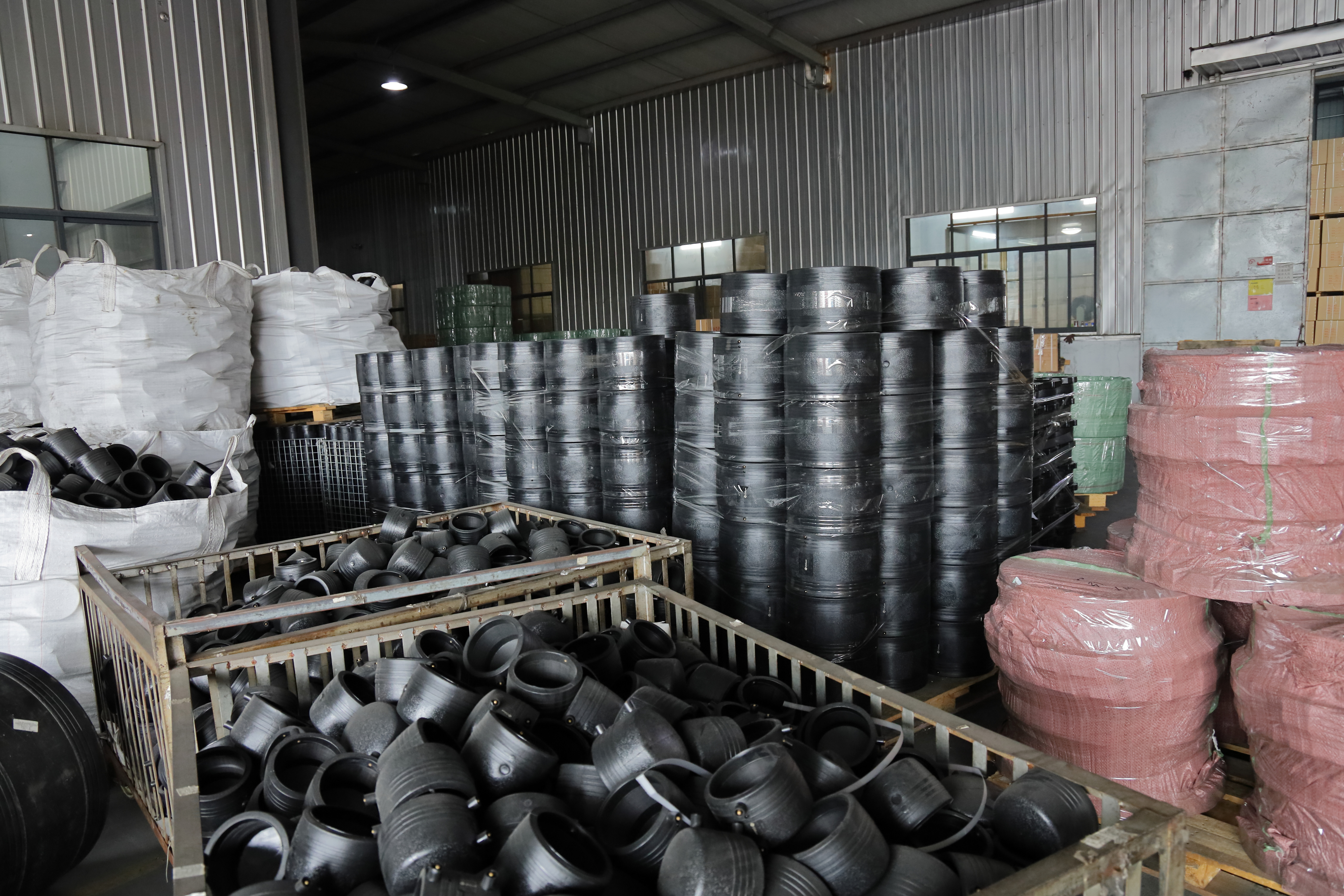
An HDPE adaptor is a special type of fitting used to connect HDPE (High-Density Polyethylene) pipes to pipes or equipment made from different materials. Think of it as a “translator” in a pipeline system. HDPE pipes are flexible, corrosion-free, and long-lasting, but they cannot be directly joined to metal valves, PVC pipes, or older systems without help. That’s where the adaptor steps in.
At its core, an HDPE adaptor usually has two parts:
An HDPE spigot or fusion end that can be welded to an HDPE pipe.
A transition end made for thread, flange, compression, or metal welding.
This combination makes it possible to connect almost any type of pipe to an HDPE system safely.
Here’s a simple breakdown:
| Adaptor Part | Purpose |
| HDPE Fusion End | Creates a leak-free joint with HDPE pipe |
| Threaded/Flanged/Metal End | Connects to valves, steel pipes, PVC fittings, or meters |
| Reinforcement (Brass/Steel Insert) | Adds strength to withstand pressure |
Transition Fittings: From HDPE to Steel, PVC, Copper & Ductile Iron
HDPE adaptors are often called transition fittings because they help move from one piping material to another. Different materials expand, contract, and handle pressure in different ways, so choosing the right adaptor is important.
Common transitions include:
HDPE to Steel — useful for gas lines, water mains, and industrial plants.
HDPE to PVC — common in irrigation and low-pressure water systems.
HDPE to Copper — seen in building plumbing and HVAC systems.
HDPE to Ductile Iron — used in municipal pipelines and fire systems.
Each transition type may require a different adaptor style such as:
Threaded adaptors (BSP/NPT)
Flange adaptors/stub ends
Compression adaptors
PE–Steel transition joints
These adaptors ensure the system stays leak-free even when materials behave differently under temperature or pressure.
How HDPE Adaptors Connect Different Piping Systems & Connection Methods
HDPE adaptors use several connection methods to fit into different piping systems. The most common include:
Butt Fusion
Fuses the HDPE side to the pipe using heat and pressure. Creates a single, solid piece.
Electrofusion
Ideal for tight spaces. Small wires inside the fitting melt the HDPE for a strong joint.
Threaded Connection
Allows HDPE pipes to connect to taps, valves, meters, or metal fittings.
Flanged Connection
Best for pumps, large valves, industrial machinery, and systems that may need maintenance.
Mechanical/Compression Connection
Useful for quick repairs or joining HDPE to older systems that cannot be welded.
A quick comparison of connection types:
| Connection Method | Best Use Case | Strength | Reusability |
| Butt Fusion | Long pipelines | ★★★★★ | No |
| Electrofusion | Confined sites | ★★★★★ | No |
| Threaded | Small valves/meters | ★★★☆☆ | Yes |
| Flanged | Pumps, heavy equipment | ★★★★☆ | Yes |
| Compression | Repairs/retrofits | ★★★☆☆ | Yes |
The Role of HDPE Adaptor in Modern Pipeline Infrastructure
HDPE adaptors are essential in today’s water, gas, and industrial systems because pipelines rarely use only one material. Cities mix old cast-iron pipes with new HDPE mains, industries use steel equipment with PE lines, and builders often combine copper and HDPE inside buildings.
HDPE adaptors make all of this possible by:
Allowing safe transitions between materials
Improving system compatibility
Reducing leak risks at connection points
Supporting repair and upgrade projects without replacing entire lines
Whether it’s a drinking-water network, a mining slurry line, a fire protection system, or an irrigation field, HDPE adaptors help keep the system running smoothly and safely.
How Does an HDPE Adaptor Work? Structure & Connection Mechanism
Main Components: HDPE PE100 Body, Metal Inserts, Backup Rings, Gaskets
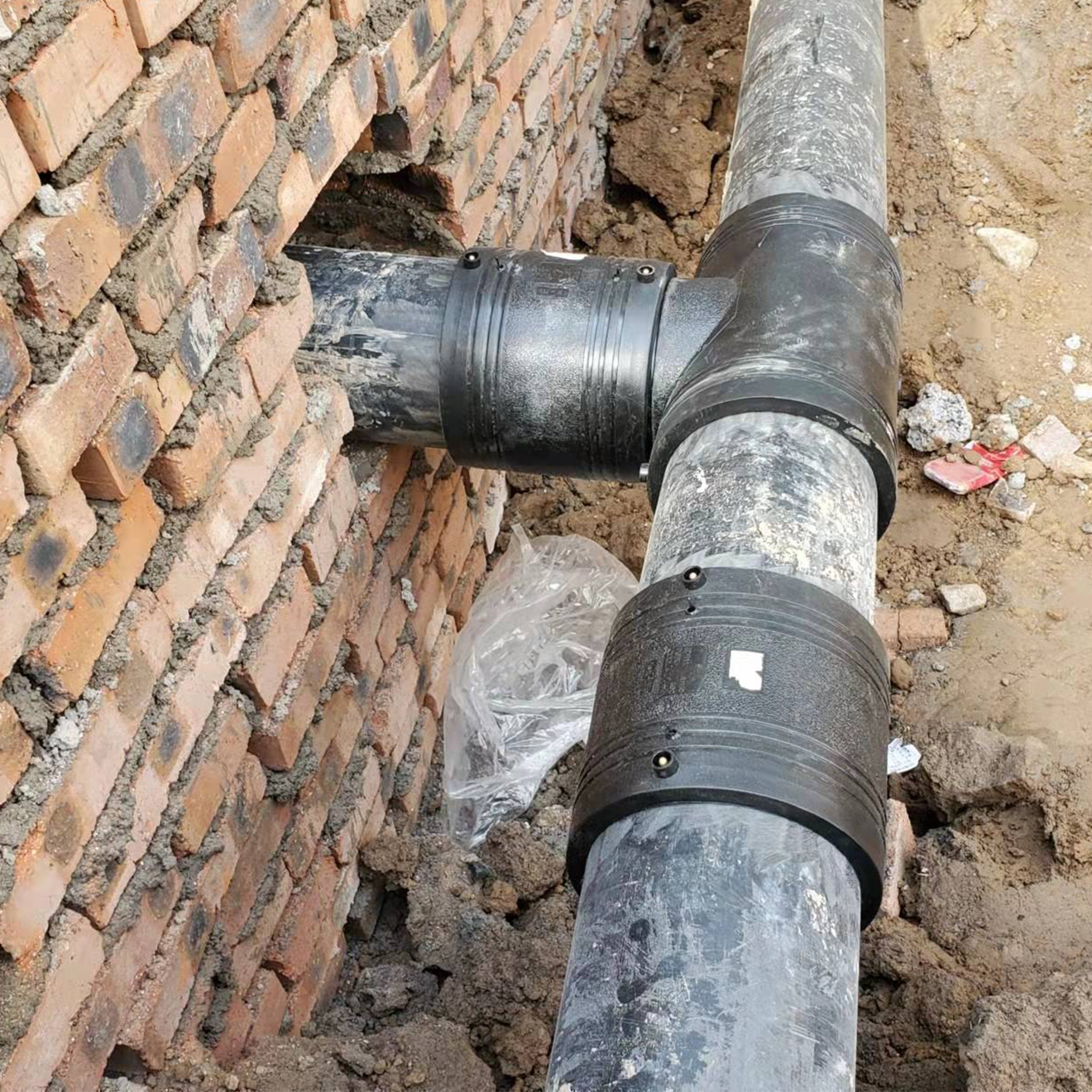
An HDPE adaptor may look simple from the outside, but it’s actually built with several parts that work together to create a strong and leak-free connection. Most high-quality adaptors are made from PE100, which is the strongest grade of HDPE used in pressure pipelines.
Here are the key components you’ll usually find:
| Component | What It Does |
| HDPE PE100 Body | Provides flexibility, corrosion resistance, and forms the fused joint with the pipe |
| Metal Insert (Brass or Stainless Steel) | Strengthens the threaded or transition end for high-pressure use |
| Backup Ring / Flange Ring | Distributes bolt pressure and prevents damage during flange tightening |
| Gaskets (EPDM, NBR, or Rubber Seals) | Ensures a tight, leak-free seal between flange faces |
| Long-Spigot End | Allows enough length for butt fusion or electrofusion welding |
Each part has a job, and together they allow the adaptor to connect HDPE pipes to valves, pumps, steel pipes, or PVC lines safely.
Monolithic Fusion Joint Concept for Leak-Free Systems
One of the biggest advantages of HDPE piping is that welded joints become monolithic—meaning the pipe and fitting fuse into one solid piece. Unlike metal pipes that rely on gaskets or threads alone, HDPE welding melts the molecules of the adaptor and the pipe together.
This creates:
A monolithic joint works especially well in underground pipelines, gas systems, and areas affected by ground movement.
Anti-Pullout and Stress Distribution Design
Because pipelines often face pressure, vibration, or soil movement, HDPE adaptors include built-in design features that prevent the joint from pulling apart.
Key anti-pullout features include:
Metal reinforcement inside threaded adaptors
Prevents cracking under torque.
Long spigot penetration for stronger weld area
Gives more surface contact for a stronger bond.
Flange rings that distribute bolt stress evenly
Avoids crushing or deforming the HDPE face.
Tapered or grooved internal shapes
Helps spread mechanical forces along the pipe.
These features help the adaptor handle high pressure, sudden water hammer, or heavy equipment loads without failing.
Fusion Welding Methods: Butt Fusion, Electrofusion, Socket Fusion
HDPE adaptors can connect to pipes using several welding methods. The method you choose depends on pipe size, location, and project requirements.
1. Butt Fusion
This is the most common method. The pipe and adaptor are heated with a fusion plate, pressed together, and cooled to form a permanent bond.
Best for:
Large diameters
Long pipelines
High-pressure systems
2. Electrofusion
The adaptor has built-in heating coils. When energized, the coils melt the HDPE from the inside out.
Best for:
3. Socket Fusion
Used for small-diameter pipes. The pipe and fitting are heated with matched sockets and joined manually.
Best for:
Irrigation
Service connections
Residential plumbing
Here’s a quick comparison:
| Method | Pipe Size | Reliability | Typical Use |
| Butt Fusion | Medium–Large | ★★★★★ | Water, gas, industrial |
| Electrofusion | Small–Large | ★★★★★ | Repairs, tight areas |
| Socket Fusion | Small | ★★★★☆ | Low-pressure or small lines |
Proper Installation Sequence for Long-Term, Leak-Free Performance
Even the best HDPE adaptor won’t perform well unless it’s installed correctly. A good installation follows a clear sequence:
Clean and prepare the pipe ends
Remove dirt, oxidation, or scratches.
Check SDR and diameter compatibility
The adaptor and pipe must match in size and pressure class.
Align the pipe and adaptor perfectly
Misalignment can weaken the weld.
Apply the correct fusion settings
Heat, pressure, and cooling time must follow the manufacturer’s chart.
Inspect the fusion bead
A uniform “bead” around the joint means the weld is good.
For flanged adaptors
Perform pressure testing
Ensures that the system is leak-free before operation.
Following this sequence helps the HDPE adaptor deliver long service life, strong connections, and reliable performance under pressure.
Types of HDPE Adaptors: Which One Do You Need?
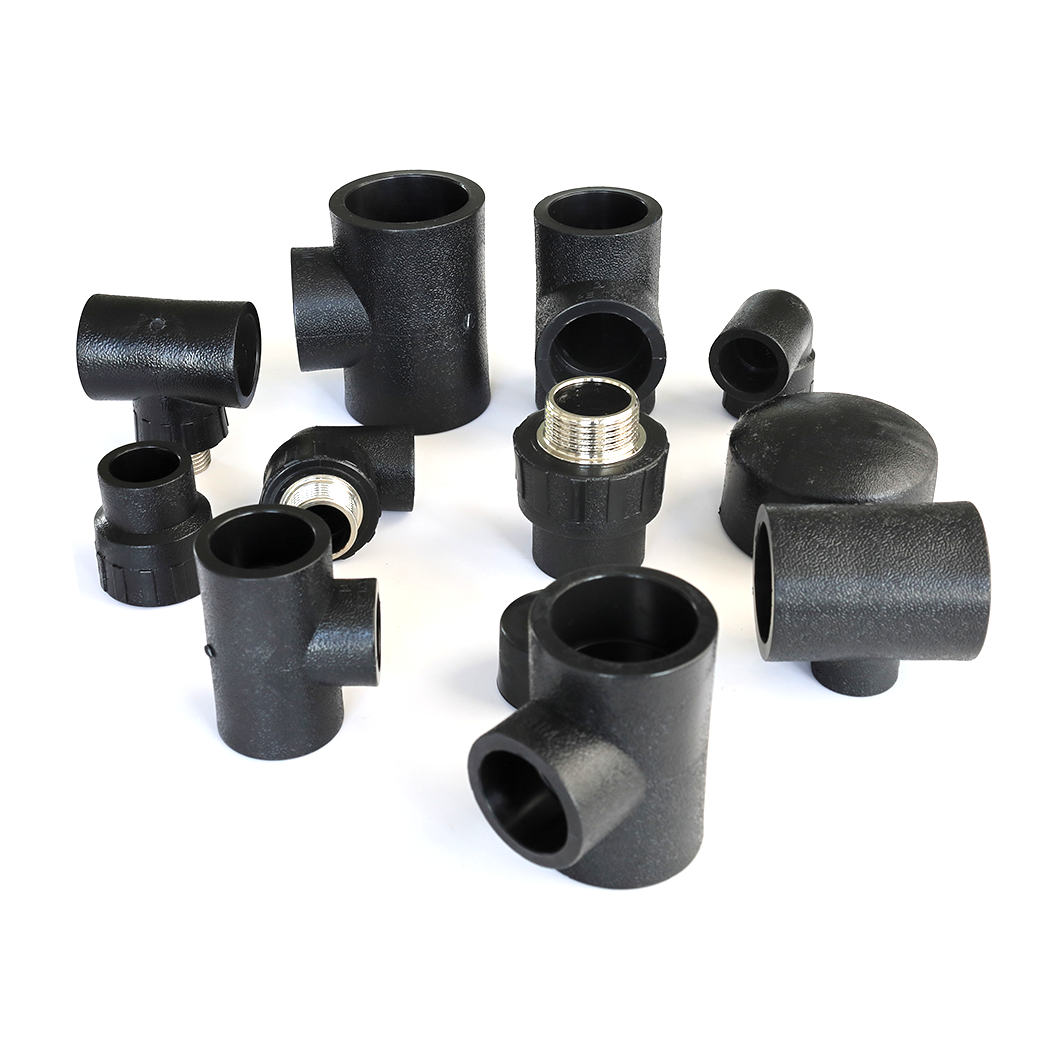
Choosing the right HDPE adaptor is an important step in designing a safe and reliable piping system. Each adaptor type is built for a specific job—whether it’s joining HDPE to steel, connecting to a valve, fixing old pipelines, or making a transition in a tight space. Below are the main types of HDPE adaptors and what they’re best used for.
HDPE Flange Adaptor (Stub Flange / Stub End)
HDPE flange adaptors are one of the most common and versatile fittings. They allow HDPE pipes to connect to pumps, valves, steel flanges, and other equipment that needs a strong, removable connection.
Butt Fusion Flange Adaptor Specifications
Comes with a long spigot end designed for butt fusion.
Suitable for high-pressure applications (PN10–PN16).
Works with HDPE SDR11 / SDR17 pipes.
Ideal for large systems like water mains, fire pipelines, and industrial plants.
Typical specs include:
| Size Range | Pressure Class | Fusion Method |
| DN50–DN1200 | PN10 / PN16 | Butt fusion |
HDPE Flange Adaptor with Backup Ring Assembly
A flange adaptor is almost always used together with a backup ring (also called a backing ring). The backup ring:
Distributes bolt load evenly
Prevents deformation of the HDPE face
Allows connection to ANSI, DIN, BS, or JIS flanges
Backup rings are usually made of:
Long Spigot vs. Short Stub End Design Differences
Quick tip:
Long spigots = better for high-pressure and heavy-duty welding.
Short stubs = better for tight spaces.
Stub End vs. Flange Adaptor: What’s the Practical Difference?
In most water and gas systems, contractors prefer flange adaptors because they're easier to align during fusion.
HDPE Thread Adaptor Variations
Threaded HDPE adaptors are used when you need to connect HDPE to threaded fittings, valves, water meters, or instrumentation.
PE100 BSP/NPT Threaded Adaptors for Instrumentation & Small Valves
Made from PE100 body + brass or stainless steel thread insert
Works with BSP or NPT threads
Good for pressure gauges, meters, and small valves
DZR Brass Threaded HDPE Adaptors for Potable Water Systems
DZR (Dezincification Resistant) brass prevents corrosion
Approved for drinking-water applications
Common in municipal and household water connections
316 Stainless Steel Thread Adaptors for Aggressive or Corrosive Media
Best for seawater, chemicals, industrial fluids
High strength and excellent corrosion resistance
HDPE to Steel Transition Adaptors (PE–Steel Weld-End Fittings)
These adaptors are built to connect HDPE pipelines directly to steel pipelines using a welded steel end.
Bevelled Steel Ends for Direct Welding to Steel Networks
Steel end is factory-welded and beveled for on-site welding
Provides a strong interface between HDPE and steel
Eliminates the need for flanges in long pipeline runs
Typical Uses in Gas, Oil & Industrial Pipelines
Gas distribution networks
Oil transport systems
Industrial pressure pipelines
Areas requiring high mechanical strength
Universal Adaption Joints (UAJ) for Multi-Material Connections
Universal adaptors are mechanical fittings used when you need to join HDPE to unknown or mixed materials.
Connecting HDPE to AC, Cast Iron, PVC & Unknown Legacy Pipes
These joints can grip irregular or older pipes commonly found in older water networks.
Compatible with:
Asbestos cement (AC)
Cast iron
Ductile iron
PVC
Unknown legacy pipes
Mechanical Sealing via Grip Rings & Gaskets
These are perfect for emergency repairs or upgrading old systems.
Electrofusion vs. Butt Fusion HDPE Adaptor Options
Both methods join HDPE adaptors to pipes, but each works better in different situations.
When to Choose Electrofusion HDPE Adaptor (Confined / Gas / Repair)
Works in small pits or tunnels
Provides highly controlled heat for gas applications
Great for repairing existing pipelines
When Butt Fusion Is the Best Choice (New Projects & Long Runs)
Faster for long pipeline installation
Creates strong monolithic joints
More cost-effective for large-diameter pipes
Compression & Mechanical HDPE Adaptor Solutions
These adaptors are great when you need fast, tool-free installation.
Quick Repair & Retrofit Use Cases
Limitations in Pressure & Diameter
Usually limited to ≤ DN110
Not ideal for high-pressure systems
Require proper tightening to avoid leaks
Mechanical adaptors give you flexibility, especially when welding isn’t possible or practical.
Key Benefits of Using HDPE Adaptor in Your Piping System
HDPE adaptors offer a long list of advantages that make them a top choice in modern water, gas, and industrial piping systems. Whether you’re dealing with corrosive fluids, underground pipelines, or mixed-material networks, these adaptors help improve performance, reduce maintenance, and extend system lifespan. Here are the key benefits you can expect.
Cost-Effectiveness and Easy Installation
One of the biggest benefits of HDPE adaptors is how simple and economical they are to install. Unlike metal fittings, HDPE adaptors don’t require heavy equipment or complex welding methods.
Why they save money:
Lightweight and easy to handle on-site
Lower labor costs due to faster installation
Minimal maintenance over the entire system life
Fewer replacement parts compared to metal systems
HDPE adaptors are especially cost-efficient for long pipelines or remote job sites where transporting heavy steel fittings would be expensive.
Chemical Resistance and Durability (50-Year Design Lifespan)
HDPE adaptors are made from PE100, a material known for its outstanding durability and resistance to chemical attack. This makes them suitable for everything from drinking-water networks to industrial chemical lines.
Key strengths include:
Resistant to most acids, salts, and organic compounds
No rust, no scaling, and no galvanic corrosion
A 50-year design life under normal operating pressure
This long lifespan reduces the need for repairs, shutdowns, and expensive downtime.
Flexibility, Impact Resistance & Ground Movement Tolerance
Traditional metal fittings can crack under stress, but HDPE adaptors are built to bend and flex without breaking.
HDPE offers:
Excellent flexibility for shifting soil
High impact resistance—less likely to break on job sites
Ability to absorb vibrations from pumps, traffic, or machinery
Resistance to freezing and thawing cycles
These qualities make HDPE adaptors perfect for earthquake-prone areas, uneven terrain, and buried pipelines.
Corrosion-Free Performance in Aggressive or Marine Environments
Steel and iron fittings corrode quickly in coastal or chemical environments, but HDPE adaptors stay strong.
Corrosion-free benefits:
No rusting in saltwater conditions
No pitting or erosion
Suitable for desalination plants, offshore platforms, and marine outfalls
HDPE adaptors are preferred in industries where corrosion is a constant threat.
Pressure Rating Excellence (PN16 / PN10 & SDR Compatibility)
HDPE adaptors are designed to handle high working pressures when paired with the right SDR-rated pipe.
Typical pressure classes:
| SDR Class | Pressure Rating | Common Use |
| SDR11 | PN16 | Water mains, fire lines, industrial pipes |
| SDR17 | PN10 | Irrigation, drainage, low-pressure systems |
Because HDPE adaptors match the same SDR and pressure rating as HDPE pipes, the entire system remains balanced, safe, and predictable under load.
Smooth Bore for Hydraulic Efficiency & Reduced Energy Loss
HDPE adaptors maintain the same smooth internal surface as HDPE pipes. Unlike metal pipes that corrode or scale over time, HDPE keeps water flowing smoothly for decades.
Hydraulic advantages:
Lower friction means higher flow rates
Less pumping energy required
No buildup of deposits or minerals
Perfect for long-distance water transport
This helps reduce operating costs for pumping stations and water treatment plants.
Environmental and Economic Advantages vs. Traditional Metal Systems
HDPE adaptors offer several environmental and long-term economic benefits.
Environmental benefits:
Lower carbon footprint during transport (lightweight material)
No toxic rust particles entering the water supply
HDPE is recyclable at the end of its life
Economic advantages:
Fewer failures and replacements over time
Less downtime for repairs
Better performance in harsh conditions than metal fittings
Because HDPE adaptors last longer and require less upkeep, they help reduce the total lifecycle cost of a pipeline project.
Technical Specifications and Standards for HDPE Adaptor

Understanding the technical details behind HDPE adaptors can help you choose the right product for your project. These specifications determine whether the adaptor can handle your pressure needs, fit your pipe size, or meet industry safety standards. Here’s a simple breakdown of the most important technical features you should know.
Size Range: From DN50mm to DN1200mm (and Typical Limits for Threaded Types)
HDPE adaptors are available in a wide range of diameters to fit different types of pipelines.
Standard size ranges include:
DN50–DN1200 for flange adaptors and butt fusion adaptors
DN20–DN110 for threaded adaptors
DN20–DN160 for compression adaptors
Threaded adaptors are smaller because threads cannot handle extreme pressure at large diameters.
Quick chart:
| Adaptor Type | Typical Size Range | Notes |
| Flange Adaptor | DN50–DN1200 | Suitable for high-pressure pipelines |
| Threaded Adaptor | DN20–DN110 | Best for meters, valves & small systems |
| PE–Steel Transition | DN25–DN400 | Used in oil, gas & industrial lines |
| Compression Adaptor | DN20–DN160 | For quick repairs and low-pressure |
Pressure Ratings: SDR11 (PN16) vs. SDR17 (PN10) Explained
HDPE adaptors follow the same pressure rating system as HDPE pipes. The SDR (Standard Dimension Ratio) tells you how thick the pipe wall is compared to the diameter.
SDR11 = PN16
SDR17 = PN10
Simple comparison:
| SDR Class | Pressure Rating | Recommended Use |
| SDR11 | PN16 | Municipal water, gas, fire systems |
| SDR13.6 | PN12.5 | General water supply |
| SDR17 | PN10 | Irrigation & low-pressure |
| SDR21 | PN6 | Drainage |
Choosing the right SDR ensures the adaptor matches your pipe’s pressure capability and performs safely throughout its lifespan.
Material Composition: PE100 Virgin Material Requirements
High-quality HDPE adaptors are made from PE100 virgin resin, which offers:
Many reputable manufacturers use raw materials from well-known brands such as:
Borealis
SABIC
Sinopec
Basell
PE100 is the international standard for pressure-rated HDPE systems.
Manufacturing Standards (ISO 4427-3, EN 12201-3, AS/NZS 4129, ASTM etc.)
To ensure safety, performance, and global compatibility, HDPE adaptors must meet international manufacturing standards.
Common standards include:
| Standard | Region | What It Covers |
| ISO 4427-3 | International | HDPE fittings for water supply |
| EN 12201-3 | Europe | Dimensions & performance for PE fittings |
| AS/NZS 4129 | Australia/New Zealand | Fusion fittings for pressure pipes |
| ASTM F2206 / F1055 | USA | Electrofusion & transition fittings |
| AWWA C906 | North America | PE pipes & fittings for water works |
These certifications help ensure the adaptor is safe for potable water, rated for pressure, and suitable for long-term buried installations.
Color Coding: Black, Blue (Water), Yellow (Gas) HDPE Adaptor Options
Color coding helps users identify what type of pipeline the adaptor is meant for.
Color meanings:
Black: General-purpose HDPE adaptors
Black with Blue Stripes: Potable water systems
Black with Yellow Stripes: Gas pipelines
Black with Green Stripes: Sewer applications
These color codes match international HDPE pipe standards and help prevent installation errors.
Temperature and Pressure Limits for HDPE Adaptor Service
HDPE adaptors perform best within certain temperature and pressure limits.
Typical operating range:
-40°C to +40°C for continuous service
Can handle up to +60°C for short durations
Pressure rating drops as temperature increases
Important factors that affect limits:
SDR rating
Fusion method used
The fluid being transported
Installation environment (buried, above ground, marine)
General guide:
| Temperature | Pressure Impact |
| 0°C to +25°C | Full pressure rating (PN10 / PN16) |
| +30°C to +40°C | Slight reduction |
| +40°C to +60°C | Significant reduction; check manufacturer data |
Understanding these limits helps prevent failures and ensures the HDPE adaptor performs reliably in your system.
Common Applications for HDPE Adaptor Fittings
HDPE adaptors are used in almost every type of pipeline system because they allow HDPE pipes to connect safely to valves, pumps, steel pipes, PVC lines, and older networks. Their durability, pressure resistance, and corrosion-proof performance make them suitable for a wide range of industries. Below are the most common applications where HDPE adaptors play an important role.
Municipal Water Supply and Distribution Systems
HDPE adaptors are widely used in city water mains and rural distribution systems. They help connect HDPE pipes to:
Why they work well here:
They are safe for drinking water
They handle high pressure (PN10–PN16)
They resist corrosion and scaling
Many municipalities prefer HDPE adaptors because they last 50+ years and need almost no maintenance.

Gas Distribution Networks & Transition from Steel Mains
Gas pipelines often require transitions between older steel networks and modern PE gas lines. HDPE adaptors, especially PE–steel transition fittings and electrofusion adaptors, are commonly used because gas systems demand very tight, leak-free joints.
Best features for gas applications:
These adaptors are certified for gas service under standards like ISO, EN, and ASTM.
Mining and Dredging Operations (Slurry & Abrasive Media)
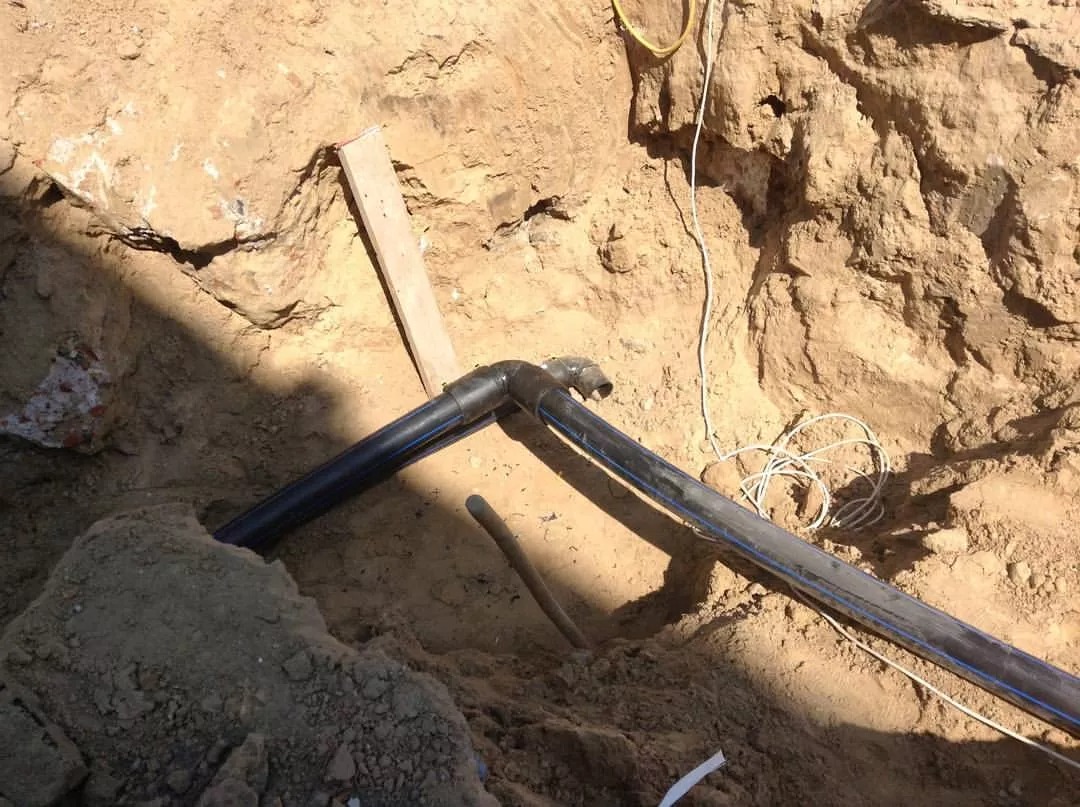
Mining pipelines transport abrasive materials like slurry, sand, ore particles, and chemicals. HDPE adaptors connect pumps, manifolds, and discharge lines where extreme wear resistance is needed.
Why HDPE adaptors work in mining:
Excellent abrasion resistance
Flexible and crack-resistant
Lightweight for fast installation on remote sites
Anti-corrosion even in acidic or dirty environments
Slurry systems often use flange adaptors, allowing quick replacement of worn sections.
Industrial Process Piping and Chemical Transport
Many factories and processing plants use HDPE piping because it handles harsh industrial chemicals better than metal pipes.
HDPE adaptors are used to connect HDPE pipes to:
Steel equipment
Chemical dosing pumps
Stainless steel valves
Measuring instruments
Advantages in industry:
They are ideal for chemical treatment plants, food processing, and pharmaceutical systems.
Agricultural Irrigation Systems & Rural Water Schemes
Farm irrigation networks use HDPE adaptors because they are easy to install and lightweight. They allow quick connections between HDPE, PVC, and metal components.
Common uses include:
Farmers like them because they are low-cost, reliable, and can be repaired quickly without special tools.
Marine and Coastal Infrastructure & Desalination Plants
Saltwater environments destroy metal fittings quickly, but HDPE adaptors stay corrosion-free.
You’ll see HDPE adaptors in:
Ocean outfalls
Desalination intake lines
Harbors and coastal pump stations
Marine aquaculture systems
Key strengths in marine settings:
No corrosion from saltwater
Safe for long-term submerged use
Lightweight for offshore installation
Stainless steel–reinforced threaded adaptors are common in high-salinity areas.
HVAC and Building Services (Chilled Water, Fire Systems)
Commercial and residential buildings often use HDPE pipes for chilled water and fire protection lines. HDPE adaptors help make connections to pumps, meters, and metal fire equipment.
Common applications:
HVAC chilled water loops
Fire hydrant and sprinkler systems
Building riser transitions
Pump room pipe connections
HDPE adaptors help reduce vibration and noise in HVAC systems thanks to their flexibility.
Wastewater & Sewage Treatment Facilities
Wastewater and sewage lines carry corrosive liquids and gases, which can quickly damage steel or cast iron connections. HDPE adaptors are ideal because they resist chemical attack and never rust.
They’re used in:
Flange adaptors and universal joints make it easy to connect HDPE lines to pumps and existing infrastructure.
How to Install an HDPE Adaptor: Best Practices & Methods
Installing an HDPE adaptor correctly is essential for a leak-free and long-lasting pipeline. Whether you’re joining HDPE to a valve, steel pipe, PVC fitting, or an older network, following the right steps ensures strong and safe connections. Below are the best practices and installation methods used across water, gas, industrial, and irrigation systems.
Pre-Installation Checklist and Site Preparation
Before you start, make sure the work area and materials are properly prepared. This helps avoid mistakes and ensures a reliable connection.
Checklist:
Confirm pipe size, SDR rating, and pressure class match the adaptor.
Inspect adaptor ends for cracks, dirt, or damage.
Clean the pipe exterior to remove debris, grease, or oxidation.
Mark the pipe insertion depth (for electrofusion or compression).
Ensure the temperature and weather meet welding guidelines.
Support pipes properly to avoid bending or strain during fusion.
Pro tip: Always store HDPE fittings in the shade to avoid UV overheating before installation.
Tools and Equipment Needed for HDPE Adaptor Installation
Different connection methods require different tools. Here are the essentials:
| Installation Type | Required Tools |
| Butt Fusion | Fusion machine, facer, heater plate, clamps, alignment tools |
| Electrofusion | Electrofusion control box, scraper tool, pipe clamps |
| Threaded Connection | Pipe wrench, PTFE tape, torque wrench |
| Flanged Connection | Bolts, nuts, washers, torque wrench, gaskets |
| Compression Joint | Wrench set, pipe cutters, chamfer tool |
Having the correct equipment prevents uneven heating, misalignment, and poor sealing.
Butt Fusion Welding Procedure for HDPE Flange Adaptor & Spigot Ends
Butt fusion is the most common method used for HDPE flange adaptors and long-spigot fittings. It creates a full monolithic weld.
Step-by-step:
Clamp the pipe and adaptor into the fusion machine.
Face both surfaces until smooth and perfectly aligned.
Apply heating plate until proper melt bead forms.
Remove heater plate and press the ends together.
Maintain pressure during cooling to avoid movement.
Key points:
Electrofusion Welding for HDPE Adaptor Connections in Confined Areas
Electrofusion is ideal for small trenches, repairs, and gas pipelines where precision is important.
How it works:
The adaptor contains built-in heating coils.
The electrofusion machine energizes the coils.
The HDPE melts and bonds from the inside out.
Electrofusion steps:
Scrape pipe surface to remove oxidation.
Clamp pipe to prevent movement.
Insert adaptor spigot into electrofusion coupler.
Scan the fitting barcode for correct settings.
Start fusion cycle and allow full cooling time.
Cooling time is critical—moving the joint too early can cause hidden leaks.
Flange Bolting Pattern, Gasket Selection & Torque Specifications
When installing a flange adaptor, proper bolt tightening is just as important as the fusion weld.
Flange installation basics:
Use EPDM, NBR, or rubber gaskets depending on fluid type.
Tighten bolts in a star pattern to apply even pressure.
Use a torque wrench to avoid over-tightening.
Ensure backing ring holes align perfectly before welding.
Typical torque sequence:
Hand tighten bolts
Tighten to 30% of torque
Tighten to 60% of torque
Finish at 100% torque
Recheck all bolts
This prevents leaks and avoids warping the HDPE flange face.
Threaded HDPE Adaptor Installation: PTFE Tape, Torque & Reinforcement
Threaded HDPE adaptors allow easy connection to metal equipment, but they require proper handling to avoid cracking.
Installation rules:
Wrap PTFE tape clockwise around male threads.
Do not overtighten—HDPE can deform under high torque.
Many female HDPE adaptors come with stainless steel reinforcement to prevent splitting.
Use two wrenches: one to hold the adaptor, one to tighten the metal fitting.
Threaded adaptors are best for small valves, meters, and instrumentation.
Common Installation Mistakes to Avoid (Misalignment, Over-Torque, SDR Mismatch)
Here are the most frequent errors installers make:
❌ Misalignment
Leads to weak welds and premature failure.
❌ Over-tightening flange or thread connections
Can crack the HDPE or distort sealing faces.
❌ Using mismatched SDR or pressure classes
Creates point-of-failure in the pipeline.
❌ Skipping pipe scraping during electrofusion
Oxidation prevents the HDPE from bonding.
❌ Not allowing enough cooling time
Causes hidden joint failures.
Pressure Testing After HDPE Adaptor Installation (Water & Gas Systems)
After installation, the pipeline must be tested to ensure safety and leak-free performance.
For water systems:
Use hydrostatic pressure testing.
Increase pressure gradually to the required PN rating.
Hold pressure and monitor for drops.
For gas systems:
Test checklist:
Testing confirms the HDPE adaptor is fully sealed and ready for operation.
Choosing the Right HDPE Adaptor: Selection Criteria
Selecting the correct HDPE adaptor is an important step in making sure your pipeline works safely and efficiently. Because HDPE systems often connect to steel, PVC, valves, pumps, and older pipelines, the adaptor must match the pipe size, pressure rating, and operating environment. Below are the key criteria to help you choose the right adaptor for your project.
Pipe Size, OD and SDR Rating Compatibility
The first thing to check is whether the adaptor matches your pipe’s dimensions and wall thickness.
What to verify:
Pipe Outer Diameter (OD): Must match the adaptor’s fusion or insertion end.
SDR Rating: SDR11, SDR13.6, SDR17, etc.
Pressure Class: PN6, PN10, PN12.5, PN16, PN20, PN25
Using an adaptor with the wrong SDR rating can create weak points in your pipeline.
Quick compatibility chart:
| Pipe SDR | Pressure Class | Recommended Adaptor Use |
| SDR11 | PN16 | Water mains, gas lines, fire networks |
| SDR13.6 | PN12.5 | General water supply |
| SDR17 | PN10 | Irrigation & low-pressure flow |
| SDR21 | PN6 | Drainage & gravity systems |
Always match the SDR of the pipe and adaptor for best results.
Pressure Requirements for Your Application (PN6–PN25)
Pressure rating is one of the most important factors when selecting an HDPE adaptor. Different systems require different pressure strengths.
Typical pressure classes:
PN6 – Low-pressure drainage
PN10 – Irrigation and general water supply
PN12.5 – Medium-pressure municipal systems
PN16 – Drinking water, gas, industrial pipelines
PN20 / PN25 – Special high-pressure systems
Higher-pressure lines usually require:
If you're unsure, choose an adaptor with a higher PN rating for safety.
Chemical Compatibility: When to Use Brass vs. Stainless vs. All-PE
Different materials react differently to chemicals, temperature, and corrosive environments. The transition end of the adaptor must match your system’s needs.
Material selection guide:
| Adaptor Material | Best For | Do Not Use For |
| DZR Brass | Drinking water, building plumbing | Acidic chemicals |
| 316 Stainless Steel | Marine, chemical plants, corrosive fluids | Very low-cost rural systems |
| All-HDPE (PE100) | Full-plastic systems, non-metal areas | High mechanical load or threaded joints |
Use stainless steel when dealing with:
Saltwater
Acids
Fertilizers
Industrial chemicals
Use brass when installing:
Water meters
Domestic water systems
Irrigation valves
Connection Type: Flanged vs. Threaded vs. Electrofusion vs. Universal
Each connection type is designed for specific installation conditions.
Which connection is right for you?
| Connection Type | Best For | Key Benefits |
| Flanged | Pumps, valves, equipment | Removable, strong, high-pressure |
| Threaded | Small valves, meters | Simple and inexpensive |
| Electrofusion | Gas lines, confined spaces | Highly controlled, leak-free |
| Butt Fusion | Long pipelines, main networks | Strongest joint, long-term |
| Universal/Mechanical | Repairs or old systems | No welding, fast installation |
If your project requires frequent maintenance or equipment replacement, a flange adaptor is usually the best option.
Environmental Factors: UV Exposure, Buried Conditions, Marine Atmosphere
Your installation environment affects the type of adaptor you need.
Consider these conditions:
Direct Sunlight (UV Exposure):
Choose black PE100 adaptors with UV-stabilized material.
Buried Pipelines:
Ensure proper SDR rating and fusion method for soil load.
High-Salinity or Marine Atmosphere:
Use 316 stainless steel inserts or flanged adaptors with stainless backup rings.
High Temperature Areas:
Note that HDPE pressure rating decreases as temperature increases.
Cold Regions:
HDPE adaptors remain flexible and resist freezing damage.
Matching the adaptor to the environment improves performance and lifespan.
Manufacturer Quality, Material Certifications & Project Specifications
Not all HDPE adaptors are made with the same quality. Always choose reputable manufacturers who meet international standards.
What to look for:
PE100 or PE100+ certified raw material
ISO, EN, AS/NZS, or ASTM approvals
Factory pressure testing
Traceability codes or barcodes
QC reports and material certificates
Many high-quality adaptors use raw materials from:
Borealis
SABIC
Sinopec
Basell
Choosing certified adaptors helps ensure:
HDPE Adaptor vs. Alternative Connection Methods
HDPE adaptors aren’t the only way to connect HDPE pipelines, but they are often the safest, strongest, and most flexible option. To help you decide when an adaptor is the right choice, let’s compare it with other common connection methods used in water, gas, industrial, and irrigation systems.
HDPE Adaptor vs. Traditional Metal Flanges & Welded Steel Neck Flanges
Many older systems use metal flanges or welded steel neck flanges to connect pipes to pumps or valves. While these methods work, they’re not always the best fit for modern HDPE pipelines.
HDPE Adaptor Advantages:
Creates a leak-free fusion joint on the HDPE side
Will not rust or corrode
Lighter and easier to handle on job sites
Compatible with multiple flange standards (ANSI, DIN, BS, JIS)
Flexes with soil movement, reducing failure risk
Metal Flange/Welded-Neck Weaknesses:
Prone to rust in wet or coastal environments
Heavy and requires lifting equipment
Less tolerant of vibration and ground movement
Welding steel requires trained welders and safety protocols
Simple comparison:
| Feature | HDPE Flange Adaptor | Metal Weld-Neck Flange |
| Corrosion resistance | ★★★★★ | ★☆☆☆☆ |
| Weight | Very light | Heavy |
| Installation | Easy | Medium–Hard |
| Flexibility | High | Low |
| Lifespan | 50+ years | Shorter in corrosive areas |
HDPE flange adaptors are usually the better choice for mixed-material systems unless the entire pipeline is steel.
HDPE Adaptor vs. Mechanical Couplings & Repair Clamps
Mechanical couplings and repair clamps are quick solutions when welding isn’t possible. They use rubber gaskets and mechanical grips to seal the joint.
Where mechanical couplings are useful:
But compared to HDPE adaptors:
They do not create a permanent fusion bond
They rely on bolts and gaskets, which wear out over time
They’re more likely to leak under pressure spikes
They require periodic tightening and inspection
Key differences:
| Feature | HDPE Adaptor | Mechanical Coupling |
| Joint Type | Permanent fusion | Mechanical grip |
| Leak Risk | Very low | Higher |
| Lifespan | 50+ years | Moderate |
| Maintenance | Almost none | Needs inspection |
| Pressure Handling | Excellent | Moderate |
HDPE adaptors are best for long-term, permanent installations, while couplings are great for quick fixes.
HDPE Adaptor vs. Direct Fusion Connections (All-PE Systems)
In an all-HDPE system, pipes can be joined directly using butt fusion or electrofusion without any adaptor. This creates a fully homogenous system.
Direct Fusion Benefits:
When You Still Need an HDPE Adaptor:
Connecting to valves, pumps, meters, or equipment
Joining HDPE to steel, PVC, copper, or ductile iron
Creating flanged joints for future maintenance
Installing threaded instruments or small valves
Quick summary:
| Scenario | Best Method |
| Long HDPE pipeline | Direct fusion |
| HDPE to valve or pump | HDPE adaptor |
| HDPE to steel | PE–Steel adaptor |
| Repair of old network | Mechanical coupling or universal adaptor |
Direct fusion is ideal when everything is HDPE, but adaptors are essential anytime you need transitions.
When to Use Threaded HDPE Adaptor Instead of Flanged Solutions
Threaded HDPE adaptors are commonly used for smaller installations or where quick connections are needed.
Choose threaded adaptors when:
Connecting water meters
Installing pressure gauges
Adding small valves or taps
Working with DN20–DN110 pipes
You need a removable and inexpensive solution
Choose flanged adaptors when:
Connecting pumps or large valves
Working with DN100–DN1200 pipes
You need a strong, pressure-rated connection
The system requires frequent maintenance access
Threaded vs. Flanged at a glance:
| Feature | Threaded Adaptor | Flanged Adaptor |
| Size Range | DN20–DN110 | DN50–DN1200 |
| Cost | Low | Medium |
| Strength | Good | Very strong |
| Pressure Rating | Moderate | High |
| Installation | Very easy | Requires bolting pattern |
Threaded adaptors are perfect for instrumentation and small fittings, while flange adaptors are best for heavy-duty pipeline equipment.
Quality Considerations: What Makes a Good HDPE Adaptor?
A high-quality HDPE adaptor is more than just a piece of plastic—it’s a safety component that keeps pipelines leak-free for decades. Whether the adaptor is used in water, gas, industrial, or marine systems, choosing a reliable product ensures long-term performance and fewer maintenance issues. Here are the most important quality factors to look for.
PE100+ Association Approved Raw Materials
A good HDPE adaptor starts with the right raw material. The PE100+ Association sets strict standards for pipe-grade polyethylene used in pressure systems.
Why PE100+ materials matter:
Higher tensile strength
Better resistance to cracking
Longer service life (50+ years)
Safe for potable water and gas networks
Adaptors made from PE100+ materials perform better under pressure, especially in buried or high-stress installations.
Leading Material Brands: Borealis, Sabic, Sinopec & Others
Top manufacturers use premium resin from well-known global suppliers. These materials offer consistent quality, stable performance, and proven durability.
Common high-grade PE100 resin brands:
Borealis (Austria)
SABIC (Saudi Arabia)
Sinopec (China)
Basell/LyondellBasell
Total Petrochemicals
These brands provide certified pressure pipe resins that meet ISO and EN standards.
Injection Molding vs. Fabricated HDPE Adaptor Quality Differences
HDPE adaptors can be made using two main methods: injection molding or fabrication. Each method has differences in strength, precision, and price.
| Feature | Injection-Molded Adaptors | Fabricated Adaptors |
| Manufacturing Method | Molded in a single piece | Cut and welded from HDPE pipe |
| Strength | Excellent for small–medium sizes | Best for large diameters |
| Size Range | DN20–DN400 | DN400–DN1200+ |
| Shape Accuracy | Very high | Dependent on welding skill |
| Cost | Lower | Higher |
| Typical Use | Threaded, compression, small flange adaptors | Large flange adaptors |
Injection-molded adaptors offer perfect shape consistency, while fabricated adaptors allow the production of larger, customized fittings.
Warranty and Lifespan Guarantees (e.g., 10-Year Product Warranty)
Quality manufacturers often back their adaptors with warranties, showing confidence in material strength and manufacturing standards.
Common warranty indicators include:
10-year product warranty for manufacturing defects
Certification for 50-year design life under ISO 4427 and EN 12201
Traceable batch numbers for quality tracking
Compliance with international potable water and gas approvals
Good warranties help ensure the adaptor is suitable for long-term projects like city water networks and industrial pipelines.
Quality Control and Factory Testing Procedures (Hydro, Dimension, Visual)
Reliable HDPE adaptors undergo strict factory testing before being shipped. These tests confirm that each fitting can handle pressure, temperature, and the mechanical stresses of real installations.
Typical quality control tests:
| Test Type | Purpose |
| Hydrostatic Pressure Test | Ensures the adaptor withstands PN10–PN25 pressure ratings |
| Dimensional Inspection | Verifies OD, wall thickness, and spigot length |
| Visual Inspection | Checks for defects, bubbles, voids, and molding flaws |
| Material Melt Flow Test (MFR) | Confirms PE100 resin consistency |
| Fusion Compatibility Test | Ensures the adaptor welds correctly with HDPE pipe |
| Thread Accuracy Test | For brass/steel inserts (BSP/NPT) |
Manufacturers who perform all these tests deliver safer, longer-lasting HDPE adaptors suitable for demanding applications like gas, mining, and municipal water supply.
Troubleshooting & Maintenance of HDPE Adaptor Connections
Even though HDPE adaptors are designed to provide strong, long-lasting connections, issues can still appear if they’re installed incorrectly or exposed to harsh conditions. Knowing how to troubleshoot and maintain these fittings helps prevent leaks, system failures, and unnecessary repairs. Here are the most common problems and how to handle them.
Leak Prevention, Diagnosis & Corrective Measures
Leaks are usually caused by improper fusion, loose bolts, worn gaskets, or damaged threads. Early diagnosis can save time and prevent pipeline downtime.
Steps to prevent leaks:
Make sure all surfaces are clean before welding.
Use the correct torque on flanged adaptors.
Check that pipes are fully inserted in mechanical or threaded joints.
Always follow proper cooling times after fusion.
How to diagnose a leak:
Look for wet spots, bubbling, or pressure drops.
Use dye or soapy water to detect small gas leaks.
Check the fusion bead for uniformity.
Corrective actions:
Dealing with Misalignment During or After Installation
Misalignment is one of the most common causes of joint failure in HDPE systems. When the pipe isn’t lined up correctly, it puts stress on the adaptor.
How to identify misalignment:
Fixing misalignment:
Use proper pipe clamps during fusion.
Re-cut and re-align the pipe before fusion.
Add pipe supports to remove stress after installation.
If misalignment occurs after backfilling, the pipe may need to be unearthed and reset.
Addressing Pressure Rating or SDR Mismatches Safely
Using an adaptor with a lower pressure rating than the pipe can create weak points. SDR mismatches are dangerous in systems carrying high-pressure water or gas.
Warning signs of SDR mismatch:
What to do:
Immediately reduce the system pressure.
Replace adaptors that are below the required SDR/PN rating.
Ensure future installations use matching SDR ratings.
Quick guide:
| Pipe SDR | Needs Adaptor SDR |
| SDR11 | SDR11 or stronger |
| SDR13.6 | SDR13.6 or stronger |
| SDR17 | SDR17 or stronger |
Never use an adaptor with a lower pressure class than the pipe.
Repair and Replacement of Damaged HDPE Adaptor Joints
Even high-quality adaptors can fail if exposed to severe pressure spikes, impacts, or poor installation.
Signs of damage:
Repair options:
For small leaks: Replace gasket or refit bolts.
For damaged threads: Replace the adaptor entirely.
For failed fusion joints: Cut out the section and re-fuse a new adaptor.
For pipe-to-steel transitions: Replace the entire PE–steel adaptor.
Mechanical couplings or universal joints can be used temporarily until fusion repairs are made.
Recommended Inspection & Maintenance Intervals for Critical Lines
Although HDPE systems require minimal maintenance, regular checks help detect issues early—especially in critical applications like gas or high-pressure water networks.
Suggested inspection intervals:
Monthly: Visual check for leaks, soil movement, unusual noise or vibration.
Every 6 months: Inspect flanged connections and torque bolts if needed.
Annually:
Pressure test critical lines
Inspect electrofusion barcodes for traceability
Review corrosion conditions on backing rings
Every 5 years:
What to inspect:
Flange bolt tightness
Gasket condition
Thread condition on small adaptors
Fusion bead shape and integrity
Support brackets and anchors
Regular maintenance helps extend the life of both the adaptor and the entire piping system.
Cost Analysis: HDPE Adaptor Pricing and Budget Planning
Planning a piping project means understanding not only how HDPE adaptors perform, but also how much they cost over the life of the system. HDPE adaptor pricing can vary widely depending on material, pressure class, size, and manufacturing standards. Below is a clear cost breakdown to help engineers, contractors, and buyers make smarter budget decisions.
Key Factors Affecting HDPE Adaptor Price (Size, SDR, Material, Standard)
Several factors influence the cost of HDPE adaptors. Knowing these helps you estimate your budget more accurately.
1. Size (DN20 to DN1200+)
2. SDR/Pressure Rating
Higher pressure = more raw material = higher price.
A quick example:
| SDR Rating | Pressure Class | Relative Cost |
| SDR17 | PN10 | Low |
| SDR13.6 | PN12.5 | Medium |
| SDR11 | PN16 | Higher |
| SDR9 / PN20 | PN20+ | Highest |
3. Material Type
PE100 virgin resin = higher price but better performance.
Brass or stainless steel inserts add cost to threaded adaptors.
Stainless steel backing rings cost more than mild steel.
4. Certifications and Standards
Adaptors tested to ISO 4427, EN 12201, ASTM, AS/NZS often cost more but provide better reliability.
Bulk Purchasing vs. Small Quantity Costs & Project Logistics
Buying adaptors in bulk can reduce the cost per unit significantly.
Bulk purchasing benefits:
Lower unit price
Reduced shipping cost per item
Guaranteed availability for large projects
Better negotiation power with suppliers
Small quantity drawbacks:
A simple comparison:
| Purchase Type | Unit Cost | Best For |
| Bulk Order (100+ units) | Low | Municipal or industrial projects |
| Medium Quantity (10–50 units) | Medium | Building services |
| Small Order (1–5 units) | High | Repairs or small installations |
Project logistics also matter—large adaptors require special transportation and handling, which can add to total cost.
Long-Term Savings from HDPE Adaptor Durability & Low Maintenance
Although HDPE adaptors may cost more upfront than basic metal fittings, they often save money over the system's lifetime.
Why HDPE adaptors save money long-term:
No corrosion → no need for replacement
Lower maintenance → fewer labor costs
Fusion joints → fewer leaks and no gasket failures
50-year design life → long-term reliability
Example:
A metal flange fitting may need replacing every 5–10 years in a coastal area.
A PE100 flange adaptor can last 50+ years with zero rust.
Cost Comparison: HDPE Adaptor vs. Metal Fittings & Alternative Solutions
Here’s how HDPE adaptors stack up against common alternatives:
| Connection Type | Initial Cost | Maintenance Cost | Lifespan | Risk Level |
| HDPE Adaptor (PE100) | Medium | Very Low | 50+ years | Very Low |
| Steel Flange | Medium–High | High | 10–20 years | Medium |
| Cast Iron Fitting | Low–Medium | High | 10–15 years | High |
| Mechanical Coupling | Low | Medium | 5–15 years | Medium |
| Repair Clamp | Very Low | High | Temporary | High |
HDPE adaptors offer the best balance of price, performance, and reliability—especially in corrosive or underground environments.
Total Cost of Ownership (TCO) Perspective for Engineers & Buyers
When planning a project, it’s smart to calculate Total Cost of Ownership (TCO) instead of just looking at the purchase price.
TCO includes:
TCO comparison example:
| Cost Component | HDPE Adaptor | Metal Fitting |
| Initial Purchase | Medium | Medium |
| Installation | Low | Medium |
| Maintenance | Very Low | High |
| Replacement Frequency | Very Low | Medium–High |
| Lifetime Cost | Lowest | High |
From a TCO viewpoint, HDPE adaptors are usually the most cost-effective option for water, gas, mining, and industrial systems.
Where to Buy HDPE Adaptor: Supplier & Manufacturer Guide
Finding the right supplier for HDPE adaptors is just as important as choosing the correct fitting. A reliable manufacturer ensures consistent quality, proper certification, and safe performance in your pipeline. Whether you're buying for a municipal project, industrial plant, or irrigation system, here’s what to look for when choosing where to buy HDPE adaptors.
Choosing Reliable HDPE Adaptor Manufacturers & Brand Indicators
Not all HDPE adaptor manufacturers offer the same level of quality. Some specialize in certified PE100 fittings, while others may only provide low-cost, low-grade options. To make sure you're choosing a reputable supplier, look for the following indicators:
Key signs of a good manufacturer:
Uses PE100 or PE100+ certified raw materials
Has ISO 4427, EN 12201, AS/NZS 4129, or ASTM certifications
Performs pressure testing, dimensional checks, and fusion compatibility testing
Offers traceability codes on each fitting
Provides technical data sheets and QC reports
Trusted global brands often use raw materials from:
Borealis
SABIC
Sinopec
LyondellBasell
Reliable manufacturers will also support you with engineering guidance and product selection.
Stock Availability, Lead Times and Fast Delivery Options
Depending on your project timeline, stock availability can be a major deciding factor. Some suppliers keep large quantities of the most common HDPE adaptors on hand, while others make fittings to order.
What affects delivery time:
Size of the adaptor (large DN sizes take longer)
Type (fabricated adaptors may require more time)
Material (stainless-steel–reinforced adaptors require additional processing)
Black, blue, or yellow color coding for specific applications
Typical lead time examples:
| Adaptor Type | Availability | Lead Time |
| Threaded HDPE Adaptors | Usually in stock | Immediate–3 days |
| Flange Adaptors (DN50–DN315) | Common sizes in stock | 3–7 days |
| Large Fabricated Adaptors (DN400–DN1200) | Made to order | 7–15 days |
| PE–Steel Transition Adaptors | Made to order | 10–20 days |
Some suppliers offer express delivery for urgent repair projects.
Custom HDPE Adaptor Fabrication Services (Non-Standard Sizes & Designs)
If your project requires a special adaptor—such as a large diameter, unusual flange standard, or a custom transition—many manufacturers offer fabrication services.
Customizable features include:
DN sizes above DN1200
Non-standard flange drilling patterns (ANSI, DIN, JIS, BS, custom)
Extra-long spigot lengths
Reinforced flange faces
High-pressure ratings (PN20 or PN25)
Specialty materials (316 stainless steel, coated steel backup rings)
Custom fabrication is especially useful for:
Online vs. Local Suppliers: Pros & Cons for Different Project Types
You can buy HDPE adaptors either from online distributors or from local industrial suppliers. Each option has its own advantages.
Online Suppliers – Pros:
Larger catalog of sizes and types
Easy comparison of prices and specifications
Fast ordering and global shipping
Often lower prices due to higher volume
Online Suppliers – Cons:
Local Suppliers – Pros:
Quick access for emergency repairs
In-person quality inspection
Local support and technical service
Easier returns or exchanges
Local Suppliers – Cons:
Which should you choose?
| Project Type | Best Option | Reason |
| Large municipal project | Online + factory-direct | Better pricing & custom options |
| Industrial plant maintenance | Local supplier | Fast access, technical support |
| Emergency repair | Local supplier | Immediate pickup |
| Long-term construction project | Online supplier | Good inventory planning |
Mixing both sources is common—online for main materials, local for last-minute fittings.
FAQ About HDPE adaptor
Q: What is an HDPE adaptor?
A: An HDPE adaptor is a transition fitting that allows HDPE (High-Density Polyethylene) pipe to connect safely to other pipe materials or connection styles.
On the HDPE side, the adaptor usually has a spigot or fusion end made from PE100, so it can be butt-fused or electrofused to the HDPE pipeline. On the other side, it may have:
A flange face for bolting to valves, pumps, or steel pipe
A threaded metal insert (brass or stainless steel) for BSP/NPT threads
A steel pipe section for welding directly into steel networks
A mechanical grip or universal joint for old AC, cast iron, or PVC pipes
So in simple terms: the HDPE adaptor is the “bridge” between HDPE pipe and the rest of the system, while keeping the joint strong, pressure-rated, and leak-free.
Q: What’s the difference between an HDPE flange adaptor and a stub end?
A: Both are used to connect HDPE pipe to a bolted flange joint, but their designs and best-use cases are slightly different.
HDPE flange adaptor:
Has a longer spigot designed for butt fusion or electrofusion
Typically has a thicker, machined sealing face
Offers better alignment and strength for high-pressure and large-diameter systems
Common on water mains, fire pipelines, and industrial plants
HDPE stub end:
Has a shorter stub that sits inside a loose backing ring
Lighter and slightly cheaper
Often used in smaller diameters or lower-stress situations
Depends more on the steel backing ring for mechanical strength
In practice, designers choose flange adaptors when they want maximum strength and welding space, and stub ends when they need a compact solution and lower cost.
Q: Can an HDPE adaptor connect to different pipe materials such as steel, PVC, or copper?
A: Yes. That’s exactly what HDPE adaptors are designed for. Different adaptor types handle different materials:
PE–Steel transition adaptors:
HDPE on one side, bevelled steel on the other
Welded directly into steel mains for water, gas, or oil
Threaded HDPE adaptors (brass or stainless inserts):
Connect HDPE to copper, brass, galvanized steel, or stainless threads
Common for valves, meters, pressure gauges
Flange adaptors:
Bolt HDPE to ductile iron, PVC, GRP, stainless, or cast iron flanges
Used on pumps, valves, and large equipment
Universal mechanical adaptors:
Grip onto AC, cast iron, PVC, or unknown legacy pipes
Ideal for rehabilitation of old networks
The key rule: HDPE and another plastic (like PVC) cannot be glued together. You must always use a mechanical, flanged, or threaded transition.
Q: What pressure rating do I need for my HDPE adaptor?
A: Your HDPE adaptor must be rated for at least the same pressure class (PN) and SDR as the pipe it connects to.
Typical combinations:
| Pipe SDR | Typical PN | Typical Uses |
| SDR11 | PN16 | Municipal water, gas, fire networks |
| SDR13.6 | PN12.5 | General water supply |
| SDR17 | PN10 | Irrigation, rural water, low-pressure |
| SDR21 | PN6 | Gravity flow, drainage |
Selection tips:
For city water mains, fire lines, and gas, PN16 (SDR11) is very common.
For irrigation or rural water, PN10 (SDR17) is often enough.
For critical lines, it’s safer to choose an adaptor with a higher PN rating than the pipeline design pressure.
Never install an adaptor with a lower pressure rating than the pipeline. It will become the weak point of the system.
Q: How long does an HDPE adaptor last in underground or buried service?
A: When made from PE100 and installed correctly, HDPE adaptors can last 50 years or more in buried conditions, matching the design life of HDPE pipe.
Reasons for the long lifespan:
No corrosion: HDPE does not rust or rot, even in acidic or salty soils.
Chemical resistance: Resists many chemicals found in groundwater and sewage.
Flexibility: Handles ground settlement and minor earthquakes better than rigid materials.
Fusion joints: Butt fusion and electrofusion create monolithic joints with no gasket to degrade.
For gas and potable water systems, many standards base their calculations on 50-year performance at rated pressure and normal temperature.
Q: Can HDPE adaptors be used for gas applications?
A: Yes, but only gas-certified HDPE adaptors should be used, and they must meet the relevant gas standards in your region.
In gas systems, you’ll typically see:
Key points:
Gas fittings are usually yellow-striped or clearly marked for gas.
Gas authorities often require pressure testing and documentation for each joint.
Never mix non-certified water fittings into a gas network.
Q: Do HDPE adaptors require special tools for installation?
A: It depends on the type of connection:
So: fusion-type adaptors need specialized equipment; mechanical and threaded types only need simple tools.
Q: What size HDPE adaptor do I need for DN110 pipe?
A: For DN110 (110 mm OD) HDPE pipe, you need an adaptor with:
Spigot or fusion end sized exactly for 110 mm OD
Matching SDR rating (for example SDR11 or SDR17)
The correct connection type on the other side (thread, flange, steel, etc.)
Typical choices for DN110 include:
110 mm butt fusion flange adaptor (to a DN100/DN80 metal flange, depending on standard)
110 × 1½" or 110 × 2" threaded adaptor for meters or valves
110 mm electrofusion spigot adaptor for confined areas
Always check both OD and pressure class before ordering.
Q: Can I reuse an HDPE adaptor after disassembly?
A: It depends on how it was connected:
Butt fusion / electrofusion joints:
These are permanent. Once fused, the adaptor becomes part of the pipe.
To “remove” it, you must cut out a section of pipe, so it’s not considered reusable.
Flanged, threaded, and mechanical adaptors:
These can often be reused if the sealing faces, threads, or grip rings are undamaged.
Gaskets are usually replaced, not reused.
In critical systems (gas, high-pressure water), designers often prefer new fittings rather than reusing old ones, even if they look fine.
Q: Is HDPE better than PVC for pipelines?
A: Both HDPE and PVC have their place, but HDPE offers several advantages in many pressure pipeline applications:
HDPE strengths:
Flexible and more resistant to ground movement
Fusion-welded joints are truly leak-free
Better impact resistance at low temperatures
Excellent for trenchless installations like HDD and pipe bursting
PVC strengths:
Often cheaper per meter
Stiffer, which can be useful for straight, above-ground systems
Common in gravity sewers and drains
If you need flexibility, trenchless installation, or high impact resistance, HDPE is usually the better choice. For simple, low-cost gravity lines, PVC might be enough.
Q: What are HDPE fittings used for?
A: HDPE fittings—including adaptors, elbows, tees, reducers, and end caps—are used to:
Build complete HDPE pipeline systems
Change direction (elbows, bends)
Branch lines (tees, reducers)
Connect to valves, pumps, meters, and other equipment (adaptors)
Transition to other materials like steel, PVC, or copper
In water, gas, mining, and industrial systems, HDPE fittings are key to creating a safe, flexible, and long-lasting network.
Q: What does HDPE mean in plumbing, and what does it stand for?
A: HDPE stands for High-Density Polyethylene. In plumbing and pipeline work, it refers to a high-strength plastic used for pressure pipes and fittings.
In plumbing, HDPE is known for:
Being safe for drinking water
Having a smooth interior that resists scale buildup
Working well in buried applications and long pipe runs
Allowing heat fusion, which creates leak-free joints
So whenever you see HDPE in plumbing, think strong, flexible, and corrosion-free pressure pipe.
Q: Is PVC compatible with HDPE, and can you use PVC fittings on HDPE?
A: PVC and HDPE are not chemically compatible for glue welding. PVC cement only works on PVC and will not bond to HDPE.
However, you can still connect PVC to HDPE using:
Mechanical couplings or universal adaptors
Flange adaptors (HDPE flange to PVC flange)
Threaded adaptors (if both sides are threaded)
So yes, you can connect HDPE to PVC, but you must use mechanical or flanged fittings—not glue.
Q: Does HDPE crack easily?
A: No. One of HDPE’s biggest advantages is its high impact strength and resistance to cracking.
It handles water hammer, vibration, and ground movement better than brittle plastics.
Its flexibility allows it to bend instead of breaking when the ground shifts.
PE100 grades also have excellent slow crack growth resistance, meaning they resist long-term crack formation under stress.
Cracking usually happens only if the pipe is badly notched, cut, or installed with severe misalignment or overload.
Q: What is the lifespan of HDPE, and how long will HDPE pipe last?
A: HDPE pipes and fittings are typically designed with a 50-year minimum service life at rated pressure and temperature, and many systems last longer than that.
Lifespan depends on:
Operating pressure vs. design pressure
Fluid temperature (higher temperature reduces life)
Exposure to UV if not buried or protected
Quality of fusion joints and installation
In buried, room-temperature water systems with good installation, lifespans of 50–100 years are realistic.
Q: How do you connect HDPE pipe fittings?
A: There are several methods, each with its own best use:
Fusion methods give the strongest, most reliable joints; mechanical methods are easier and faster but not as permanent.
Q: Is there a standard for HDPE fittings?
A: Yes. HDPE fittings, including adaptors, are covered by multiple standards. Common ones include:
ISO 4427-3 – Polyethylene fittings for water supply
EN 12201-3 – PE fittings for water and pressure applications
AS/NZS 4129 – Fusion fittings for PE pipes in Australia/New Zealand
ASTM F2206, F1055 – American standards for electrofusion and transition fittings
AWWA C906 – PE pipe and fittings for waterworks in North America
These standards define dimensions, pressure ratings, testing, and material requirements so that fittings are safe and compatible.
Q: Do you glue HDPE pipe?
A: No, you do not glue HDPE pipe. HDPE has a very low surface energy, so normal glues and cements will not stick to it.
The correct ways to join HDPE are:
Butt fusion
Electrofusion
Socket fusion (small sizes)
Mechanical couplings, flanges, and adaptors
If someone suggests “gluing” HDPE, they are almost certainly using the wrong method.
Q: Which is more expensive, HDPE or PVC?
A: On a per-meter material cost, HDPE is usually more expensive than PVC.
However, if you look at total project cost and lifetime:
HDPE can be cheaper overall because it lasts longer and requires less maintenance.
HDPE allows trenchless methods (like HDD), which can save big money on excavation and road repairs.
Fusion joints reduce the need for gaskets and frequent leak repairs.
So HDPE costs more upfront but often wins on lifecycle cost, especially for pressurized pipelines.
Q: Can you drill and tap HDPE pipe?
A: Yes, HDPE can be drilled and tapped, but it should be done using the correct fittings and procedures:
Use tapping saddles or branch fittings made for HDPE.
For live lines, use hot tapping equipment designed for PE.
Avoid sharp tools that can gouge or stress the pipe.
Directly tapping into HDPE without the right fittings can weaken the wall and lead to leaks.
Q: What does DR mean in HDPE pipe?
A: DR stands for Dimension Ratio. It is similar to SDR and is calculated as:
DR = Outside Diameter ÷ Wall Thickness
The lower the DR, the thicker the pipe wall and the higher the pressure rating.
For example:
DR11 (similar to SDR11) → thicker wall, higher pressure
DR17 → thinner wall, lower pressure
When specifying an adaptor, you must match the DR/SDR of the pipe to keep the system balanced.
Q: Which is better, PE80 or PE100?
A: PE100 is generally better for pressure pipelines and adaptors than PE80:
Higher strength → allows thinner walls for the same pressure
Better long-term creep and crack resistance
Now the dominant grade for most new HDPE pipes and fittings
PE80 is still used in some older systems or lower-pressure applications, but most modern projects prefer PE100 for its performance and efficiency.
Q: Is HDPE the best plastic for pipelines?
A: For many pressurized water, gas, and industrial fluid systems, HDPE is one of the best overall choices, thanks to:
Long lifespan (50–100 years)
Fusion-welded, leak-free joints
Flexibility and impact resistance
Chemical and corrosion resistance
Suitability for trenchless installation methods
However, “best” always depends on the job. For gravity-only drains, PVC or concrete might be fine; for high-temperature fluids, other materials may be needed. But for cold to moderate temperature pressure pipelines, HDPE is often the top choice.
Future Trends in HDPE Adaptor Technology
HDPE adaptor technology is evolving quickly as cities upgrade aging infrastructure, industries demand safer piping systems, and digital monitoring becomes more common. The next generation of HDPE adaptors will be smarter, more sustainable, and better suited for challenging environments. Here are the major trends shaping the future of HDPE adaptor design and manufacturing.
Innovations in Universal Adaption Joints for Aging Infrastructure
Many water and sewer networks around the world are decades old and built from cast iron, asbestos cement, PVC, or unknown pipe materials. Upgrading these systems requires adaptable fittings.
Future improvements in universal adaptors include:
Stronger multi-material grip rings
Improved sealing gaskets for uneven or worn pipe surfaces
Higher pressure ratings for older high-pressure mains
Quick-install designs for emergency repair teams
Anti-vibration and anti-slip enhancements
Advanced universal joints are becoming essential tools for replacing or rehabilitating old pipelines without major excavation or shutdowns.
Smart HDPE Adaptor with Monitoring & Leak Detection Capabilities
Smart pipeline technology is rapidly advancing, and HDPE adaptors are beginning to integrate built-in sensors. These new designs help monitor system health in real time.
Possible smart features:
Embedded leak detection sensors
Wireless pressure and flow monitoring
Temperature tracking for heat-sensitive fluids
Vibration and stress sensors for seismic zones
Remote data transmission to SCADA systems
These smart adaptors allow operators to detect leaks early, reduce water loss, and avoid catastrophic failures—especially in critical systems like gas or high-pressure water lines.
Sustainable & Recycled Material Developments for HDPE Fittings
Environmental sustainability is now a priority in the piping industry. Manufacturers are researching new materials and cleaner production technologies.
Eco-focused trends include:
Increasing use of recycled HDPE for non-pressure applications
Reprocessing and reuse of manufacturing scrap
Lower-carbon PE100 resin development
Adoption of renewable-energy-powered production facilities
Recyclable stainless steel backup rings
The goal is to reduce overall emissions while still maintaining the strength and safety required for pressure-rated fittings.
Material comparison chart:
| Material Type | Sustainability Level | Suitable For |
| Virgin PE100 | Medium | High-pressure systems |
| Recycled HDPE (non-pressure) | High | Drainage, housings |
| Stainless Steel Backup Rings | Medium–High | Corrosive and marine systems |
Integration with Digital Twins & Smart Pipeline Management
As water, gas, and industrial networks move toward digital operation, HDPE adaptors will become part of advanced data systems that monitor entire pipelines.
How adaptors will integrate with digital twins:
Fusion and installation data stored in digital profiles
QR-coded adaptors for traceability and quality verification
Real-time monitoring linked to 3D pipeline models
AI-driven predictions for wear, stress, and failure points
Digital twins allow engineers to simulate pipeline behavior, plan maintenance, and reduce operational risks. HDPE adaptors with traceability and sensor features will help make these systems more accurate and dependable.
Conclusion: Why HDPE Adaptor Is the Smart Choice
HDPE adaptors offer strong, corrosion-free, and long-lasting connections for modern piping systems. They work with many materials, handle high pressure, and require very little maintenance. For the best results, choose PE100 adaptors, match the SDR rating, and follow proper fusion or installation steps. When planning your next project, check size, pressure needs, and environmental conditions to specify the right HDPE adaptor with confidence.

 English
  العربية
  Français
  Русский
  Español
  Português
  Deutsch
  italiano
  日本語
日本語  한국어
한국어  Nederlands
  Tiếng Việt
  ไทย
ไทย  Polski
  Türkçe
  አማርኛ
አማርኛ  ພາສາລາວ
  ភាសាខ្មែរ
  Bahasa Melayu
  ဗမာစာ
ဗမာစာ  தமிழ்
தமிழ்  Filipino
  Bahasa Indonesia
  magyar
  Română
  Čeština
  Монгол
  қазақ
қазақ  Српски
  हिन्दी
  فارسی
فارسی  Kiswahili
  Slovenčina
  Slovenščina
  Norsk
Norsk  Svenska
  українська
  Ελληνικά
  Suomi
Suomi  Հայերեն
  עברית
עברית  Latine
  Dansk
Dansk  اردو
اردو  Shqip
Shqip  বাংলা
বাংলা  Hrvatski
  Afrikaans
  Gaeilge
  Eesti keel
  Māori
Māori 


